Hydrogen acts as the critical quality control agent and chemical facilitator in the Chemical Vapor Deposition (CVD) diamond growth process. Its most fundamental function is the selective etching of non-diamond carbon forms, ensuring that graphitic impurities are removed while the desired diamond crystal structure remains intact.
While carbon provides the raw material for the diamond, hydrogen acts as the architect. It drives the chemical reactions necessary for growth, stabilizes the diamond lattice, and aggressively removes structural errors to ensure high purity.
The Primary Mechanism: Selective Etching
The most vital role of hydrogen, as established by the primary technical literature, is purification through selective etching.
Removing Non-Diamond Phases
During deposition, carbon can form in two distinct phases: diamond (sp3-bonded) and graphite (sp2-bonded). Hydrogen plasma attacks and erodes the graphite and amorphous carbon at a much faster rate than it affects the diamond structure.
Ensuring Crystal Purity
By rapidly stripping away the unstable sp2-bonded carbon, hydrogen prevents these impurities from becoming trapped within the crystal lattice. This process is essential for minimizing graphitic content and producing high-quality, gem-grade diamonds.
Driving Growth and Activation
Beyond purification, hydrogen is chemically active in generating the precursors and surface conditions required for the diamond to actually grow.
Creating Active Surface Sites
Diamond growth cannot occur on an inert surface. Atomic hydrogen performs hydrogen abstraction, removing surface hydrogen atoms to create open, reactive "dangling bonds." These active sites allow incoming carbon species to attach and extend the diamond lattice.
Generating Reactive Precursors
In the gas phase, atomic hydrogen reacts with stable hydrocarbon gases (like methane) to produce reactive radicals, such as the methyl radical. These radicals are the necessary building blocks that deposit onto the diamond seed.
Promoting Deposition
There is a direct correlation between hydrogen concentration and growth efficiency. Increasing the concentration of atomic hydrogen promotes the deposition of hydrocarbons, effectively increasing the growth rate of single crystals.
Stabilization and Surface Protection
Hydrogen also plays a structural role, ensuring the thermodynamics of the system favor diamond formation over graphite formation.
Preventing Surface Reconstruction
Without hydrogen, a diamond surface would naturally attempt to rearrange itself into a graphitic structure to lower its energy. Hydrogen atoms terminate the surface bonds, "locking" the sp3 diamond structure in place and preventing reconstruction.
Stabilizing Nucleation
Hydrogen reduces the critical size required for a stable nucleus to form. By energetically favoring diamond nuclei over graphite nuclei, it ensures that new crystal layers follow the correct diamond template from the very start.
Understanding the Trade-offs
While hydrogen is indispensable, the CVD process requires a precise balance between conflicting forces.
The Etch vs. Deposition Balance
The process is a constant competition between depositing carbon (growth) and etching carbon (removal). If the etching environment is too aggressive, it may suppress the growth rate or damage the crystal facets. Conversely, insufficient hydrogen leads to the inclusion of "black" graphitic defects.
Thermal Management
Producing atomic hydrogen requires significant energy to dissociate H2 molecules, typically achieved via microwave plasma or hot filaments (around 1500°F/800°C+). This introduces thermal management challenges within the vacuum chamber to maintain stability over long growth cycles.
Making the Right Choice for Your Goal
When configuring CVD parameters, the role of hydrogen should be tuned according to the specific outcome you require.
- If your primary focus is Crystal Purity: Prioritize high hydrogen plasma density to maximize the selective etching of non-diamond sp2 carbon phases.
- If your primary focus is Growth Rate: Focus on increasing the concentration of atomic hydrogen to accelerate surface activation and hydrocarbon deposition.
Ultimately, hydrogen is the governing variable that dictates whether you create a pristine diamond or a graphitic coating.
Summary Table:
| Function of Hydrogen | Mechanism of Action | Impact on Diamond Growth |
|---|---|---|
| Selective Etching | Rapidly erodes sp2-bonded graphite/amorphous carbon | Ensures high purity and prevents graphitic inclusions |
| Surface Activation | Hydrogen abstraction creates reactive "dangling bonds" | Provides active sites for carbon atoms to attach and grow |
| Precursor Generation | Reacts with methane to produce methyl radicals | Generates the essential building blocks for crystal deposition |
| Structural Stabilization | Terminates surface bonds to prevent reconstruction | Keeps the sp3 lattice locked in place instead of reverting to graphite |
| Nucleation Support | Reduces the critical size for stable nuclei | Favors diamond template formation from the earliest growth stages |
Elevate Your Lab's Diamond Synthesis Precision
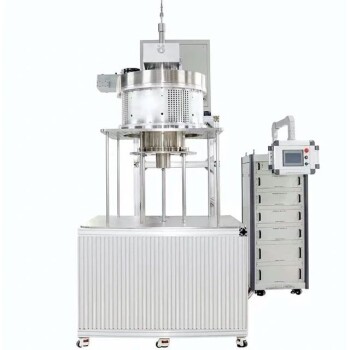
Achieving the perfect balance of selective etching and deposition requires high-performance equipment. KINTEK specializes in advanced laboratory solutions, providing the specialized Microwave Plasma CVD and PECVD systems necessary for precise hydrogen plasma control.
Our extensive portfolio supports every stage of material research, from high-temperature furnaces and vacuum systems to crushing, milling, and high-pressure reactors. Whether you are focused on gem-grade purity or rapid single-crystal growth, KINTEK offers the technical expertise and robust consumables—including ceramics and crucibles—to ensure your success.
Ready to optimize your CVD process? Contact KINTEK today to explore our laboratory equipment and consumables!
Related Products
- 915MHz MPCVD Diamond Machine Microwave Plasma Chemical Vapor Deposition System Reactor
- Microwave Plasma Chemical Vapor Deposition MPCVD Machine System Reactor for Lab and Diamond Growth
- Cylindrical Resonator MPCVD Machine System Reactor for Microwave Plasma Chemical Vapor Deposition and Lab Diamond Growth
- HFCVD Machine System Equipment for Drawing Die Nano-Diamond Coating
- CVD Diamond Domes for Industrial and Scientific Applications
People Also Ask
- How does a microwave plasma reactor facilitate the synthesis of diamond? Master MPCVD with Precision Technology
- What are the advantages of a Microwave Plasma CVD reactor for MCD/NCD coatings? Precision Multilayer Diamond Engineering
- How do vacuum pumps and valves collaborate in MPCVD? Achieve Precise Pressure Control for Superior CNT Synthesis
- What are the primary advantages of the CVD method for growing diamonds? Engineering High-Purity Gems and Components
- How is a diamond formed from CVD? The Science of Growing Diamonds Atom by Atom