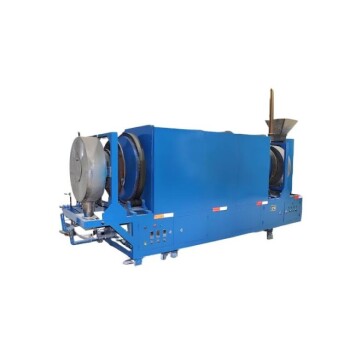
The primary function of using a laboratory electric drying oven for Fe-Cr-Mn-Mo-N alloy raw materials is to thoroughly eliminate adsorbed water and moisture by preheating the metal oxides to 250°C. This step is a mandatory prerequisite for Self-propagating High-temperature Synthesis (SHS) to ensure both operational safety and metallurgical precision.
Core Takeaway: This drying process is not merely about cleanliness; it is a critical safety control to prevent explosions caused by flash-vaporization during high-pressure reactions. Simultaneously, it ensures the precise chemical stoichiometry required to achieve high nitrogen solubility in the final alloy.
Critical Safety Implications
Prevention of Violent Reactions
The synthesis of Fe-Cr-Mn-Mo-N alloys often involves an aluminothermic reaction. This process generates extreme heat almost instantaneously.
If the raw metal oxide powders contain moisture, that water will vaporize immediately upon reaction ignition. In a high-pressure nitrogen environment, this rapid expansion of steam can lead to dangerous splashing of molten material or even explosions.
Protecting Equipment and Operators
The drying oven acts as the first line of defense against containment failure.
By removing volatile moisture before the material enters the reactor, you stabilize the reaction kinetics. This prevents pressure spikes that could damage the synthesis vessel or harm laboratory personnel.
Ensuring Metallurgical Quality
Guaranteeing Chemical Ratio Precision
Achieving the specific properties of a high-nitrogen alloy requires exact chemical ratios (stoichiometry).
Moisture adds artificial weight to the raw materials. If powders are weighed while "wet" (containing adsorbed water), the actual metal content will be lower than calculated. Pretreatment ensures you are weighing the reactant itself, not the water attached to it.
Optimizing Nitrogen Solubility
The defining characteristic of Fe-Cr-Mn-Mo-N alloys is their nitrogen content.
Impurities introduced by moisture can chemically interfere with the alloy's ability to absorb nitrogen during synthesis. Thorough drying minimizes these impurities, creating the ideal chemical environment for maximum nitrogen uptake and retention.
Understanding the Process Parameters
The Necessity of 250°C
While standard laboratory drying (such as for biomass) typically occurs between 50°C and 105°C, metal oxides for SHS require higher temperatures.
You must set the oven to 250°C for these materials. This higher temperature is required to drive off not just surface dampness, but strongly adsorbed water molecules that lower temperatures cannot dislodge.
The Risk of Incomplete Drying
Failing to maintain the material at temperature until it reaches a "constant mass" compromises the entire batch.
Even trace amounts of residual moisture can skew compositional analysis and lower the heating value of the reaction. This results in an alloy that fails to meet mechanical specifications due to unpredictable reaction temperatures.
Making the Right Choice for Your Goal
To ensure the success of your Fe-Cr-Mn-Mo-N alloy synthesis, apply the drying process based on your specific priorities:
- If your primary focus is Safety: Ensure the oven reaches and stabilizes at 250°C to eliminate all explosion risks associated with rapid steam generation.
- If your primary focus is Alloy Performance: Verify the material has reached constant mass before weighing to guarantee the precise stoichiometry needed for maximum nitrogen solubility.
Thorough pretreatment is the invisible foundation of a safe, high-performance alloy synthesis.
Summary Table:
| Parameter/Factor | Requirement/Value | Impact on Synthesis |
|---|---|---|
| Preheating Temperature | 250°C | Removes strongly adsorbed moisture that 100°C cannot dislodge. |
| Primary Goal | Constant Mass | Ensures precise weighing for correct chemical stoichiometry. |
| Safety Risk | Moisture/Water | Prevents flash-vaporization and explosions during aluminothermic reactions. |
| Quality Metric | Nitrogen Solubility | Minimizes impurities to optimize nitrogen uptake and retention. |
| Material State | Dry Powder | Stabilizes reaction kinetics and prevents dangerous pressure spikes. |
Elevate Your Metallurgical Precision with KINTEK
Don't compromise the safety or quality of your high-nitrogen alloy synthesis. KINTEK provides specialized laboratory electric drying ovens and high-performance high-pressure reactors designed to handle the rigorous demands of Fe-Cr-Mn-Mo-N alloy production.
Whether you need precise thermal pretreatment or robust crushing and milling systems to prepare your raw oxides, our comprehensive range of equipment—from muffle furnaces to isostatic presses—ensures your lab achieves repeatable, high-quality results.
Ready to optimize your alloy synthesis workflow? Contact KINTEK today to discover how our high-temperature solutions and laboratory consumables can enhance your research and production efficiency.
References
- Maksim Konovalov, V. A. Karev. On the coefficient of compositional stability of nitrogen for high-nitrogen alloys of the Fe-Cr-Mn-Mo-N system, obtained by the SHS method under nitrogen pressure. DOI: 10.22226/2410-3535-2023-2-121-125
This article is also based on technical information from Kintek Solution Knowledge Base .
Related Products
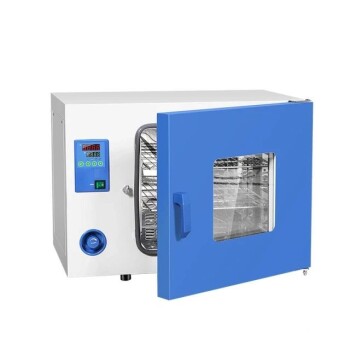
- Laboratory Scientific Electric Heating Blast Drying Oven
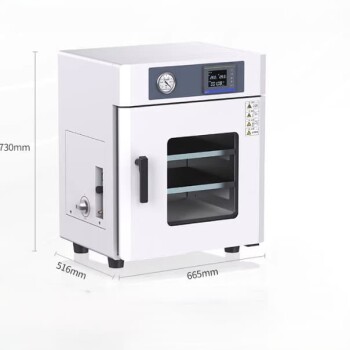
- 56L Vertical Laboratory Vacuum Drying Oven
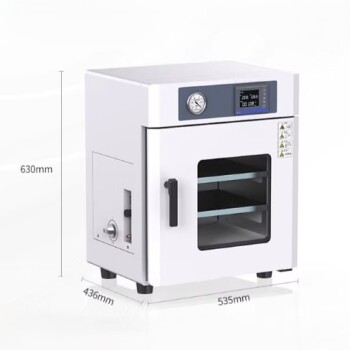
- 23L Laboratory Vacuum Drying Oven
- High Temperature Muffle Oven Furnace for Laboratory Debinding and Pre Sintering
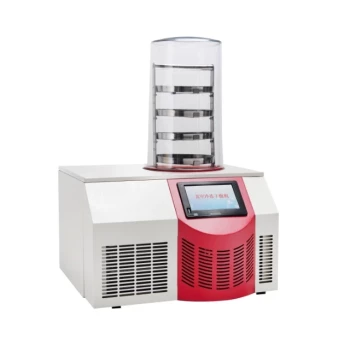
- Benchtop Laboratory Vacuum Freeze Dryer
People Also Ask
- How does a laboratory electric drying oven contribute to the formation of the initial coating? Expert Insights
- What role does a precision laboratory drying oven play in the synthesis of GO-PANI nanocomposites? Protect Material Integrity
- What role does a laboratory drying oven play in the preparation of zinc oxide nanoparticle precursors?
- What is the necessity of using a laboratory drying oven when processing MoO3/GO composite nanopowders? Find out here.
- What is the role of a laboratory drying oven in cellulose citrate production? Ensure Material Stability & Purity