The use of corrosion-resistant materials in subcritical water treatment is a non-negotiable requirement for process integrity. Because subcritical water exhibits aggressive acid-base catalytic activity at high temperatures, it actively attacks ordinary metals through oxidation. Utilizing materials like stainless steel or titanium is the only effective way to prevent rapid equipment degradation and maintain the chemical purity of your hydrolysis extract.
Subcritical water acts as a highly reactive solvent that causes oxidation in standard metals. Resistant alloys are essential to prevent structural corrosion and to ensure metal impurities do not contaminate the final product.
The Aggressive Nature of Subcritical Water
To understand why specific materials are required, you must first understand how the solvent changes under subcritical conditions.
Enhanced Reactivity at High Temperatures
Subcritical water is not simply hot water; its chemical properties shift largely. At high temperatures, it exhibits strong acid-base catalytic activity.
The Risk to Ordinary Metals
This heightened reactivity creates a harsh environment for equipment. Ordinary metals cannot withstand these conditions and are prone to rapid oxidation and corrosion.
The Role of Resistant Materials
Selecting the right construction material—specifically stainless steel or titanium—serves two critical functions in the treatment process.
Ensuring Long-Term Stability
The primary engineering challenge in these systems is durability. Reaction systems built from stainless steel or titanium are capable of withstanding the aggressive reactivity of the solvent. This ensures the equipment maintains its structural integrity over long-term operation under extreme conditions.
Preventing Product Contamination
Beyond protecting the machine, you must protect the product. When equipment corrodes, it releases metal ions into the fluid. Using corrosion-resistant materials prevents these metal impurities from leaching into and contaminating the hydrolysis extract.
Common Pitfalls to Avoid
While the choice of material seems straightforward, failing to prioritize resistance leads to significant operational failures.
The Cost of "Ordinary" Metals
It may be tempting to use standard metals for non-critical components, but in subcritical water systems, this is a mistake. The oxidation potential of the water is high enough to degrade these materials quickly, leading to leaks or mechanical failure.
The Hidden Cost of Impurities
Even if the equipment does not fail catastrophically, minor corrosion degrades your output. If your goal is a pure extract, the presence of dissolved metal impurities caused by insufficient corrosion resistance will compromise the quality and safety of your final product.
Making the Right Choice for Your Goal
Selecting the correct material is about balancing structural needs with chemical strictness.
- If your primary focus is Equipment Longevity: Prioritize titanium or high-grade stainless steel to resist the strong acid-base catalytic activity and oxidation inherent to the process.
- If your primary focus is Product Purity: specific corrosion-resistant alloys are mandatory to ensure absolutely zero metal impurities leach into your hydrolysis extract.
Build your system to withstand the chemistry of the water, and your equipment will deliver consistent, pure results.
Summary Table:
| Feature | Impact of Subcritical Water | Benefit of Corrosion-Resistant Materials |
|---|---|---|
| Chemical Environment | High acid-base catalytic activity | Resists aggressive chemical attack and oxidation |
| Equipment Durability | Rapid degradation of ordinary metals | Ensures long-term structural integrity and stability |
| Product Quality | Leaching of metal ion impurities | Guarantees high-purity hydrolysis extracts |
| Operational Risk | Frequent leaks and mechanical failure | Minimizes downtime and maintenance costs |
Elevate Your Lab's Precision with KINTEK
Don't let equipment corrosion compromise your research or product purity. KINTEK specializes in high-performance laboratory solutions designed to withstand the most demanding environments. Whether you need high-temperature high-pressure reactors and autoclaves, specialized corrosion-resistant electrolytic cells, or precision PTFE and ceramic consumables, our team ensures your subcritical water processes remain efficient and contaminant-free.
Ready to upgrade your system? Contact KINTEK today to discover how our premium laboratory equipment and expertise can enhance your operational reliability and output quality.
References
- Maja Čolnik, Mojca Škerget. Hydrolytic Decomposition of Corncobs to Sugars and Derivatives Using Subcritical Water. DOI: 10.3390/pr13010267
This article is also based on technical information from Kintek Solution Knowledge Base .
Related Products
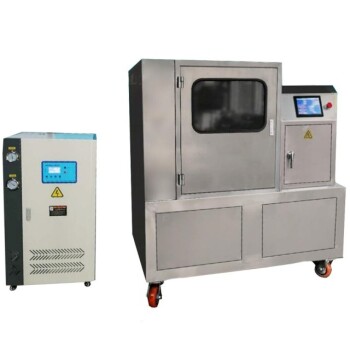
- Low-Temperature Water-Cooled Touchscreen Vibratory Ultrafine Pulverizer
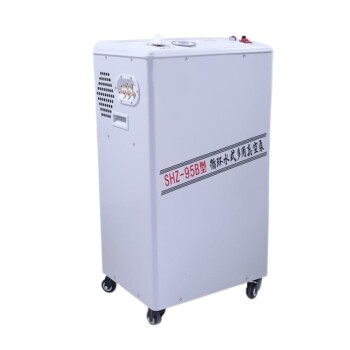
- Laboratory Vertical Water Circulating Vacuum Pump for Lab Use
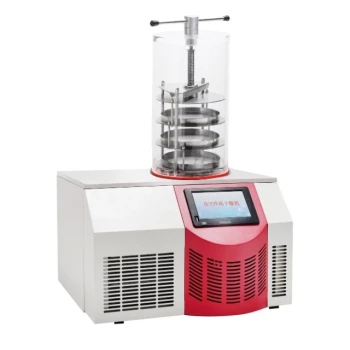
- High Performance Laboratory Freeze Dryer for Research and Development
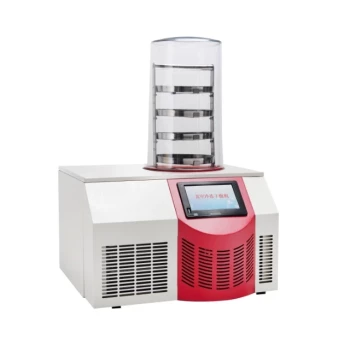
- Benchtop Laboratory Vacuum Freeze Dryer
- 30L Chiller Water Bath Cooling Circulator Low Temperature Constant Temperature Reaction Bath
People Also Ask
- What is the function of an industrial vibratory mill? Optimize Fe-Cr-Al Alloy Powder Production
- How does a Vibratory Mill improve niobium recovery efficiency? Optimize Waste Pre-treatment for Maximum Yield
- Why use stainless steel jars and balls for solid-state battery slurries? Maximize Dispersion and Conductivity
- What role does ultra-low temperature cooling equipment play in hydrogel preparation? Master Light-Driven Actuation
- Why is a low-temperature cooling solution necessary for nanoparticle toxicity? Ensure Scientific Accuracy & Stability