Knowledge What is the necessity of high-purity ceramic crucibles in rare earth steel research? Ensure Accurate Data Results
Author avatar

Tech Team · Kintek Solution

Updated 1 day ago

What is the necessity of high-purity ceramic crucibles in rare earth steel research? Ensure Accurate Data Results


Experimental integrity in metallurgical research relies on eliminating variables that could distort chemical data. The necessity of using high-purity ceramic crucibles when studying rare earth elements in molten steel stems directly from the need to prevent the container itself from contaminating the melt and invalidating the purification results.

To accurately measure how well rare earth elements remove impurities, you must ensure the crucible is not simultaneously adding new ones. High-purity vessels are essential for establishing a clean baseline, allowing researchers to attribute chemical changes solely to the rare earth additions rather than crucible degradation.

The Critical Role of Chemical Inertness

Preventing Material Leaching

Standard ceramic crucibles often contain binders or lower-grade oxides that become unstable at steel-making temperatures.

When these materials interact with molten steel, they can release impurity ions into the melt. Using high-purity ceramics, such as high-purity alumina or magnesia, drastically minimizes this leaching effect.

Protecting the Rare Earth Reaction

Rare earth elements are highly reactive.

If the crucible material is chemically active, the rare earth elements may react with the crucible walls rather than the impurities in the steel. High-purity crucibles ensure the rare earths remain available to perform their intended purification tasks within the molten matrix.

accurately Evaluating Purification Efficiency

Isolating Trace Harmful Elements

The primary goal of these studies is often to measure the removal of specific trace elements.

Key targets include phosphorus, arsenic, tin, and antimony. Even minute amounts of contamination from a low-grade crucible can mask the reduction of these elements, making it impossible to calculate the true efficiency of the rare earth addition.

Establishing Causality

Researchers need to prove that a drop in impurity levels is caused by the rare earth elements.

If the crucible introduces background noise by releasing ions, the data becomes noisy and unreliable. High-purity materials provide the controlled environment necessary to prove a direct cause-and-effect relationship.

Observing Inclusion Evolution

Tracking Oxysulfide Patterns

Rare earth elements modify non-metallic inclusions in steel, typically forming rare earth oxysulfides.

The size, shape, and distribution of these inclusions are critical indicators of steel quality.

Avoiding "False" Inclusions

Exogenous material from a degrading crucible can act as nucleation sites for unwanted inclusions.

This creates "false" data, where researchers might mistake crucible debris for reaction products. High-purity crucibles ensure that the evolution patterns observed under the microscope are intrinsic to the steel chemistry, not artifacts of the container.

Understanding the Trade-offs

Cost vs. Data Quality

High-purity alumina and magnesia crucibles are significantly more expensive than standard refractory vessels.

However, in the context of rare earth research, the cost of failed experiments or misleading data far outweighs the expense of consumables.

Thermal Sensitivity

High-purity ceramics can be more susceptible to thermal shock.

They often lack the stabilizing impurities that make standard ceramics more robust against rapid temperature changes. This requires careful heating and cooling protocols to prevent cracking during the melt.

Making the Right Choice for Your Goal

When designing your experimental apparatus, prioritize the material based on your specific analytical needs.

  • If your primary focus is Chemical Quantification: Use high-purity alumina to prevent background interference when measuring reductions in phosphorus, arsenic, tin, or antimony.
  • If your primary focus is Inclusion Morphology: Use high-purity magnesia or alumina to ensure that the oxysulfide inclusions you observe are genuine reaction products, not exogenous contaminants.

Using the correct vessel is not merely a procedural detail; it is the foundation of reproducible metallurgical science.

Summary Table:

Feature High-Purity Crucibles Standard Crucibles
Material Purity Typically >99% Alumina/Magnesia Contains binders and low-grade oxides
Chemical Stability Highly inert; prevents leaching Unstable at high temperatures; releases ions
Rare Earth Synergy Minimizes wall reactions; focuses on melt Can react with RE elements, depleting them
Inclusion Quality Allows clear oxysulfide tracking Introduces 'false' exogenous inclusions
Best Use Case Precise quantification & morphology General heating & non-sensitive melting

Elevate Your Metallurgical Precision with KINTEK

Don't let crucible contamination compromise your research integrity. KINTEK specializes in high-performance laboratory equipment and consumables designed for the most demanding thermal applications. Whether you are studying rare earth purification or advanced material synthesis, our premium high-purity ceramics and crucibles—including alumina, magnesia, and specialized PTFE products—provide the chemically inert environment required for reproducible results.

From high-temperature furnaces and vacuum systems to precision hydraulic presses and high-pressure reactors, we empower researchers with the tools needed for innovation. Contact us today to discuss your specific lab requirements and discover how our expertise can drive your scientific breakthroughs.

Related Products

People Also Ask

Related Products

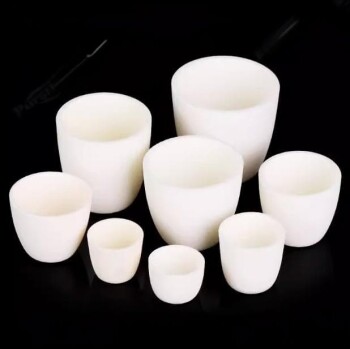
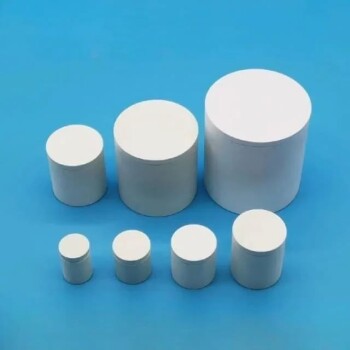
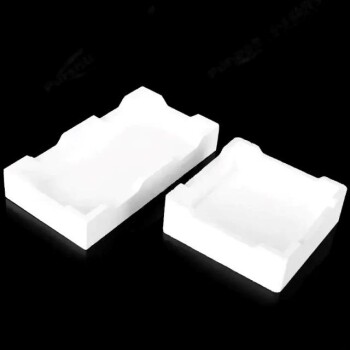
Engineering Advanced Fine Alumina Al2O3 Ceramic Crucible for Laboratory Muffle Furnace

Engineering Advanced Fine Alumina Al2O3 Ceramic Crucible for Laboratory Muffle Furnace

Alumina ceramic crucibles are used in some materials and metal melting tools, and flat-bottomed crucibles are suitable for melting and processing larger batches of materials with better stability and uniformity.

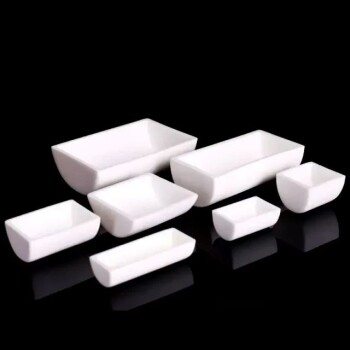
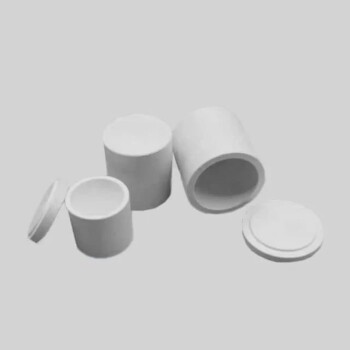
Alumina Al2O3 Ceramic Crucible Semicircle Boat with Lid for Engineering Advanced Fine Ceramics

Alumina Al2O3 Ceramic Crucible Semicircle Boat with Lid for Engineering Advanced Fine Ceramics

Crucibles are containers widely used for melting and processing various materials, and semicircular boat-shaped crucibles are suitable for special smelting and processing requirements. Their types and uses vary by material and shape.

Arc-Shaped Alumina Ceramic Crucible High Temperature Resistant for Engineering Advanced Fine Ceramics

Arc-Shaped Alumina Ceramic Crucible High Temperature Resistant for Engineering Advanced Fine Ceramics

In the journey of scientific exploration and industrial production, every detail is crucial. Our arc-shaped alumina ceramic crucibles, with their excellent high temperature resistance and stable chemical properties, have become a powerful assistant in laboratories and industrial fields. They are made of high-purity alumina materials and manufactured through precision processes to ensure excellent performance in extreme environments.

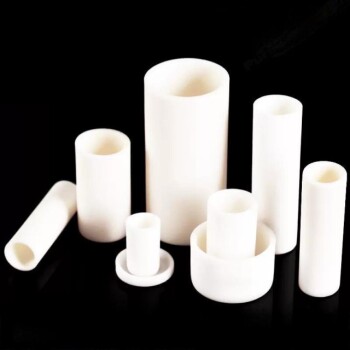
Engineering Advanced Fine Ceramics Alumina Crucibles (Al2O3) for Thermal Analysis TGA DTA

Engineering Advanced Fine Ceramics Alumina Crucibles (Al2O3) for Thermal Analysis TGA DTA

TGA/DTA thermal analysis vessels are made of aluminum oxide (corundum or aluminum oxide). It can withstand high temperature and is suitable for analyzing materials that require high temperature testing.

Boron Nitride (BN) Crucible for Phosphorous Powder Sintered

Boron Nitride (BN) Crucible for Phosphorous Powder Sintered

Phosphorus powder sintered boron nitride (BN) crucible has a smooth surface, dense, pollution-free and long service life.

Custom Machined and Molded PTFE Teflon Parts Manufacturer with PTFE Crucible and Lid

Custom Machined and Molded PTFE Teflon Parts Manufacturer with PTFE Crucible and Lid

PTFE crucibles, made from pure Teflon, offer chemical inertness and resistance from -196°C to 280°C, ensuring compatibility with a wide range of temperatures and chemicals. These crucibles feature machine-finished surfaces for easy cleaning and prevention of contamination, making them ideal for precise laboratory applications.

Evaporation Crucible for Organic Matter

Evaporation Crucible for Organic Matter

An evaporation crucible for organic matter, referred to as an evaporation crucible, is a container for evaporating organic solvents in a laboratory environment.

Electron Beam Evaporation Coating Tungsten Crucible and Molybdenum Crucible for High Temperature Applications

Electron Beam Evaporation Coating Tungsten Crucible and Molybdenum Crucible for High Temperature Applications

Tungsten and molybdenum crucibles are commonly used in electron beam evaporation processes due to their excellent thermal and mechanical properties.

Electron Beam Evaporation Coating Gold Plating Tungsten Molybdenum Crucible for Evaporation

Electron Beam Evaporation Coating Gold Plating Tungsten Molybdenum Crucible for Evaporation

These crucibles act as containers for the gold material evaporated by the electron evaporation beam while precisely directing the electron beam for precise deposition.

Sub-Lance Probe for Molten Steel Temperature Carbon Content Oxygen Content Measurement and Steel Sample Collection

Sub-Lance Probe for Molten Steel Temperature Carbon Content Oxygen Content Measurement and Steel Sample Collection

Optimize steelmaking with sub-lance probes for precise temperature, carbon, and oxygen measurements. Enhance efficiency and quality in real-time.

Precision Machined Yttrium Stabilized Zirconia Ceramic Rod for Engineering Advanced Fine Ceramics

Precision Machined Yttrium Stabilized Zirconia Ceramic Rod for Engineering Advanced Fine Ceramics

Zirconia ceramic rods are prepared by isostatic pressing, and a uniform, dense and smooth ceramic layer and transition layer are formed at high temperature and high speed.

Electron Beam Evaporation Coating Conductive Boron Nitride Crucible BN Crucible

Electron Beam Evaporation Coating Conductive Boron Nitride Crucible BN Crucible

High-purity and smooth conductive boron nitride crucible for electron beam evaporation coating, with high temperature and thermal cycling performance.

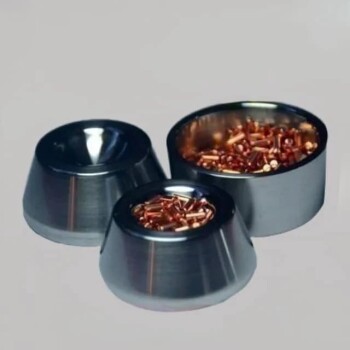
Electron Beam Evaporation Coating Oxygen-Free Copper Crucible and Evaporation Boat

Electron Beam Evaporation Coating Oxygen-Free Copper Crucible and Evaporation Boat

Electron Beam Evaporation Coating Oxygen-Free Copper Crucible enables precise co-deposition of various materials. Its controlled temperature and water-cooled design ensure pure and efficient thin film deposition.

High Purity Zinc Foil for Battery Lab Applications

High Purity Zinc Foil for Battery Lab Applications

There are very few harmful impurities in the chemical composition of zinc foil, and the surface of the product is straight and smooth; it has good comprehensive properties, processability, electroplating colorability, oxidation resistance and corrosion resistance, etc.

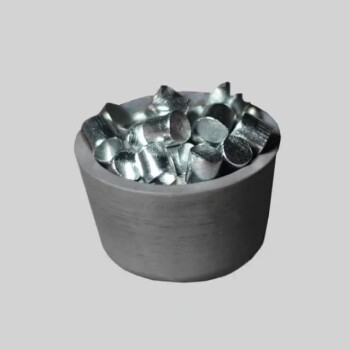
Carbon Graphite Boat -Laboratory Tube Furnace with Cover

Carbon Graphite Boat -Laboratory Tube Furnace with Cover

Covered Carbon Graphite Boat Laboratory Tube Furnaces are specialized vessels or vessels made of graphite material designed to withstand extreme high temperatures and chemically aggressive environments.

Custom PTFE Teflon Parts Manufacturer Grinding Bowl

Custom PTFE Teflon Parts Manufacturer Grinding Bowl

PTFE is renowned for its exceptional chemical resistance, thermal stability, and low friction properties, making it a versatile material in various industries. The PTFE grinding bowl, specifically, finds applications where these properties are crucial.

Custom PTFE Teflon Parts Manufacturer for PTFE Mesh F4 Sieve

Custom PTFE Teflon Parts Manufacturer for PTFE Mesh F4 Sieve

PTFE mesh sieve is a specialized test sieve designed for particle analysis in various industries, featuring a non-metallic mesh woven from PTFE filament. This synthetic mesh is ideal for applications where metal contamination is a concern . PTFE sieves are crucial for maintaining the integrity of samples in sensitive environments, ensuring accurate and reliable results in particle size distribution analysis.

Custom PTFE Teflon Parts Manufacturer for PTFE Buchner Funnel and Triangular Funnel

Custom PTFE Teflon Parts Manufacturer for PTFE Buchner Funnel and Triangular Funnel

The PTFE funnel is a piece of laboratory equipment used primarily for filtration processes, particularly in the separation of solid and liquid phases in a mixture. This setup allows for efficient and rapid filtration, making it indispensable in various chemical and biological applications.

Laboratory Oscillating Orbital Shaker

Laboratory Oscillating Orbital Shaker

Mixer-OT orbital shaker uses brushless motor, which can run for a long time. It is suitable for vibration tasks of culture dishes, flasks and beakers.

Desktop Fast Laboratory Autoclave Sterilizer 35L 50L 90L for Lab Use

Desktop Fast Laboratory Autoclave Sterilizer 35L 50L 90L for Lab Use

The desktop fast steam sterilizer is a compact and reliable device used for rapid sterilization of medical, pharmaceutical, and research items. It efficiently sterilizes surgical instruments, glassware, medicines, and resistant materials, making it suitable for various applications.


Leave Your Message