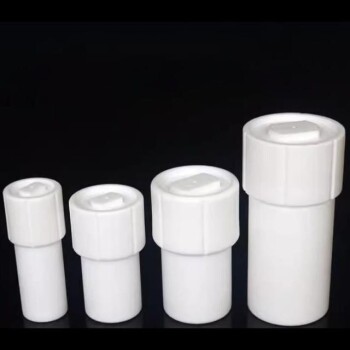
High-pressure digestion vessels function by generating a sealed, aggressive reaction environment designed to liquefy solid electronic waste. Operating at temperatures reaching 220 °C, these vessels utilize a mixture of hydrochloric acid and hydrogen peroxide to create high-pressure acid vapors. These vapors possess the energy and chemical potential to forcefully penetrate and dissolve the metal frames of electronic components, converting them into a liquid solution suitable for metal recovery.
The core mechanism relies on the synergy of extreme heat, pressure, and chemical oxidation. By converting solid metal components into a liquid leachate, this process creates the necessary conditions for the selective extraction of high-value metals like gold, palladium, and platinum.
The Mechanics of Dissolution
Creating the Extreme Environment
The vessel operates as a strictly sealed system. This containment is essential to build and maintain the internal pressure required for the reaction.
To initiate the process, the internal temperature is raised to extreme levels, specifically around 220 °C. This thermal energy is the catalyst that drives the chemical breakdown of the materials.
The Chemical Engine
The digestion process is fueled by a potent chemical mixture: hydrochloric acid and hydrogen peroxide.
This combination acts as an aggressive oxidant. While the acid provides the dissolving medium, the peroxide enhances the oxidation potential, allowing the mixture to attack the robust metals found in electronics.
Vapor Phase Penetration
Under these sealed, high-temperature conditions, the liquid reagents undergo a phase change. They generate high-pressure acid vapors.
These vapors are far more effective than static liquid baths. They forcefully penetrate the intricate geometries of electronic components, dissolving the metal frames that hold the electronic parts together.
From Solid Waste to Liquid Resource
Formation of Leachate
The primary output of the digestion mechanism is the conversion of solid waste into a liquid leachate.
This phase transition is the critical bottleneck in recycling. Without fully dissolving the solid metal frames into a liquid form, the precious metals remain trapped and inaccessible.
Enabling Selective Extraction
Once the metals are in solution (leachate), they become chemically accessible.
This liquid state allows for the introduction of specialized adsorbents. These materials can then selectively target and capture specific precious metals—namely gold, palladium, and platinum—from the mixture.
Understanding Operational Constraints
Safety and Containment Requirements
The combination of high pressure and 220 °C heat creates a volatile environment.
Equipment must be rigorously rated to withstand these conditions. A failure in the seal or vessel integrity releases dangerous, high-pressure acid vapors.
Material Compatibility
The reagents used (hydrochloric acid and hydrogen peroxide) are highly corrosive.
The digestion vessel itself must be constructed of materials capable of resisting this specific acid mix at high temperatures to prevent the equipment from corroding alongside the e-waste.
Optimizing Precious Metal Recovery
To ensure you are maximizing the potential of high-pressure digestion, align your operational parameters with your specific recovery goals:
- If your primary focus is dissolution speed: Prioritize maintaining the 220 °C temperature threshold to ensure rapid generation of the acid vapors required to penetrate metal frames.
- If your primary focus is recovery yield: Ensure the solid-to-liquid conversion is complete, as the efficacy of your adsorbents depends entirely on the metals being fully suspended in the leachate.
The efficiency of your recovery operation is directly proportional to the effectiveness of this initial high-pressure liquefaction stage.
Summary Table:
| Key Component | Function | Expected Outcome |
|---|---|---|
| Sealed Reactor | Containment for internal pressure buildup | Safe environment for high-energy reactions |
| Thermal Catalyst | Maintaining 220°C temperature | Accelerated chemical breakdown of materials |
| Oxidant Mixture | HCl and H2O2 reagents | Aggressive dissolution of robust metal frames |
| Acid Vapors | High-pressure gaseous penetration | Access to intricate electronic geometries |
| Liquid Leachate | Phase transition from solid to liquid | Metal ions ready for selective extraction |
Optimize Your Precious Metal Recovery with KINTEK
Maximize your extraction yields and processing efficiency with KINTEK’s high-performance laboratory solutions. We specialize in providing the robust equipment necessary for aggressive e-waste digestion, including:
- High-Temperature High-Pressure Reactors & Autoclaves: Engineered to withstand 220°C and corrosive acid environments.
- Specialized Electrolytic Cells & Electrodes: For the selective recovery of gold, palladium, and platinum.
- Corrosion-Resistant Consumables: High-quality PTFE products, ceramics, and crucibles designed for long-term durability.
Ready to enhance your lab's recycling capabilities? Contact our experts today to find the perfect system for your needs!
References
- Simon Carter, Julia Waack. Atomic spectrometry update: review of advances in the analysis of metals, chemicals and materials. DOI: 10.1039/d0ja90067b
This article is also based on technical information from Kintek Solution Knowledge Base .
Related Products
- Custom PTFE Teflon Parts Manufacturer for Microwave Digestion Tank
- Customizable High Pressure Reactors for Advanced Scientific and Industrial Applications
- Stainless High Pressure Autoclave Reactor Laboratory Pressure Reactor
- High Purity Pure Graphite Crucible for Evaporation
- Special Shape Press Mold for Lab
People Also Ask
- Why are PTFE containers required for PCT leaching tests? Ensure Chemical Inertness and Analytical Precision
- Why use high-quality PTFE containers for CO2 reduction electrolytes? Eliminate silicon contamination and ensure data.
- Why is PTFE Mandatory for Hydrofluoric Acid (HF) Handling? Ensure Safety and Data Integrity in Corrosion Testing
- Why is a PTFE container required for acid leaching of silicon nanosheets? Ensure High Purity and Safety
- Why are polytetrafluoroethylene (PTFE) containers essential for assessing the corrosion resistance of glassified waste?