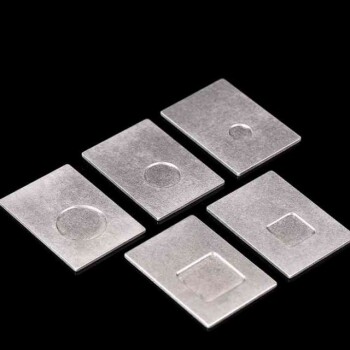
The primary function of a quartz glass sample holder is to provide a chemically inert structural support for alloy specimens within the high-temperature zone of a heating furnace or reaction tube. Its role extends beyond simple physical support; it creates a neutral environment that prevents the holder from reacting with corrosive gases or the metal samples themselves.
Ideally, a sample holder must be "invisible" to the chemical reaction. Quartz achieves this by resisting high-temperature corrosion, ensuring that the collected kinetic and mass loss data reflect only the test specimen's behavior, free from external contamination.
Preserving Experimental Integrity
Chemical Inertness at High Temperatures
The validity of a corrosion study depends entirely on the isolation of variables. Quartz glass is utilized specifically for its high corrosion resistance.
Unlike metallic or ceramic alternatives that might degrade, quartz remains stable in the presence of aggressive corrosive gases. This ensures the holder maintains its structural integrity throughout the duration of the experiment.
Preventing Cross-Contamination
A critical risk in high-temperature studies is the interaction between the support material and the test sample.
Quartz avoids this by strictly preventing reactions with the metal samples (such as N10276 alloy). This isolation prevents cross-contamination, guaranteeing that any observed changes in the specimen are due solely to the intended experimental conditions.
Ensuring Accurate Kinetic Data
The ultimate goal of using quartz is to protect the fidelity of the data.
By eliminating interference from the holder, researchers can trust the corrosion kinetics and mass loss data. The measurements reflect the true degradation rate of the alloy, rather than a composite rate influenced by a reacting sample holder.
Simulating Real-World Conditions
Precise Specimen Orientation
Beyond chemical stability, the holder acts as a precise mechanical guide within the tube furnace.
It is designed to ensure that the surfaces of the alloy specimens remain parallel to the gas flow direction. This geometric precision is essential for consistent exposure across the sample surface.
Replicating Industrial Gas Scrubbing
Accurate lab results must mimic the physical dynamics of industrial reactors.
The positioning provided by the quartz holder simulates the actual kinetic conditions of gas scrubbing against metal surfaces. This allows for valid analysis of chemical composition distribution and ensures corrosion rate measurements translate effectively to real-world applications.
Common Pitfalls to Avoid
The Risk of Reactive Supports
The most significant error in setup design is underestimating the reactivity of the sample holder.
If a material less inert than quartz is used, it may act as a catalyst or a reactant. This leads to skewed mass loss calculations and chemically inaccurate conclusions regarding the alloy's performance.
Compromised Flow Dynamics
Failing to use a holder that offers rigid, parallel support can lead to turbulent or uneven gas flow.
If the sample is not aligned correctly with the flow, the gas scrubbing effect will be inconsistent. This results in localized corrosion variations that do not accurately represent the material's general resistance properties.
Ensuring Validity in Your Research
To maximize the reliability of your corrosion studies, select your equipment based on your specific analytical requirements:
- If your primary focus is Chemical Accuracy: Rely on quartz to eliminate cross-contamination and ensure mass loss data is derived strictly from the specimen-gas interaction.
- If your primary focus is Kinetic Simulation: Use the quartz holder's structural rigidity to maintain parallel alignment, replicating the hydrodynamic conditions of industrial gas scrubbing.
The correct sample holder is not just a stand; it is a control variable that safeguards the scientific truth of your experiment.
Summary Table:
| Feature | Primary Function & Benefit |
|---|---|
| Material | High-purity Quartz Glass (Chemically Inert) |
| Chemical Stability | Resists aggressive gases; prevents reaction with alloy specimens |
| Data Accuracy | Ensures mass loss and kinetic data reflect only the test specimen |
| Mechanical Role | Maintains specimen orientation parallel to gas flow for uniform scrubbing |
| Research Value | Prevents cross-contamination and eliminates external variables |
Elevate Your Research Precision with KINTEK
Don't let reactive hardware compromise your high-temperature corrosion data. KINTEK specializes in high-performance laboratory solutions, providing the precision-engineered quartz components, high-temperature furnaces (tube, muffle, vacuum), and corrosion-resistant consumables (ceramics, crucibles, PTFE) required for uncompromising research integrity.
Whether you are analyzing alloy kinetics or simulating industrial gas scrubbing, our comprehensive portfolio—including high-pressure reactors, crushing systems, and thermal processing tools—is designed to meet the rigorous demands of material science.
Ready to optimize your experimental setup? Contact our technical experts today to find the perfect equipment for your lab's unique requirements!
References
- Manuela Nimmervoll, Roland Haubner. Effect of Varying H2S Content on High-Temperature Corrosion of Ferritic and Austenitic Alloys in a Simulated Pyrolysis Process of Post-Consumer Plastics. DOI: 10.1007/s00501-021-01126-x
This article is also based on technical information from Kintek Solution Knowledge Base .
Related Products
- High Temperature Resistant Optical Quartz Glass Sheet
- Optical Window Glass Substrate Wafer Quartz Plate JGS1 JGS2 JGS3
- Customizable XRD Sample Holders for Diverse Research Applications
- XRD Sample Holder X-ray Diffractometer Powder Slide
- Sample Support Body for Electrochemical Tests
People Also Ask
- What is the high temperature of quartz? Key Thresholds for Crystalline vs. Fused Silica
- What is high temperature quartz? A Guide to Unmatched Thermal Stability & Purity
- What is the high temperature variety of quartz? Unlock the Secrets of Beta-Quartz & Fused Quartz
- Which materials are used as high temperature resistance materials? A Guide to Superalloys, Ceramics & Composites
- What is optical quartz? The Ultimate Material for UV and High-Temp Optics