The primary function of the Ti/Ta2O5–IrO2 electrode in this application is to act as a highly efficient electrocatalyst for the generation of active chlorine. By lowering the energy barrier required for chlorine evolution, the electrode facilitates the rapid production of oxidizing agents that chemically degrade acrylic acid.
Core Insight The effectiveness of this Dimensionally Stable Anode (DSA) relies on its specific surface coating of rutile-type IrO2 crystals and solid solutions. These components drastically improve electrocatalytic activity, making the generation of active chlorine—the primary mechanism for destroying acrylic acid—energetically favorable and efficient.
The Mechanism of Action
Active Surface Composition
The electrode derives its functionality from a specialized coating containing rutile-type IrO2 crystals and TiO2–IrO2 solid solutions.
These materials are not merely structural; they provide the active sites necessary for electrochemical reactions.
This specific crystal structure ensures the electrode remains stable while providing superior catalytic properties compared to standard anodes.
Lowering the Potential Barrier
The defining characteristic of this DSA is its ability to lower the chlorine evolution potential.
In electrochemical terms, this means less energy (voltage) is required to convert chloride ions in the solution into active chlorine.
By reducing this threshold, the system becomes more efficient, prioritizing the creation of oxidants over other competing reactions.
The Role of Active Chlorine
Indirect Oxidation
While the electrode provides the electrical potential, it is the active chlorine that performs the actual degradation.
The electrode generates this highly oxidative species within the media.
Once generated, the active chlorine attacks the acrylic acid molecules, breaking them down into simpler compounds.
Chemical Efficiency
Because the electrode surface is optimized for chlorine evolution, it maximizes the concentration of oxidants available for reaction.
This ensures that the degradation of acrylic acid is driven by potent chemical agents rather than relying solely on direct electron transfer at the electrode surface.
Critical Operating Conditions
The Necessity of Mass Transfer
For the electrode to function effectively, the acrylic acid must physically reach the anode surface, and the generated chlorine must be dispersed.
Forced convection, typically achieved via a magnetic stirrer, is critical to this process.
Preventing Localized Saturation
Without adequate mixing, active chlorine can over-concentrate near the electrode surface.
This localization can lead to undesirable side reactions and reduce the overall degradation rate.
High-speed rotation ensures even distribution, allowing the electrode to maintain peak efficiency.
Understanding the Limitations
Media Dependency
The Ti/Ta2O5–IrO2 electrode is specifically optimized for media containing chlorine.
If the electrolyte lacks sufficient chloride ions, the primary mechanism—active chlorine generation—cannot occur.
dependence on Hydrodynamics
The electrode's high reaction rate creates a dependency on physical mixing.
If mass transfer is poor (e.g., no stirring), the electrode's catalytic speed exceeds the rate at which pollutants arrive at the surface, creating a bottleneck that negates the electrode's benefits.
Optimizing Your Electrochemical Process
To maximize the degradation of acrylic acid using this DSA technology, consider the following:
- If your primary focus is Chemical Efficiency: Ensure your electrolyte media contains sufficient chloride concentration to leverage the electrode's low chlorine evolution potential.
- If your primary focus is Process Speed: Implement vigorous forced convection (magnetic stirring) to match the mass transfer rate with the electrode's high catalytic activity.
Success with the Ti/Ta2O5–IrO2 electrode requires balancing superior surface chemistry with the physical dynamics of your reaction vessel.
Summary Table:
| Feature | Description |
|---|---|
| Anode Type | Dimensionally Stable Anode (DSA) |
| Active Coating | Rutile-type IrO2 and TiO2–IrO2 solid solutions |
| Primary Mechanism | Lowers chlorine evolution potential for indirect oxidation |
| Oxidizing Agent | Active chlorine (generated in situ) |
| Target Pollutant | Acrylic Acid |
| Critical Factor | Mass transfer (requires forced convection/stirring) |
Maximize Your Electrochemical Efficiency with KINTEK
Ready to optimize your wastewater treatment or laboratory research? KINTEK specializes in advanced laboratory equipment and high-performance consumables. Whether you require electrolytic cells and precision electrodes for acrylic acid degradation, or high-temperature furnaces and pressure reactors for material synthesis, our comprehensive portfolio is designed to meet the rigorous demands of modern science.
Why choose KINTEK?
- Superior Materials: High-stability electrodes and durable ceramics/crucibles.
- Comprehensive Solutions: From battery research tools to specialized cooling and milling systems.
- Expert Support: We help you select the right equipment to overcome mass transfer bottlenecks and improve chemical efficiency.
Contact KINTEK today to discuss your electrode needs and laboratory solutions!
References
- Jinrui Liu, Xuan Zhang. Electrochemical degradation of acrylic acid using Ti/Ta<sub>2</sub>O<sub>5</sub>–IrO<sub>2</sub> electrode. DOI: 10.1039/d3ra01997g
This article is also based on technical information from Kintek Solution Knowledge Base .
Related Products
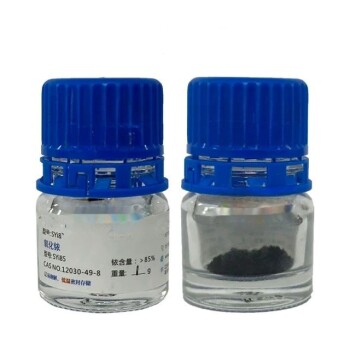
- Iridium Dioxide IrO2 for Water Electrolysis
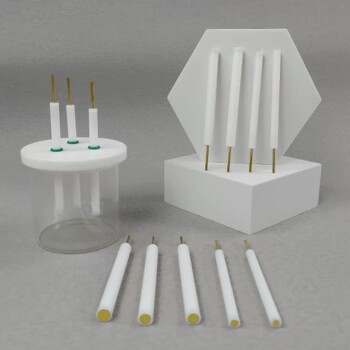
- Gold Disc Electrode
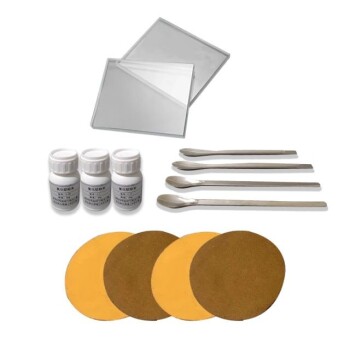
- Electrode Polishing Material for Electrochemical Experiments
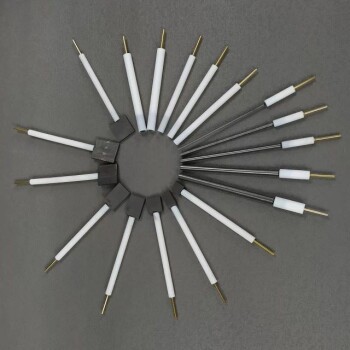
- Graphite Disc Rod and Sheet Electrode Electrochemical Graphite Electrode
- Gold Electrochemical Sheet Electrode Gold Electrode
People Also Ask
- What advantages does supercritical fluid technology provide for Iridium catalysts? Achieve Precision Nano-Synthesis
- What are the different types of catalysts used in pyrolysis? A Guide to Optimizing Biomass Conversion
- How does catalyst work in pyrolysis? A Guide to Efficient and Selective Fuel Production
- Which catalyst is used in pyrolysis process? Choosing the Right Catalyst for Your Feedstock
- What is the best catalyst for pyrolysis? A Strategic Guide to Maximizing Bio-Oil Quality and Yield