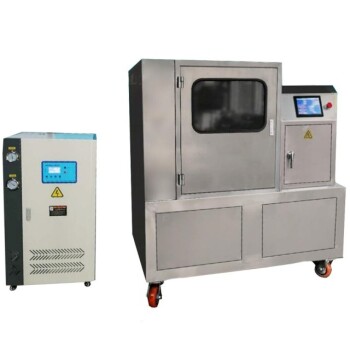
The primary purpose of using an industrial ultra-centrifugal mill in this context is to mechanically reduce dry Triticale Straw to a precise particle size, typically 0.75 mm. This physical transformation is a foundational step designed to drastically increase the specific surface area of the biomass. By maximizing this surface area, the process prepares the material for high-efficiency chemical and biological reactions downstream.
Mechanical size reduction is not merely about handling properties; it is the critical enabler of reactivity. By increasing surface exposure, you ensure that chemical agents and enzymes can physically access cellulose fibers, which is the direct driver of higher conversion rates.
The Mechanics of Biomass Preparation
Achieving Precise Particle Size
The ultra-centrifugal mill is calibrated to grind lignocellulosic biomass down to a specific target, often 0.75 mm.
Achieving this target size is essential for creating a uniform substrate. Consistency in particle size prevents bottlenecks in later processing stages.
Increasing Specific Surface Area
The most significant outcome of this milling process is the expansion of specific surface area.
Intact straw presents a limited exterior surface for reaction. Pulverizing the material exposes the internal structure, multiplying the area available for contact.
Optimizing for Bio-Conversion
Enhancing Chemical Pretreatment
Chemical pretreatment requires reactants to penetrate the biomass structure to be effective.
A larger surface area significantly enhances contact efficiency between the straw and these chemical agents. This ensures the material is properly "opened up" before biological processing begins.
Facilitating Enzymatic Hydrolysis
Enzymatic hydrolysis relies on enzymes physically attaching to cellulose fibers to break them down.
The milling process removes physical barriers, allowing enzymes greater access to the cellulose. This direct accessibility ensures higher conversion rates of the biomass into fermentable sugars.
Operational Considerations and Trade-offs
The Requirement for Dry Biomass
The equipment is specifically utilized for dry lignocellulosic biomass.
Moisture content must be managed strictly before milling. Wet biomass can cause clogging or inconsistent particle sizing, potentially disrupting the workflow.
Balancing Energy and Yield
Ultra-centrifugal milling is a mechanical process that consumes energy.
There is an inherent trade-off between the energy cost of grinding to 0.75 mm and the value of increased yield. However, the reference indicates this step is critical for ensuring the efficiency of subsequent steps.
Making the Right Choice for Your Goal
To maximize the efficiency of your bio-conversion process, you must view milling as a chemical enabler, not just a physical step.
- If your primary focus is maximizing reaction kinetics: Prioritize achieving the 0.75 mm particle size to maximize the surface area available for reactant and enzyme contact.
- If your primary focus is process reliability: Ensure the Triticale Straw is thoroughly dried prior to milling to maintain equipment performance and particle uniformity.
The ultra-centrifugal mill serves as the essential bridge between raw agricultural residue and a reactive substrate capable of high-yield conversion.
Summary Table:
| Feature | Specification/Goal | Impact on Bio-conversion |
|---|---|---|
| Target Particle Size | 0.75 mm | Ensures uniform substrate and prevents processing bottlenecks |
| Primary Mechanism | Ultra-centrifugal grinding | Drastically increases specific surface area for reagent contact |
| Material Requirement | Dry Lignocellulosic Biomass | Prevents equipment clogging and ensures consistent sizing |
| Downstream Benefit | Enhanced Enzymatic Access | Accelerates cellulose breakdown into fermentable sugars |
Maximize Your Biomass Conversion Yield with KINTEK
High-efficiency bio-conversion starts with precise material preparation. KINTEK specializes in providing robust industrial solutions, including crushing and milling systems, to help you achieve the exact particle size needed for superior enzymatic hydrolysis.
Whether you are processing Triticale Straw or other lignocellulosic biomass, our expert-grade equipment ensures uniform surface area expansion and reliable performance. Beyond milling, KINTEK offers a full suite of laboratory essentials—from high-temperature reactors and autoclaves to centrifuges and cooling solutions—designed to support every stage of your research and production.
Ready to optimize your workflow? Contact KINTEK today to discover how our high-precision laboratory equipment and consumables can drive your conversion rates higher.
References
- Rafał Łukajtis, Marian Kamiński. Comparison and Optimization of Saccharification Conditions of Alkaline Pre-Treated Triticale Straw for Acid and Enzymatic Hydrolysis Followed by Ethanol Fermentation. DOI: 10.3390/en11030639
This article is also based on technical information from Kintek Solution Knowledge Base .
Related Products
- High-Energy Omnidirectional Planetary Ball Mill Milling Machine for Laboratory
- High-Energy Omnidirectional Planetary Ball Mill Machine for Laboratory
- High Energy Planetary Ball Mill Milling Machine for Laboratory
- High-Speed Desktop Centrifuge for Blood Sample Processing
- High Energy Planetary Ball Mill Milling Machine for Laboratory
People Also Ask
- How does a planetary ball mill solve mixing challenges with PEO? Unlock solid-state synthesis for insoluble dopants
- What is the role of a planetary ball mill in preparing doped high-nickel cathode materials? Enhance Battery Stability
- Why is a planetary ball mill used for LNMO precursor powders? Optimize Particle Uniformity & Battery Performance
- What is the function of a planetary ball mill in the solid-state synthesis of LiTa2PO8? Achieve High-Purity Electrolytes
- What is the critical role of a planetary ball mill in the processing of inorganic fillers? Enhance Battery Performance