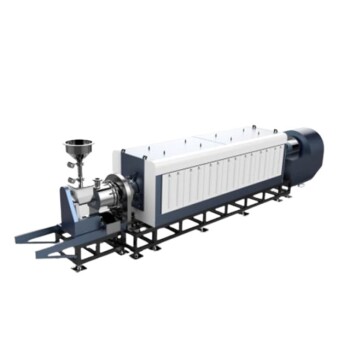
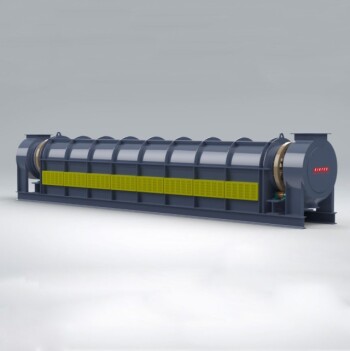
The primary role of a horizontal tube furnace in the thermal conversion of Technical Hydrolysis Lignin (THL) is to provide a strictly controlled, high-temperature reaction environment for pyrolysis. By managing heating rates and maintaining an inert atmosphere—typically using nitrogen—the furnace ensures the lignin undergoes full carbonization without oxygen. This process effectively transforms the raw lignin into high-quality biochar characterized by a high fixed carbon content.
A horizontal tube furnace serves as a precision reaction chamber that isolates THL from oxygen while applying uniform heat, enabling the consistent production of biochar and the systematic study of pyrolysis variables.
The Mechanics of Thermal Conversion in THL
Maintaining an Inert Environment
In the thermal conversion of THL, preventing combustion is critical to achieving carbonization rather than ash production. The horizontal tube furnace provides a well-sealed reaction space that allows for the introduction of carrier gases like nitrogen. This creates an oxygen-free state at atmospheric pressure, ensuring the lignin decomposes thermally rather than burning.
Precise Temperature and Residence Time
The furnace is designed to execute specific programmed heating rates, such as 5 to 10 °C per minute, and maintain isothermal residence times. This level of control allows researchers to simulate conditions ranging from slow to fast pyrolysis. Managing these variables is essential for studying how different operating parameters impact the final biochar yield.
Achieving Superior Biochar Quality
Unmatched Thermal Uniformity
Horizontal tube furnaces provide 360-degree thermal uniformity across the hot zone. This ensures that the heat distribution is consistent across the entire cross-section of the lignin sample. Such uniformity is vital for producing a homogeneous biochar product where the fixed carbon content is stable throughout the batch.
Protecting Sample and Equipment Integrity
The internal tube acts as a barrier that protects the furnace insulation from the chemical products released during lignin breakdown. Simultaneously, it prevents external contaminants from entering the sample area. This ensures the phase purity of the final product and maintains the longevity of the furnace heating elements.
Understanding the Trade-offs
Scale and Volume Constraints
Horizontal tube furnaces are optimized for low-volume processes and small-scale laboratory research. While they offer extreme precision, they are generally not suitable for large-scale industrial throughput. Organizations must balance the need for high-quality, consistent samples with the inherent capacity limitations of the tube design.
Sample Geometry Limitations
The design of the furnace requires samples to fit within a relatively small diameter tube. This restricts the physical form of the THL feedstock and may require pre-processing of the material to ensure it fits within the uniform hot zone. Furthermore, while excellent for batch processing, the horizontal orientation can be more challenging to automate for continuous feeding compared to other furnace types.
How to Apply This to Your Project
Determining the right furnace configuration depends on your specific research or production goals regarding Technical Hydrolysis Lignin.
- If your primary focus is optimizing biochar yield: Utilize the furnace’s ability to strictly execute complex thermal profiles and residence times to identify the peak carbonization temperature for your specific lignin grade.
- If your primary focus is high-purity material synthesis: Prioritize the use of high-quality ceramic tubes and inert gas flows to prevent any contamination during the ultra-high temperature phase.
- If your primary focus is thermal sensitivity analysis: Leverage the 360-degree thermal uniformity to ensure that small samples are heated evenly, preventing localized over-heating that could skew your data.
By mastering the precise temperature controls of a horizontal tube furnace, you can transform lignin into a high-value carbon resource with repeatable and predictable results.
Summary Table:
| Feature | Function in THL Conversion | Research & Production Benefit |
|---|---|---|
| Inert Atmosphere | Prevents combustion/oxidation | Ensures full carbonization into high-quality biochar |
| Programmed Heating | Controls rates (5-10°C/min) | Allows systematic study of pyrolysis variables/yields |
| 360° Thermal Uniformity | Consistent heat distribution | Produces stable, homogeneous fixed carbon content |
| Sealed Reaction Tube | Isolates sample from contaminants | Maintains high phase purity and protects equipment |
Elevate Your Thermal Research with KINTEK Precision
Achieve unmatched accuracy in your lignin pyrolysis and carbonization workflows with KINTEK’s high-performance laboratory solutions. We specialize in providing the advanced equipment necessary for superior material synthesis, including a comprehensive range of horizontal, vertical, and rotary tube furnaces designed for strict atmospheric control and uniform heating.
Why choose KINTEK for your lab?
- Precision Thermal Systems: From muffle and vacuum furnaces to advanced CVD and PECVD systems.
- Sample Preparation Excellence: High-quality crushing, milling, and hydraulic presses (pellet, hot, isostatic) for feedstock optimization.
- Comprehensive Lab Portfolio: Explore our high-temperature high-pressure reactors, autoclaves, electrolytic cells, and essential consumables like PTFE and ceramic crucibles.
Don’t let equipment limitations hinder your biochar yield. Contact our technical experts today to configure the perfect furnace solution for your specific research goals.
References
- Iliyana Naydenova, Ivo Valchev. Utilization Perspectives of Lignin Biochar from Industrial Biomass Residue. DOI: 10.3390/molecules28124842
This article is also based on technical information from Kintek Solution Knowledge Base .
Related Products
- 1700℃ Laboratory High Temperature Tube Furnace with Alumina Tube
- 1400℃ Laboratory High Temperature Tube Furnace with Alumina Tube
- Horizontal High Temperature Graphite Vacuum Graphitization Furnace
- Vertical Laboratory Tube Furnace
- Electric Rotary Kiln Continuous Working Small Rotary Furnace Heating Pyrolysis Plant
People Also Ask
- What functions does a laboratory high-temperature tube furnace perform? Master Catalyst Synthesis & Carbonization
- What roles does a high-temperature tube furnace play in the synthesis of N/O co-doped carbon? Master Precise Doping
- How does a laboratory tube furnace facilitate methane catalyst evaluation & regeneration? Optimize Thermal Performance
- Why is a high-temperature tube furnace required for the production of biochar from tobacco straw? Expert Pyrolysis Guide
- What are the primary applications of muffle and tube furnaces in photocatalysts? Optimize Metal Loading & Support Synthesis