Knowledge Rubber processing machine What is the process of calendering? A Guide to High-Volume Plastic Film Production
Author avatar

Tech Team · Kintek Solution

Updated 2 months ago

What is the process of calendering? A Guide to High-Volume Plastic Film Production


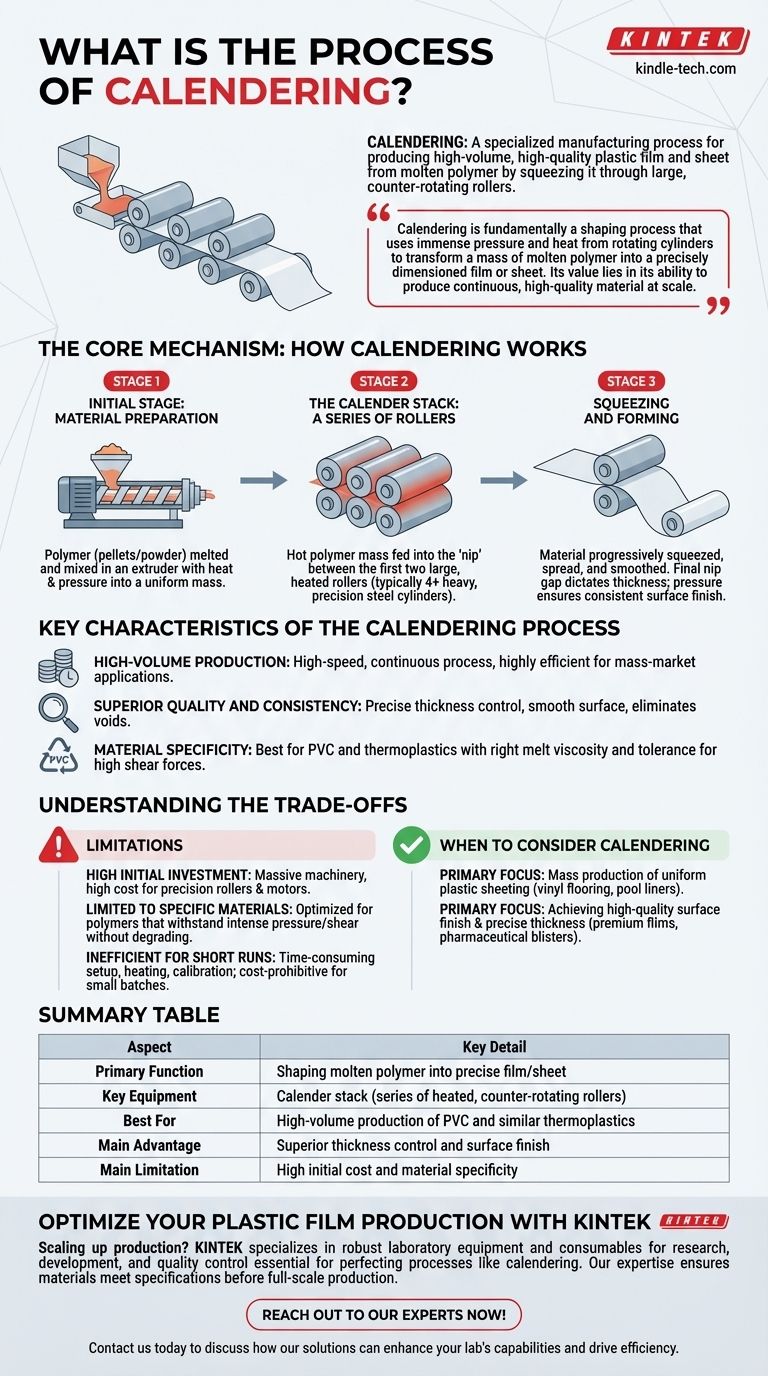
In manufacturing, calendering is a specialized process for producing high-volume, high-quality plastic film and sheet from a molten polymer. The core of the method involves squeezing the heated, pliable material through a series of large, counter-rotating rollers to form it into a continuous layer of precise thickness. It is most commonly associated with PVC and other modified thermoplastics.

Calendering is fundamentally a shaping process that uses immense pressure and heat from rotating cylinders to transform a mass of molten polymer into a precisely dimensioned film or sheet. Its value lies in its ability to produce continuous, high-quality material at scale.
What is the process of calendering? A Guide to High-Volume Plastic Film Production

The Core Mechanism: How Calendering Works

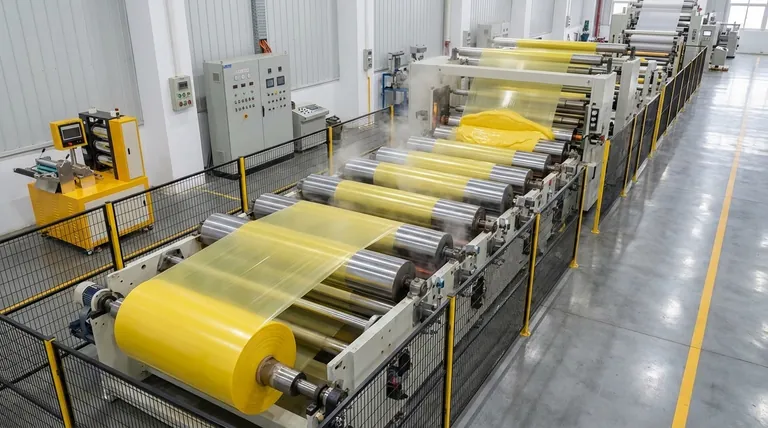
The calendering process is a continuous operation that moves from raw material to a finished roll of film or sheet in a seamless flow. It can be broken down into distinct stages centered around the "calender stack" of rollers.

The Initial Stage: Material Preparation

The process begins by preparing the polymer. The plastic, often in pellet or powder form, is melted and mixed in an extruder, where it is subjected to intense heat and pressure to create a uniform, viscous mass ready for forming.

The Calender Stack: A Series of Rollers

This hot polymer mass is then fed directly into the gap, or "nip," between the first two large, heated rollers in a machine known as a calender. These machines typically use four or more of these heavy, precision-engineered steel cylinders.

Squeezing and Forming

As the material passes through the successive gaps between the rollers, it is progressively squeezed, spread, and smoothed. The gap size between the final set of rollers dictates the final thickness of the sheet, while the immense pressure ensures a consistent, high-quality surface finish.

Key Characteristics of the Calendering Process

Understanding the defining features of calendering helps clarify why it is chosen over other film and sheet production methods.

High-Volume Production

Calendering is a high-speed, continuous process. Once running, it can produce vast quantities of film or sheeting with remarkable efficiency, making it ideal for mass-market applications.

Superior Quality and Consistency

The process excels at producing films with very precise thickness control and a smooth, uniform surface. The heavy rollers apply enormous pressure, which eliminates voids and imperfections in the material.

Material Specificity

This method is not suitable for all plastics. It is mainly used for PVC and certain other thermoplastics that have the right melt viscosity and tolerance for the high shear forces involved in the process.

Understanding the Trade-offs

While powerful, calendering is not a universal solution. Its specialized nature comes with specific limitations that are critical to consider.

High Initial Investment

Calendering lines involve massive, heavy machinery that requires significant capital investment. The cost of the precision rollers and the powerful motors needed to drive them makes this an expensive technology to implement.

Limited to Specific Materials

The process is optimized for materials that can withstand the intense pressure and shear forces without degrading. This narrows the range of compatible polymers compared to other methods like extrusion.

Inefficient for Short Runs

The setup, heating, and calibration of a calendering line are time-consuming. This makes the process highly inefficient and cost-prohibitive for small production volumes or custom one-off jobs.

When to Consider Calendering

The decision to use calendering is driven entirely by the specific goals of your production environment.

  • If your primary focus is mass production of uniform plastic sheeting: Calendering is an ideal choice due to its high speed and consistent, repeatable output for products like vinyl flooring or pool liners.
  • If your primary focus is achieving a high-quality surface finish and precise thickness: The immense pressure of the rollers makes calendering superior for applications like premium decorative films or pharmaceutical blister packs.
  • If your primary focus is low-volume production or material versatility: Alternative methods like flat die extrusion would be more cost-effective and flexible for smaller projects or a wider range of plastics.

Ultimately, choosing calendering is a strategic decision for large-scale operations where material consistency and production volume are paramount.

Summary Table:

Aspect Key Detail
Primary Function Shaping molten polymer into precise film/sheet
Key Equipment Calender stack (series of heated, counter-rotating rollers)
Best For High-volume production of PVC and similar thermoplastics
Main Advantage Superior thickness control and surface finish
Main Limitation High initial cost and material specificity

Optimize Your Plastic Film Production with KINTEK

Are you scaling up production of high-quality PVC or thermoplastic sheets? The precision and consistency of the calendering process are critical to your success. At KINTEK, we specialize in providing robust laboratory equipment and consumables that support the research, development, and quality control essential for perfecting manufacturing processes like calendering.

Our expertise helps ensure your materials meet exact thickness and finish specifications before full-scale production. Contact us today to discuss how our solutions can enhance your lab's capabilities and drive efficiency in your manufacturing pipeline.

Reach out to our experts now!

Visual Guide

What is the process of calendering? A Guide to High-Volume Plastic Film Production Visual Guide

Related Products

People Also Ask

Related Products

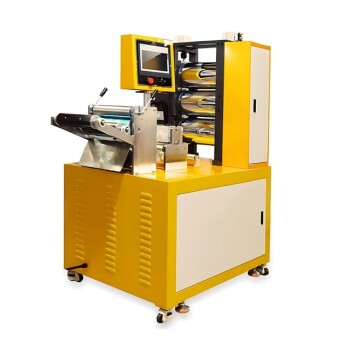
Small Lab Rubber Calendering Machine

Small Lab Rubber Calendering Machine

Small lab rubber calendering machine is used for producing thin, continuous sheets of plastic or rubber materials. It is commonly employed in laboratories, small-scale production facilities, and prototyping environments to create films, coatings, and laminates with precise thickness and surface finish.

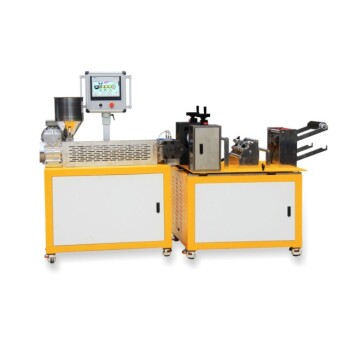
Lab Plastic PVC Calender Stretch Film Casting Machine for Film Testing

Lab Plastic PVC Calender Stretch Film Casting Machine for Film Testing

The cast film machine is designed for the molding of polymer cast film products and has multiple processing functions such as casting, extrusion, stretching, and compounding.

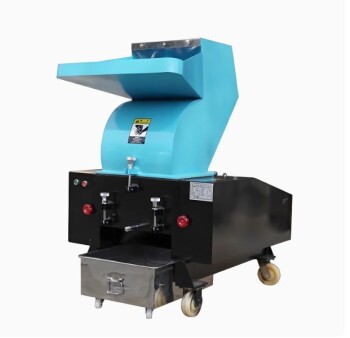
Powerful Plastic Crusher Machine

Powerful Plastic Crusher Machine

KINTEK's powerful plastic crusher machines process 60-1350 KG/H of diverse plastics, ideal for labs and recycling. Durable, efficient, and customizable.

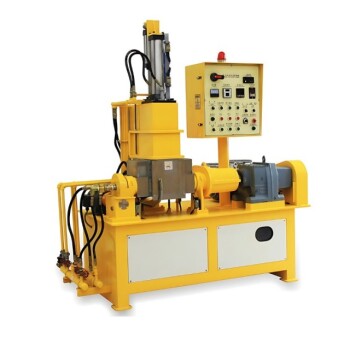
Lab Internal Rubber Mixer Rubber Kneader Machine for Mixing and Kneading

Lab Internal Rubber Mixer Rubber Kneader Machine for Mixing and Kneading

Lab internal rubber mixer is suitable for mixing, kneading and dispersing various chemical raw materials such as plastics, rubber, synthetic rubber, hot melt adhesive and various low-viscosity materials.

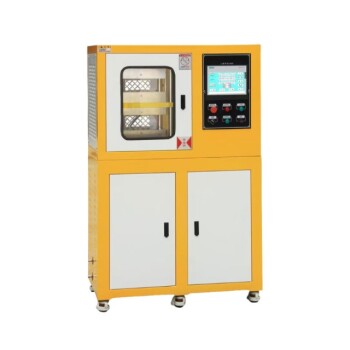
Rubber Vulcanizer Vulcanizing Machine Plate Vulcanizing Press for Lab

Rubber Vulcanizer Vulcanizing Machine Plate Vulcanizing Press for Lab

The Plate vulcanizing press is a kind of equipment used in the production of rubber products, mainly used for the vulcanization of rubber products. Vulcanization is a key step in rubber processing.

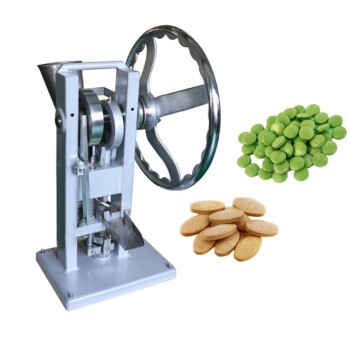
Single Punch Manual Tablet Press Machine TDP Tablet Punching Machine

Single Punch Manual Tablet Press Machine TDP Tablet Punching Machine

Single punch manual tablet punching machine can press various granular, crystal or powdery raw materials with good fluidity into disc-shaped, cylindrical, spherical, convex, concave and other various geometric shapes (such as square, triangle, ellipse, capsule shape, etc.), and can also press products with text and patterns.

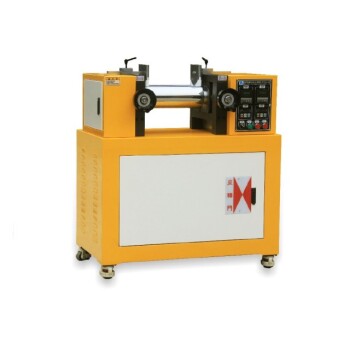
Open Type Two Roll Mixing Mill Machine for Rubber Crusher

Open Type Two Roll Mixing Mill Machine for Rubber Crusher

Rubber crusher open mixing mill/Open two roller rubber mixing mill machine is suitable for mixing and dispersing rubber, plastic raw materials, pigments, masterbatches and other high molecular polymers.

Cold Isostatic Pressing Machine CIP for Small Workpiece Production 400Mpa

Cold Isostatic Pressing Machine CIP for Small Workpiece Production 400Mpa

Produce uniformly high-density materials with our Cold Isostatic Press. Ideal for compacting small workpieces in production settings. Widely used in powder metallurgy, ceramics, and biopharmaceutical fields for high-pressure sterilization and protein activation.

Lab Scale Rotary Single Punch Tablet Press Machine TDP Tablet Punching Machine

Lab Scale Rotary Single Punch Tablet Press Machine TDP Tablet Punching Machine

This machine is a single-pressure automatic rotating, continuous tableting machine that compresses granular raw materials into various tablets. It is mainly used for tablet production in the pharmaceutical industry, and is also suitable for chemical, food, electronics and other industrial sectors.

Automatic High Temperature Heated Hydraulic Press Machine with Heated Plates for Lab

Automatic High Temperature Heated Hydraulic Press Machine with Heated Plates for Lab

The High Temperature Hot Press is a machine specifically designed for pressing, sintering and processing materials in a high temperature environment. It is capable of operating in the range of hundreds of degrees Celsius to thousands of degrees Celsius for a variety of high temperature process requirements.

Manual High Temperature Heated Hydraulic Press Machine with Heated Plates for Lab

Manual High Temperature Heated Hydraulic Press Machine with Heated Plates for Lab

The High Temperature Hot Press is a machine specifically designed for pressing, sintering and processing materials in a high temperature environment. It is capable of operating in the range of hundreds of degrees Celsius to thousands of degrees Celsius for a variety of high temperature process requirements.

Single Punch Electric Tablet Press Machine TDP Tablet Punching Machine

Single Punch Electric Tablet Press Machine TDP Tablet Punching Machine

The electric tablet punching machine is a laboratory equipment designed for pressing various granular and powdery raw materials into discs and other geometric shapes. It is commonly used in pharmaceutical, healthcare products, food, and other industries for small batch production and processing. The machine is compact, lightweight, and easy to operate, making it suitable for use in clinics, schools, laboratories, and research units.

Automatic Laboratory Heat Press Machine

Automatic Laboratory Heat Press Machine

Precision automatic heat press machines for labs—ideal for material testing, composites, and R&D. Customizable, safe, and efficient. Contact KINTEK today!

Single Punch Tablet Press Machine and Mass Production Rotary Tablet Punching Machine for TDP

Single Punch Tablet Press Machine and Mass Production Rotary Tablet Punching Machine for TDP

Rotary tablet punching machine is an automatic rotating and continuous tableting machine. It is mainly used for tablet manufacturing in the pharmaceutical industry, and is also suitable for industrial sectors such as food, chemicals, batteries, electronics, ceramics, etc. to compress granular raw materials into tablets.

Electric button battery sealing machine

Electric button battery sealing machine

The electric button battery sealing machine is a high-performance packaging equipment designed for mass production of button batteries (such as CR series, LR series, SR series, etc.), suitable for electronic manufacturing, new energy research and development, and industrial automation production lines.

Automatic Lab Cold Isostatic Press CIP Machine Cold Isostatic Pressing

Automatic Lab Cold Isostatic Press CIP Machine Cold Isostatic Pressing

Efficiently prepare samples with our Automatic Lab Cold Isostatic Press. Widely used in material research, pharmacy, and electronic industries. Provides greater flexibility and control compared to electric CIPs.

Manual button battery sealing machine (digital display)

Manual button battery sealing machine (digital display)

The manual button battery sealing machine is a small device specially used for button battery packaging. It is easy to operate and suitable for laboratories and small batch production to ensure that the battery is firmly sealed and improve production efficiency.

Manual Heated Hydraulic Press Machine with Heated Plates for Laboratory Hot Press

Manual Heated Hydraulic Press Machine with Heated Plates for Laboratory Hot Press

The Manual Heat Press is a versatile piece of equipment suitable for a variety of applications, operated by a manual hydraulic system that applies controlled pressure and heat to the material placed on the piston.

Vacuum Hot Press Furnace Machine for Lamination and Heating

Vacuum Hot Press Furnace Machine for Lamination and Heating

Experience clean and precise lamination with Vacuum Lamination Press. Perfect for wafer bonding, thin-film transformations, and LCP lamination. Order now!


Leave Your Message