The primary purpose of grinding N10276 alloy samples with 1000-mesh silicon carbide (SiC) sandpaper is to establish a standardized, uniform initial surface state across all specimens prior to high-temperature exposure. This preparation step removes inconsistencies caused by prior machining and ensures that the resulting corrosion data is reproducible and comparable.
Surface condition is a critical variable in corrosion science. By unifying surface roughness, researchers ensure that the corrosion layer nucleates and grows based on the material's chemistry and the environment, rather than being dictated by random surface defects or machining artifacts.
The Science of Surface Standardization
Unifying Surface Roughness
In any comparative study, variables must be isolated. Grinding all samples to the same grit (1000-mesh) creates a consistent surface roughness across the entire batch.
Without this step, variations in surface texture would change the effective surface area exposed to the corrosive environment. This would lead to skewed data where rougher samples appear to corrode faster simply due to increased exposure area.
Eliminating Machining History
Raw samples often carry original machining marks, such as deep grooves or localized stress points from the cutting process.
These marks can act as artificial stress concentrators or preferential sites for attack. Grinding removes these artifacts, ensuring the experiment measures the alloy's intrinsic resistance rather than the quality of the machining.
Impact on Corrosion Kinetics
Controlling Nucleation Sites
Corrosion does not happen instantaneously across a surface; it begins at specific nucleation sites.
A surface ground to 1000-mesh provides a controlled topographic landscape. This ensures that the corrosion layer nucleates uniformly across the sample, rather than clustering around deep scratches or irregular defects.
Promoting Uniform Layer Growth
For accurate kinetic modeling, the oxide or corrosion layer must grow evenly.
The primary reference indicates that this preparation ensures the corrosion layer grows uniformly under controlled conditions. This uniformity is essential for accurately measuring weight change or oxide thickness over time.
Understanding the Limitations
Mechanical Stress Introduction
While grinding removes macroscopic machining marks, it is essentially a mechanical process that introduces its own thin layer of cold work (deformation) to the surface.
While 1000-mesh is fine enough to minimize this, it is not a "stress-free" surface. For extremely sensitive electrochemical studies, further steps like electropolishing might be required, but for high-temperature corrosion, 1000-mesh grinding is the standard trade-off between surface quality and preparation practicality.
Particle Embedding
There is a minor risk that silicon carbide (SiC) particles from the sandpaper can become embedded in the soft alloy matrix.
While generally inert, these particles can technically alter surface heterogeneity. However, in the context of high-temperature corrosion, the benefits of a uniform roughness vastly outweigh the negligible risk of SiC inclusion.
Making the Right Choice for Your Goal
To maximize the validity of your N10276 corrosion experiments, apply this preparation step consistently:
- If your primary focus is Reproducibility: strictly enforce the 1000-mesh limit for all samples to ensure that data spread is caused by the environment, not sample variance.
- If your primary focus is Comparative Analysis: treat all control and variable samples with the exact same grinding protocol to legitimize the comparison of their corrosion rates.
Standardizing your sample preparation is the single most effective way to reduce experimental noise and guarantee data integrity.
Summary Table:
| Preparation Factor | Impact on Corrosion Experiment | Benefit of 1000-Mesh SiC Grinding |
|---|---|---|
| Surface Roughness | Affects effective exposure area | Standardizes roughness to prevent skewed kinetic data |
| Machining Marks | Acts as artificial nucleation sites | Removes grooves and stress points from prior machining |
| Layer Growth | Can lead to uneven oxide formation | Promotes uniform nucleation and consistent layer growth |
| Data Integrity | High variance in results | Reduces experimental noise for better reproducibility |
Elevate Your Material Research with KINTEK
Precision in sample preparation is the foundation of scientific breakthrough. KINTEK specializes in high-performance laboratory equipment designed to meet the rigorous demands of material science and high-temperature research.
Whether you need advanced crushing and milling systems for sample processing, high-temperature furnaces (muffle, vacuum, or tube) for corrosion testing, or specialized high-pressure reactors and autoclaves, we provide the tools necessary for uniform and reproducible results.
Ready to optimize your lab's performance? Contact KINTEK today to explore our comprehensive range of furnaces, hydraulic presses, and essential consumables like SiC media and ceramics. Let our experts help you achieve superior data integrity in every experiment.
References
- Manuela Nimmervoll, Roland Haubner. Corrosion of N10276 in a H2S, HCl, and CO2 Containing Atmosphere at 480 °C and 680 °C. DOI: 10.3390/met11111817
This article is also based on technical information from Kintek Solution Knowledge Base .
Related Products
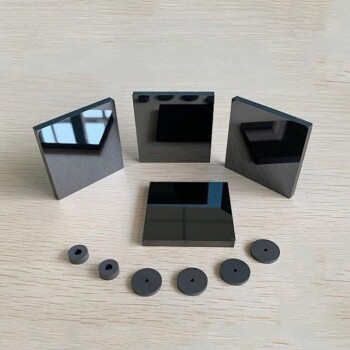
- Silicon Carbide (SIC) Ceramic Sheet Wear-Resistant Engineering Advanced Fine Ceramics
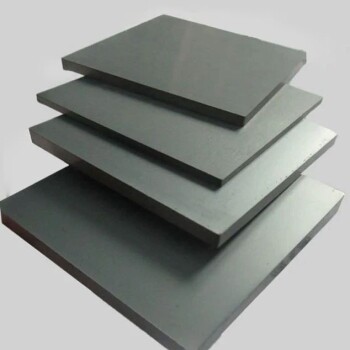
- Silicon Carbide (SIC) Ceramic Plate for Engineering Advanced Fine Ceramics
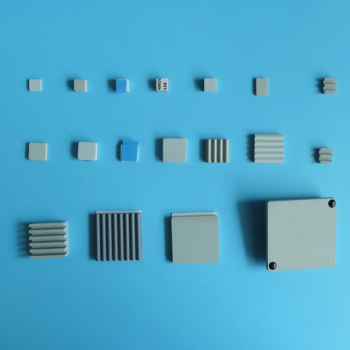
- Silicon Carbide (SIC) Ceramic Sheet Flat Corrugated Heat Sink for Engineering Advanced Fine Ceramics
- Precision Machined Silicon Nitride (SiN) Ceramic Sheet for Engineering Advanced Fine Ceramics
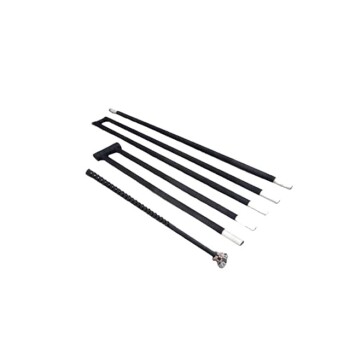
- Silicon Carbide SiC Thermal Heating Elements for Electric Furnace
People Also Ask
- What is the strongest ceramics? Silicon Carbide Leads in Hardness & Thermal Strength
- What are the properties and applications of silicon carbide ceramics? Solve Extreme Engineering Challenges
- What are the uses of silicon carbide ceramics in different industries? Master Extreme Performance in Aerospace, Semiconductors & More
- What are the properties of SiC? Unlock High-Temperature, High-Frequency Performance
- What are the applications of silicon carbide? From Abrasives to High-Tech Semiconductors