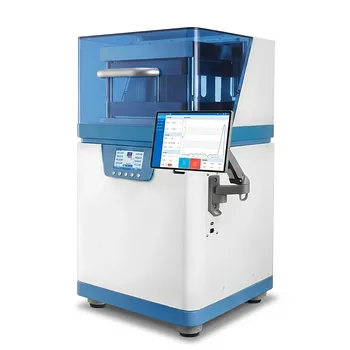
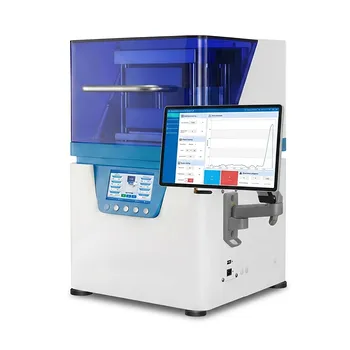
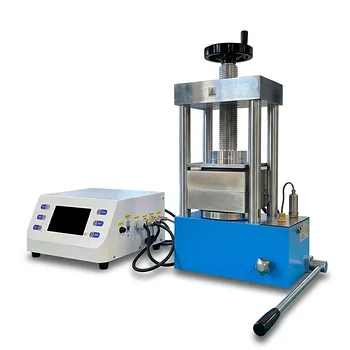
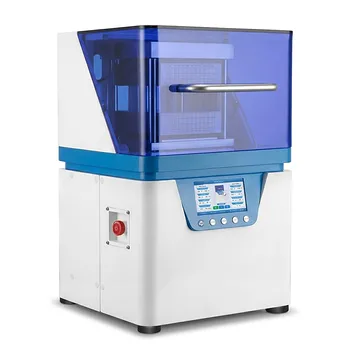
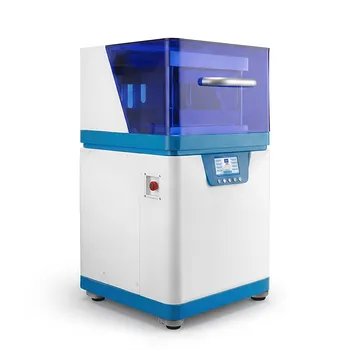
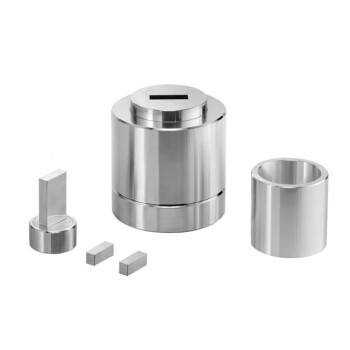
Sample preparation via laboratory hydraulic press is the critical bridge between raw sludge biochar and high-fidelity analytical data. By applying significant pressure—often reaching tens of tons—the press transforms loose, heterogeneous biochar powder into dense, standardized pellets. This process is essential for minimizing physical deviations and ensuring the consistency required for advanced spectroscopic and mechanical characterization.
The primary purpose of a laboratory hydraulic press is to standardize sample morphology and density. This eliminates scattering interference and physical variability, allowing for accurate, repeatable measurements in techniques like XRF, FTIR, and mechanical strength testing.
Enhancing Spectroscopic Accuracy
The hydraulic press is indispensable for preparing samples for X-ray fluorescence (XRF) and infrared (FTIR) spectroscopy.
Minimizing Signal Interference
Loose biochar powder creates irregular surfaces that cause light or X-ray scattering, which degrades signal quality. By compressing the sample into a flat, uniform disk, the press improves the signal-to-noise ratio and ensures that instrumental detectors receive a clean, representative response.
Optimizing Light Transmission for FTIR
For Fourier-Transform Infrared Spectroscopy, the press is used to create transparent pellets by mixing biochar with potassium bromide (KBr). The high pressure ensures the formation of a light-transmitting disk free of air bubbles, which is necessary to identify key functional groups like phosphate, Fe-O, and C=O on the biochar surface.
Ensuring Consistent Elemental Detection
In XRF analysis, the density of the sample pellet directly impacts the depth of X-ray penetration. Using a hydraulic press ensures a consistent sample density, allowing for the precise and repeatable detection of inorganic elements within the sludge-based matrix.
Structural and Mechanical Characterization
Beyond spectroscopy, the physical form of the biochar pellet allows for the evaluation of its industrial utility.
Standardizing Geometry for Strength Testing
To assess how biochar will behave in industrial applications, researchers must test its durability. A hydraulic press uses precision molds to create standardized geometric shapes, such as briquettes, which are then used to measure mechanical strength and crush resistance.
Evaluating Electrode Performance
When biochar is destined for use as an electrode material, structural compactness is vital. Precise pressure control during pelletization ensures the structural uniformity required to obtain reliable data on electrical conductivity and electrochemical stability.
Improving Practical Application Modeling
Characterization often involves simulating how biochar will perform in real-world environments, such as filtration or carbon storage.
Increasing Packing Density for Adsorption
In adsorption studies, the hydraulic press is used to mold modified biochar into pellets that mimic an adsorption bed. This increased packing density reduces gas penetration resistance and prevents the loss of material as dust when subjected to high-speed gas flows.
Enhancing Volumetric Energy Density
For studies focusing on biochar as a fuel source, the press is used to evaluate densification. This process increases the volumetric energy density, providing a clearer picture of the material's transportation, storage, and combustion characteristics.
Understanding the Trade-offs
While densification is necessary for characterization, the process introduces variables that must be managed.
Risk of Pore Deformation
Applying excessive pressure can collapse the delicate pore structure of the biochar. This may lead to underestimated surface area or altered adsorption profiles during characterization if the pressure exceeds the material’s structural limits.
Sample Contamination and Heterogeneity
The small sample sizes used in pelletization (often just a few milligrams for FTIR) mean that any local heterogeneity in the sludge biochar can skew results. Furthermore, failure to clean precision molds between runs can lead to cross-contamination, compromising the integrity of the analytical data.
How to Apply This to Your Characterization Goal
The choice of pressure and preparation method should align with your specific analytical objectives.
- If your primary focus is elemental quantification (XRF): Prioritize high-pressure pelletization to ensure a perfectly flat surface and maximum density for stable X-ray interactions.
- If your primary focus is chemical bonding (FTIR): Focus on the precise KBr-to-sample ratio and use moderate pressure (approx. 20 MPa) to achieve transparency without crushing the molecular structure.
- If your primary focus is industrial handling (Fuel/Adsorbent): Use the press to create larger briquettes or pellets to test how densification impacts energy density and dust emission levels.
A laboratory hydraulic press is not merely a shaping tool, but a precision instrument that ensures the physical state of the sample does not interfere with the accuracy of the analytical result.
Summary Table:
| Analytical Technique | Role of Hydraulic Press | Key Benefit for Biochar Analysis |
|---|---|---|
| FTIR Spectroscopy | Compresses sample with KBr into a disk | Eliminates scattering and identifies functional groups |
| XRF Analysis | Standardizes pellet density | Ensures consistent X-ray penetration and elemental data |
| Mechanical Testing | Molds into precise geometric briquettes | Allows for accurate measurement of crush resistance |
| Adsorption Studies | Increases packing density | Mimics adsorption beds and prevents material loss as dust |
| Fuel Evaluation | Densifies powder into pellets | Increases volumetric energy density for combustion testing |
Elevate Your Biochar Research with KINTEK Precision
High-fidelity analytical data starts with flawless sample preparation. KINTEK specializes in providing researchers with the high-performance laboratory equipment needed to transform raw materials into precise analytical samples.
From our robust laboratory hydraulic presses (pellet, hot, and isostatic) to our advanced crushing and milling systems, we offer everything you need to ensure sample uniformity and density. Beyond preparation, KINTEK supports your entire workflow with high-temperature furnaces (muffle, tube, vacuum), CVD/PECVD systems, and high-pressure reactors for biochar modification and synthesis.
Ready to minimize physical deviations and maximize your lab's efficiency?
Contact KINTEK Today to Find Your Perfect Lab Solution
References
- Neelaambhigai Mayilswamy, Balasubramanian Kandasubramanian. Sludge-derived biochar: Physicochemical characteristics for environmental remediation. DOI: 10.1063/5.0137651
This article is also based on technical information from Kintek Solution Knowledge Base .
Related Products
- Laboratory Hydraulic Press Split Electric Lab Pellet Press
- Automatic Laboratory Hot Press 400x400 mm with Programmable High Temperature and Hydraulic Force Control
- Fully Automatic Heated Hydraulic Lab Press for Materials Sintering and Sample Preparation
- Laboratory Hydraulic Press Lab Pellet Press Machine for Glove Box
- Laboratory Hydraulic Press Lab Pellet Press for Button Battery
People Also Ask
- What role does a laboratory hydraulic press play in platinum recovery research? Enhancing Sample Precision
- What are the specific applications of a lab hydraulic press in biochar evaluation? Optimize density and data accuracy.
- What are the roles of a laboratory hydraulic press and stainless steel molds in the preparation of graphite samples?
- What is the role of a laboratory hydraulic press in electrode prep? Maximize Energy Density & Sealing Precision
- Why must a laboratory hydraulic press equipped with cylindrical molds be used when preparing BZY green bodies? High Density