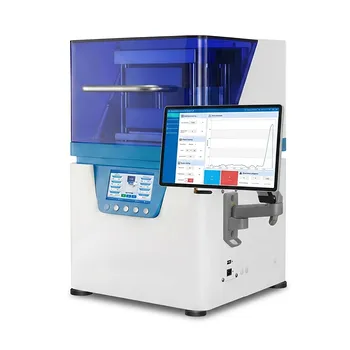
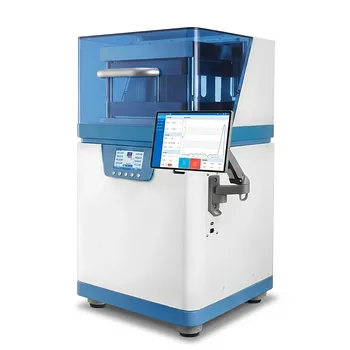
The laboratory hydraulic press and stainless steel molds serve as the primary mechanical system for transforming loose graphite powder into dense, uniform, and geometrically precise solid samples. This process is essential for normalizing data across experiments, ensuring structural integrity for electrical testing, and preparing high-quality pellets for spectroscopic analysis.
By applying controlled, high-magnitude pressure within a rigid mold, this equipment eliminates internal voids and standardizes the sample's surface area. This ensures that any subsequent measurements—whether chemical, electrical, or optical—reflect the material's true properties rather than preparation inconsistencies.
Achieving Geometric Uniformity and Repeatability
Normalizing Surface Area for Calculations
A hydraulic press compresses modified graphite powder into uniform disk-shaped samples with a consistent geometric surface area. This standardization is vital for normalizing oxidation rate calculations, ensuring that comparisons between different samples are scientifically valid.
Eliminating Experimental Variables
The mechanical molding process effectively eliminates void gradients between powder particles. By removing these inconsistencies, researchers significantly improve the repeatability of experimental data, as the physical structure of the sample remains constant across trials.
Precision through Rigid Tooling
High-strength stainless steel molds provide the necessary rigidity to withstand intense pressure without deforming. This ensures the resulting graphite pellets have precise dimensions and flat surfaces, which are prerequisites for accurate contact angle measurements and surface energy calculations.
Enhancing Physical and Electrochemical Properties
Improving Density and Conductivity
In the production of graphite-PVC electrodes, the press creates a tight internal structure that provides stable mechanical strength. This high-density compaction is critical for achieving excellent electrical conductivity, which is necessary for electrochemical degradation applications.
Facilitating Material Bonding
When used with heated molds, the press allows graphite fillers and binders to rearrange and bond while in a softened state. This "hot-pressing" technique increases the initial density of the green body and eliminates internal voids, providing a stable foundation for high-temperature sintering.
Structural Integrity for Post-Processing
By applying precise pressure (such as 7.8 MPa), the hydraulic press increases the structural integrity of composite powders. This stability prevents the sample from crumbling during subsequent stages, such as silicification reactions or long-duration scanning.
Sample Preparation for Specialized Analysis
High-Quality Spectroscopic Pellets
For FT-IR analysis, a manual hydraulic press compresses graphite and potassium bromide (KBr) mixtures into transparent pellets. Precise pressure control ensures uniform thickness and the absence of air bubbles, which are essential for acquiring high-quality spectra to identify functional groups.
Rapid XRF Sample Production
The hydraulic press is a versatile tool for X-ray fluorescence spectroscopy (XRF), where it compresses powder mixtures into solid pellets. Its ability to deliver varied speeds and pressures allows for rapid, high-volume sample preparation of non-destructive analytical specimens.
Mechanical Fixation and Stability
Beyond simple compaction, the press is used for the mechanical fixation and encapsulation of single-crystal samples. By securely bonding the sample to a support plate, it reduces imaging artifacts caused by vibrations or loosening during long-duration laboratory scans.
Understanding the Trade-offs and Limitations
Risk of Pressure-Induced Defects
While high pressure increases density, excessive or uneven force can lead to internal stress or cracking within the graphite pellet. If the pressure is released too quickly, "capping" or delamination can occur, where the top layers of the sample pull away from the body.
Mold Wear and Contamination
Repeated use of stainless steel molds at high pressures can lead to surface scoring or deformation over time. Furthermore, if the molds are not meticulously cleaned, cross-contamination between different graphite grades can occur, skewing sensitive analytical results like FT-IR or XRF.
Thermal Constraints in Hot-Pressing
When using heated molds to prepare graphite green bodies, precise temperature control is as important as pressure. If the heat is inconsistent, the binder pitch may not flow correctly, resulting in non-uniform density and localized structural weaknesses.
How to Apply This to Your Project
Depending on your specific research goals, the configuration of your hydraulic press and mold should be adjusted accordingly.
- If your primary focus is electrochemical testing: Prioritize high-pressure compaction to maximize density and electrical conductivity within the graphite matrix.
- If your primary focus is chemical characterization (FT-IR/XRF): Focus on pressure precision and mold cleanliness to ensure transparent, bubble-free pellets that provide clear spectral data.
- If your primary focus is surface energy measurement: Utilize a vacuum hydraulic press and polished stainless steel molds to produce perfectly flat, non-porous surfaces without the use of binders.
- If your primary focus is structural material development: Implement a heating hydraulic press to facilitate the proper rearrangement of fillers and binders during the compaction phase.
Properly calibrated pressure and high-quality molds are the foundation of reliable, reproducible graphite material science.
Summary Table:
| Application | Role of Press/Mold | Key Benefit |
|---|---|---|
| Electrochemical Testing | High-pressure compaction | Maximizes density and electrical conductivity |
| Spectroscopy (FT-IR/XRF) | Controlled pelletizing | Produces transparent, bubble-free pellets for clear data |
| Material Development | Heated molding (Hot-pressing) | Facilitates binder bonding and structural integrity |
| Surface Analysis | Precision rigid tooling | Creates flat, non-porous surfaces for accurate measurement |
Elevate Your Graphite Research with KINTEK Precision
Achieving repeatable and scientifically valid data starts with superior sample preparation. KINTEK provides the high-performance tools you need to ensure structural integrity and geometric precision in every pellet.
Our extensive portfolio includes:
- Hydraulic Presses: Pellet, hot, and isostatic presses for optimal density.
- Material Preparation: Crushing and milling systems, high-temperature furnaces, and precision molds.
- Specialized Analysis: High-temperature high-pressure reactors, electrolytic cells, and battery research tools.
Whether you are preparing specimens for FT-IR, XRF, or advanced electrochemical degradation, KINTEK’s laboratory equipment delivers the reliability your research demands.
Ready to optimize your laboratory workflow? Contact our specialists today to find the perfect equipment for your specific applications!
References
- Junhua Jiang, Yaqiao Wu. Catalyzed oxidation of nuclear graphite by simulated fission products Sr, Eu, and I. DOI: 10.1016/j.jnucmat.2023.154255
This article is also based on technical information from Kintek Solution Knowledge Base .
Related Products
- Laboratory Hydraulic Press Split Electric Lab Pellet Press
- Laboratory Hydraulic Press Lab Pellet Press Machine for Glove Box
- Laboratory Hydraulic Press Lab Pellet Press for Button Battery
- Automatic Laboratory Hydraulic Pellet Press Machine for Lab Use
- Fully Automatic Heated Hydraulic Lab Press for Materials Sintering and Sample Preparation
People Also Ask
- What is the role of a laboratory hydraulic press in electrode prep? Maximize Energy Density & Sealing Precision
- How does a laboratory hydraulic press ensure the quality of alumina-forming alloy green bodies? Optimize CSP Research
- How is a laboratory hydraulic press used to evaluate the mechanical performance of nano-modified concrete? Expert Guide
- Why is a laboratory hydraulic press used for ASSB assembly? Achieving 392 MPa for Optimal Solid-State Battery Density
- How does a laboratory hydraulic press contribute to Fe-Cu-Ni-Sn-VN green bodies? Master High-Density Compaction