Knowledge What is the purpose of using a precision laboratory oven for solid-state battery testing? Ensure High-Temp Stability
Author avatar

Tech Team · Kintek Solution

Updated 3 days ago

What is the purpose of using a precision laboratory oven for solid-state battery testing? Ensure High-Temp Stability


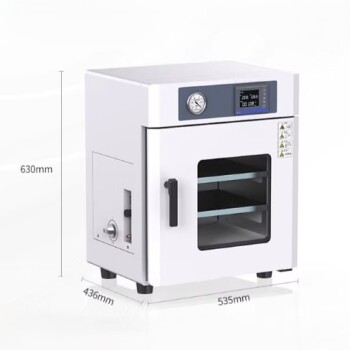
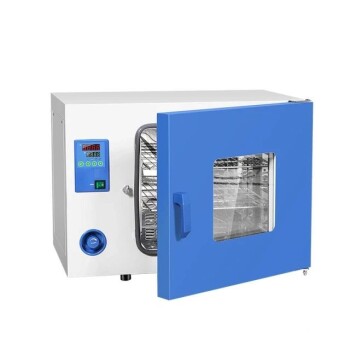
A precision temperature-controlled laboratory oven serves as a critical environmental chamber to ensure valid testing data for solid-state batteries. Its primary purpose is to maintain a stable high-temperature environment—typically between 60°C and 100°C—which is required to activate the ionic conductivity necessary for polymer electrolytes to function and to stress-test the battery's safety mechanisms.

Core Takeaway: Solid-state batteries, particularly those using polymer electrolytes, often require elevated temperatures to achieve optimal performance. The laboratory oven provides the precise thermal stability needed to activate these chemical processes while simultaneously acting as a containment zone for evaluating thermal abuse recovery.

The Critical Role of Temperature in Solid-State Chemistry

To understand the necessity of the oven, one must look beyond the hardware and look at the chemistry of the battery cell itself.

Activating Ionic Conductivity

Standard liquid electrolytes conduct ions easily at room temperature, but solid-state materials function differently.

In many solid-state designs, specifically those utilizing polymer electrolytes, the material requires thermal energy to facilitate ion movement.

The 60°C to 100°C Window

The laboratory oven allows researchers to dial in a specific range, usually between 60°C and 100°C.

Within this window, the polymer structure becomes sufficiently flexible to allow lithium ions to migrate from the cathode to the anode. Without this precise heating, the battery may appear non-functional simply because the electrolyte is too rigid to conduct current.

Assessing Durability Under Thermal Stress

Beyond merely activating the battery, the oven serves as a stress-test chamber.

Simulating Extreme Conditions

Batteries in real-world applications (such as electric vehicles) are subjected to harsh environments.

The oven allows engineers to simulate these extreme thermal conditions in a controlled, repeatable manner to ensure the battery does not fail catastrophically when overheated.

Thermal Abuse Recovery

A key aspect of safety testing is "thermal abuse recovery."

This involves exposing the battery to high heat to degrade its performance intentionally, then observing if and how it recovers once the stress is removed. The precision of the oven ensures that the "abuse" is measured and consistent across different test samples.

Understanding the Trade-offs

While essential, relying on high-temperature testing introduces specific variables that researchers must manage.

The "Ideal" vs. The "Real"

Testing at 60°C–100°C provides excellent data on maximum performance, but it may not reflect the battery's efficiency at room temperature.

There is a risk of optimizing a battery that performs exceptionally well in the oven but struggles in colder, real-world climates.

Polymer Dependency

The reliance on the oven highlights a limitation in current polymer electrolyte technology.

If a battery requires the oven to function (to activate conductivity), it indicates the technology may not yet be ready for consumer applications where temperature control is passive or non-existent.

Making the Right Choice for Your Goal

The way you utilize the laboratory oven depends heavily on whether you are characterizing materials or validating safety.

  • If your primary focus is Electrolyte Performance: Use the oven to maintain a steady 60°C–80°C to ensure the polymer is fully activated, allowing you to measure peak ionic conductivity without thermal throttling.
  • If your primary focus is Safety Certification: Push the oven towards the 100°C upper limit to perform thermal abuse tests, documenting how the cell structure maintains integrity under stress.

The laboratory oven is not just a heating element; it is an activation tool that bridges the gap between latent chemical potential and measurable kinetic performance.

Summary Table:

Feature Purpose in Battery Testing Key Benefit
Temp Range (60°C-100°C) Activates ionic conductivity in polymer electrolytes Ensures optimal battery performance data
Precision Control Maintains stable thermal environments Eliminates variables for repeatable research
Safety Containment Facilitates thermal abuse recovery testing Evaluates cell integrity under extreme stress
Simulated Stress Mimics real-world EV operating conditions Validates durability and safety certifications

Elevate Your Battery Research with KINTEK Precision

Unlock the full potential of your energy storage innovations with KINTEK’s high-performance laboratory solutions. Whether you are characterizing next-generation polymer electrolytes or conducting rigorous safety certifications, our precision laboratory ovens and high-temperature high-pressure reactors provide the thermal stability your research demands.

From battery research tools and electrolytic cells to our advanced muffle and vacuum furnaces, KINTEK specializes in equipping world-class labs with the precision needed for breakthrough results. Ensure your solid-state batteries meet the highest standards of durability and performance today.

Ready to optimize your testing environment? Contact KINTEK experts now to find the perfect equipment for your specific application!

Related Products

People Also Ask

Related Products

Laboratory Scientific Electric Heating Blast Drying Oven

Laboratory Scientific Electric Heating Blast Drying Oven

The desktop fast autoclave sterilizer is a compact and reliable device used for rapid sterilization of medical, pharmaceutical, and research items.

High Temperature Muffle Oven Furnace for Laboratory Debinding and Pre Sintering

High Temperature Muffle Oven Furnace for Laboratory Debinding and Pre Sintering

KT-MD High temperature debinding and pre-sintering furnace for ceramic materials with various molding processes. Ideal for electronic components such as MLCC and NFC.

1200℃ Muffle Furnace Oven for Laboratory

1200℃ Muffle Furnace Oven for Laboratory

Upgrade your lab with our 1200℃ Muffle Furnace. Achieve fast, precise heating with Japan alumina fibers and Molybdenum coils. Features TFT touch screen controller for easy programming and data analysis. Order now!

Vertical Laboratory Tube Furnace

Vertical Laboratory Tube Furnace

Elevate your experiments with our Vertical Tube Furnace. Versatile design allows for operation under various environments and heat treatment applications. Order now for precise results!

Platinum Sheet Electrode for Battery Lab Applications

Platinum Sheet Electrode for Battery Lab Applications

Platinum sheet is composed of platinum, which is also one of the refractory metals. It is soft and can be forged, rolled and drawn into rod, wire, plate, tube and wire.

Dental Porcelain Zirconia Sintering Ceramic Furnace Chairside with Transformer

Dental Porcelain Zirconia Sintering Ceramic Furnace Chairside with Transformer

Experience top-notch sintering with Chairside Sintering Furnace with Transformer. Easy to operate, noise-free pallet, and automatic temperature calibration. Order now!

Twin Screw Extruder Plastic Granulation Machine

Twin Screw Extruder Plastic Granulation Machine

Twin screw extruder plastic granulation machine is designed for the mixing and processing experiments of engineering plastics, modified plastics, waste plastics and masterbatches.

Benchtop Laboratory Freeze Dryer for Lab Use

Benchtop Laboratory Freeze Dryer for Lab Use

Premium benchtop laboratory freeze dryer for lyophilization, preserving samples with ≤ -60°C cooling. Ideal for pharmaceuticals & research.

Evaporation Crucible for Organic Matter

Evaporation Crucible for Organic Matter

An evaporation crucible for organic matter, referred to as an evaporation crucible, is a container for evaporating organic solvents in a laboratory environment.

Custom PTFE Teflon Parts Manufacturer for Culture Dish and Evaporation Dish

Custom PTFE Teflon Parts Manufacturer for Culture Dish and Evaporation Dish

The PTFE culture dish evaporating dish is a versatile laboratory tool known for its chemical resistance and high-temperature stability. PTFE, a fluoropolymer, offers exceptional non-stick properties and durability, making it ideal for various applications in research and industry, including filtration, pyrolysis, and membrane technology.

Electron Beam Evaporation Coating Tungsten Crucible and Molybdenum Crucible for High Temperature Applications

Electron Beam Evaporation Coating Tungsten Crucible and Molybdenum Crucible for High Temperature Applications

Tungsten and molybdenum crucibles are commonly used in electron beam evaporation processes due to their excellent thermal and mechanical properties.

Metallographic Specimen Mounting Machine for Laboratory Materials and Analysis

Metallographic Specimen Mounting Machine for Laboratory Materials and Analysis

Precision metallographic mounting machines for labs—automated, versatile, and efficient. Ideal for sample prep in research and quality control. Contact KINTEK today!

Platinum Sheet Electrode for Laboratory and Industrial Applications

Platinum Sheet Electrode for Laboratory and Industrial Applications

Elevate your experiments with our Platinum Sheet Electrode. Crafted with quality materials, our safe and durable models can be tailored to fit your needs.

Custom PTFE Teflon Parts Manufacturer for PTFE Measuring Cylinder 10/50/100ml

Custom PTFE Teflon Parts Manufacturer for PTFE Measuring Cylinder 10/50/100ml

PTFE measuring cylinder are a rugged alternative to traditional glass cylinders. They are chemically inert over a wide temperature range (up to 260º C), have excellent corrosion resistance and maintain a low coefficient of friction, ensuring ease of use and cleaning.

Vacuum Heat Treat and Pressure Sintering Furnace for High Temperature Applications

Vacuum Heat Treat and Pressure Sintering Furnace for High Temperature Applications

Vacuum pressure sintering furnaces are designed for high temperature hot pressing applications in metal and ceramic sintering. Its advanced features ensure precise temperature control, reliable pressure maintenance, and a robust design for seamless operation.

Engineering Advanced Fine Ceramics Alumina Crucibles (Al2O3) for Thermal Analysis TGA DTA

Engineering Advanced Fine Ceramics Alumina Crucibles (Al2O3) for Thermal Analysis TGA DTA

TGA/DTA thermal analysis vessels are made of aluminum oxide (corundum or aluminum oxide). It can withstand high temperature and is suitable for analyzing materials that require high temperature testing.

Vacuum Cold Trap Direct Cold Trap Chiller

Vacuum Cold Trap Direct Cold Trap Chiller

Improve vacuum system efficiency and extend pump life with our Direct Cold Trap. No chilling fluid required, compact design with swivel casters. Stainless steel and glass options available.

Lab Scale Rotary Single Punch Tablet Press Machine TDP Tablet Punching Machine

Lab Scale Rotary Single Punch Tablet Press Machine TDP Tablet Punching Machine

This machine is a single-pressure automatic rotating, continuous tableting machine that compresses granular raw materials into various tablets. It is mainly used for tablet production in the pharmaceutical industry, and is also suitable for chemical, food, electronics and other industrial sectors.

Molybdenum Disilicide (MoSi2) Thermal Elements Electric Furnace Heating Element

Molybdenum Disilicide (MoSi2) Thermal Elements Electric Furnace Heating Element

Discover the power of Molybdenum Disilicide (MoSi2) Heating Element for high-temperature resistance. Unique oxidation resistance with stable resistance value. Learn more about its benefits now!

Engineering Advanced Fine Alumina Al2O3 Ceramic Crucible for Laboratory Muffle Furnace

Engineering Advanced Fine Alumina Al2O3 Ceramic Crucible for Laboratory Muffle Furnace

Alumina ceramic crucibles are used in some materials and metal melting tools, and flat-bottomed crucibles are suitable for melting and processing larger batches of materials with better stability and uniformity.


Leave Your Message