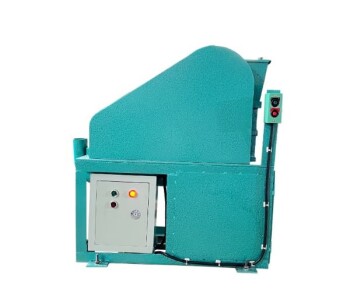
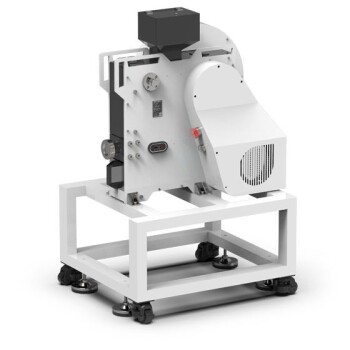
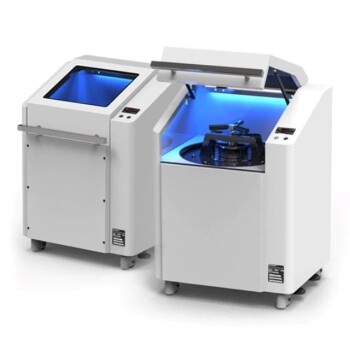
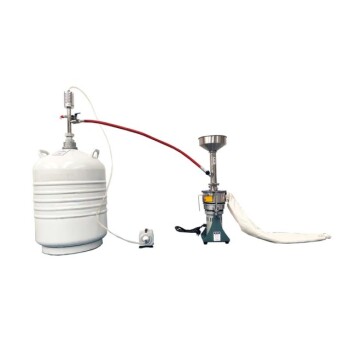
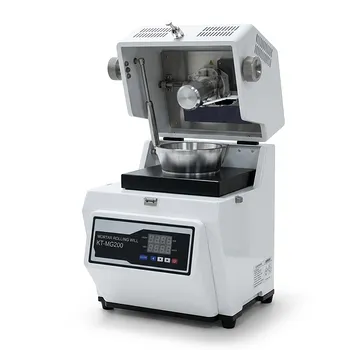
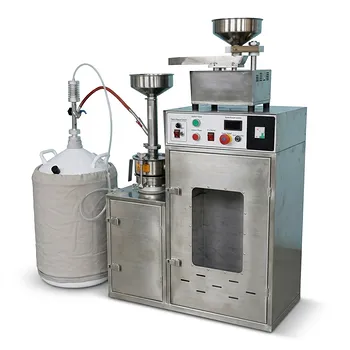
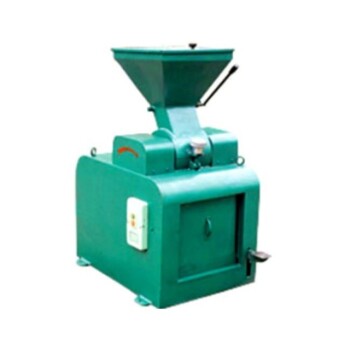
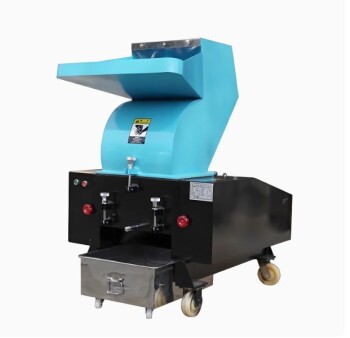
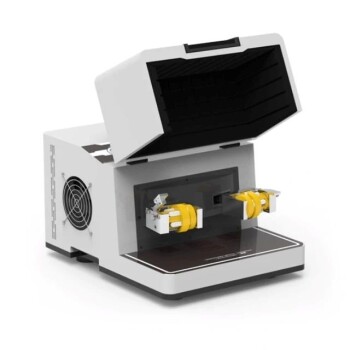
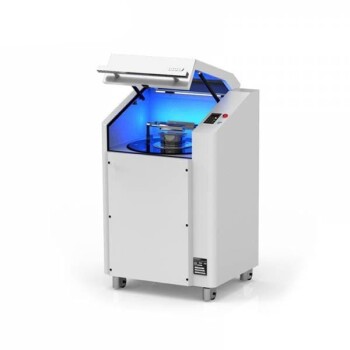
The primary purpose of grinding and crushing equipment in biomass pretreatment is to mechanically reduce raw feedstock into specific particle sizes, typically below 3mm. This size reduction dramatically increases the specific surface area of the material, acting as a critical enabler for efficient heat transfer and rapid chemical decomposition during thermochemical conversion.
Core Takeaway Physical pretreatment is the foundation of reactor efficiency. By increasing the surface area-to-volume ratio, you eliminate internal thermal resistance, allowing biomass to heat uniformly and react significantly faster, which ultimately reduces the total energy required for the conversion process.
The Physics of Particle Reduction
Increasing Specific Surface Area
Raw biomass is often irregular and bulky. Crushing equipment, such as hammer mills or blade mills, breaks these structures down into a standardized range.
This process exposes more of the material's internal structure. A higher specific surface area allows heat to penetrate the biomass more effectively from the outside in.
Eliminating Internal Heat Transfer Resistance
In large biomass particles, the outer surface may burn or char while the core remains cool. This creates a temperature gradient that slows down the process.
Reducing particle size minimizes this internal thermal resistance. Small particles achieve a state where the internal temperature effectively matches the surface temperature almost instantly.
Ensuring Uniform Heating
For processes like pyrolysis and gasification, consistency is vital. If particles vary in size, they will degrade at different rates, leading to unstable reactor conditions.
Grinding ensures that every particle entering the reactor has similar physical dimensions. This guarantees uniform heating, preventing cold spots and ensuring the entire batch reacts simultaneously.
Impact on Reaction Efficiency
Accelerating Reaction Kinetics
Thermochemical conversion is time-dependent. The faster the heat transfer, the faster the chemical bonds within the biomass break down.
By maximizing surface area, you significantly increase the chemical reaction rate. This allows for higher throughput in industrial reactors, as the material requires less time to fully convert.
Reducing Overall Energy Consumption
While grinding itself requires energy, it is a net-positive investment for the system.
Because the biomass reacts faster and heats more efficiently, the reactor does not need to work as hard or run as long to achieve conversion. This efficiency lowers the overall energy consumption of the entire plant.
Understanding the Operational Trade-offs
The Cost of Consistency
While smaller particles generally perform better, achieving extremely fine powders requires exponentially more grinding energy.
You must balance the energy spent on crushing against the energy saved in the reactor. There is a point of diminishing returns where further size reduction no longer yields proportional benefits in reaction speed.
Representative Sampling
In a laboratory setting, the trade-off involves data accuracy. Using irregular feedstock can lead to skewed analytical results.
Crushing ensures that small samples are representative of the entire batch. Without this homogenization, results from proximate analysis or kinetic studies may not accurately reflect the properties of the bulk biomass.
Making the Right Choice for Your Goal
To optimize your pretreatment strategy, consider your specific end-game requirements:
- If your primary focus is Reactor Throughput: Prioritize grinding to the smallest economically viable size (e.g., <1mm) to maximize reaction kinetics and reduce residence time.
- If your primary focus is Energy Efficiency: Target a particle size (e.g., 2-3mm) that eliminates major thermal resistance without incurring excessive electrical costs from over-grinding.
Summary: The goal of crushing is not just to make biomass smaller, but to engineer a feedstock that allows your reactor to operate at its theoretical limit of thermal and chemical efficiency.
Summary Table:
| Key Benefit | Mechanism | Impact on Conversion |
|---|---|---|
| Increased Surface Area | Reduces size to <3mm | Accelerates chemical decomposition and heat penetration |
| Lower Thermal Resistance | Eliminates internal gradients | Ensures uniform heating and prevents localized charring |
| Enhanced Kinetics | Homogenized feedstock | Increases reactor throughput and reduces residence time |
| Energy Efficiency | Optimized particle size | Lowers the net energy required for thermochemical conversion |
Maximize Your Reactor Efficiency with KINTEK
Precise biomass pretreatment is the cornerstone of successful thermochemical conversion. At KINTEK, we specialize in the engineering and supply of high-performance crushing and milling systems designed to achieve exact particle dimensions for optimized surface area.
Our comprehensive laboratory portfolio supports your entire workflow—from feedstock preparation to conversion—featuring:
- Advanced High-Temperature Furnaces: Including tube, muffle, vacuum, and atmosphere models for precise pyrolysis and gasification.
- Material Processing: Professional-grade sieving equipment and hydraulic presses.
- Durable Consumables: High-purity ceramics, crucibles, and PTFE products to withstand rigorous research environments.
Don't let internal thermal resistance bottleneck your research. Contact KINTEK today to consult with our experts and find the perfect equipment solution for your laboratory needs!
References
- Azwifunimunwe Tshikovhi, Tshwafo Ellias Motaung. Technologies and Innovations for Biomass Energy Production. DOI: 10.3390/su151612121
This article is also based on technical information from Kintek Solution Knowledge Base .
Related Products
- Sealed Jaw Crusher High Efficiency Environmental Protection Safe and Reliable
- Laboratory Jaw Crusher
- Nature Agate Mortar and Pestle for Grinding and Mixing
- Laboratory Disc Cup Vibratory Mill for Sample Grinding
- Liquid Nitrogen Cryogenic Grinder Mill Cryomill Airflow Ultrafine Pulverizer
People Also Ask
- How does a jaw crusher contribute to the primary processing of slate waste? Optimize Your Size Reduction Workflow
- What is the primary function of a jaw crusher in ore pre-treatment? Optimize Your Magnesite & Limonite Processing
- What is the use of jaw crusher in laboratory? The Essential First Step for Sample Reduction
- What is a laboratory crusher? The First Step to Accurate Sample Analysis
- What is a jaw crusher for labs? The Essential First Step for Accurate Sample Analysis