The primary purpose of specialized glass components is to establish a chemically inert isolation system. In biofuel corrosion studies, these glass tubes and rod holders secure steel alloy specimens to ensure they remain fully immersed in the organic testing medium while physically separating them from one another. This configuration is critical for preventing electrochemical interference and contact corrosion, ensuring that the collected data reflects only the chemical interaction between the fuel and the metal.
By acting as a non-conductive barrier, glass holders prevent galvanic coupling between test samples and the reactor vessel. This ensures that corrosion rates are driven solely by the fuel chemistry, not by unintended electrical currents.
Ensuring Data Integrity Through Isolation
Preventing Electrochemical Interference
When different metals touch in a conductive medium, they form a galvanic cell. This creates an electrical current that artificially accelerates corrosion on one metal while protecting the other.
Glass is an electrical insulator. By using glass holders, you break this circuit completely. This guarantees that each alloy specimen behaves independently, providing accurate data on its specific resistance to the biofuel.
Eliminating Contact Corrosion
Direct contact between a specimen and the reactor walls can lead to localized "contact corrosion." This creates variables that are difficult to control or quantify.
Glass rod holders suspend the samples in the center of the medium. This physical separation protects the specimens from wall interactions and ensures the observed degradation is uniform and chemically induced.
Maintaining Chemical Inertness
Biofuels can be chemically aggressive organic mixtures. The support system itself must not react with the fuel or release contaminants.
Glass, particularly high-grade quartz or borosilicate, is chemically inert to these organic mediums. It provides structural support without introducing new chemical variables into the closed system.
Simulating Industrial Kinetic Conditions
Precise Sample Orientation
Beyond isolation, glass holders allow for precise geometric positioning. For example, in flow-based studies, holders can keep alloy surfaces strictly parallel to the direction of gas or fluid flow.
This alignment is crucial for accuracy. It ensures that the exposure is consistent across the entire surface area of the sample.
Replicating Scrubbing Effects
Proper positioning simulates the kinetic conditions found in industrial reactors. It replicates how gases or fluids "scrub" against metal surfaces in real-world applications.
By mimicking these kinetic forces, researchers can accurately analyze chemical composition distribution and measure corrosion rates that predict actual service life.
Understanding the Trade-offs
Mechanical Fragility
While chemically superior, glass is mechanically brittle. Glass holders are susceptible to breakage during setup, cleaning, or if subjected to significant mechanical vibration within the reactor.
Thermal Shock Sensitivity
Glass components must be chosen carefully based on thermal properties. Rapid heating or cooling cycles in the reactor can cause standard glass to crack, potentially ruining a long-term corrosion test.
Load Limitations
Glass rods have lower tensile strength than metal supports. They may not be suitable for holding heavy, large-scale specimens or for high-velocity flow environments where mechanical stress is high.
Making the Right Choice for Your Goal
To ensure your corrosion study yields valid, reproducible results, select your fixtures based on the specific interference you need to eliminate.
- If your primary focus is electrochemical accuracy: Prioritize glass holders to strictly isolate samples from one another and the reactor vessel to prevent galvanic errors.
- If your primary focus is flow dynamics: Use rigid quartz holders designed to keep specimen surfaces parallel to the flow, ensuring realistic kinetic simulation.
The use of inert glass fixtures is not merely a structural choice, but a fundamental control measure required to validate the scientific accuracy of corrosion rate measurements.
Summary Table:
| Feature | Function in Biofuel Studies | Benefit to Researcher |
|---|---|---|
| Electrical Insulation | Prevents galvanic coupling between samples | Eliminates artificial corrosion rate spikes |
| Chemical Inertness | Non-reactive with organic biofuel mediums | Prevents contamination and secondary reactions |
| Physical Isolation | Separates specimens from reactor walls | Ensures degradation is purely chemically induced |
| Geometric Precision | Maintains specific sample orientation | Replicates real-world industrial kinetic effects |
Elevate Your Corrosion Research with KINTEK Precision
Ensure the integrity of your biofuel studies with KINTEK’s premium laboratory solutions. We specialize in high-performance equipment designed for the most demanding research environments. Beyond inert glass components, our portfolio includes:
- High-Temperature & High-Pressure Reactors: Engineered for complex chemical simulations.
- Advanced Materials: High-grade ceramics, crucibles, and PTFE products for total chemical resistance.
- Comprehensive Lab Tools: From crushing and milling systems to hydraulic presses and cooling solutions.
Don't let electrochemical interference compromise your data. Partner with KINTEK to access the reliable tools and technical expertise your laboratory deserves.
Contact KINTEK Today to Optimize Your Reactor Setup
References
- András Gergely, Tamás Kristóf. Hydrogen Sulphide Corrosion of Carbon and Stainless Steel Alloys Immersed in Mixtures of Renewable Fuel Sources and Tested Under Co-processing Conditions. DOI: 10.1515/hjic-2016-0007
This article is also based on technical information from Kintek Solution Knowledge Base .
Related Products
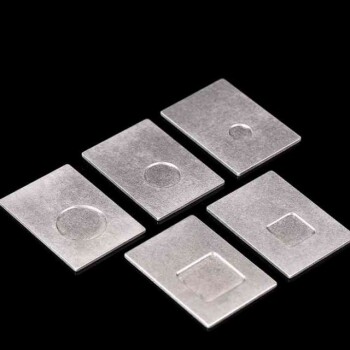
- Customizable XRD Sample Holders for Diverse Research Applications
- XRD Sample Holder X-ray Diffractometer Powder Slide
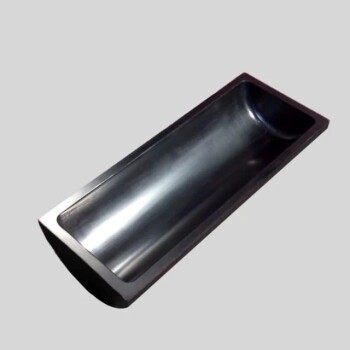
- Carbon Graphite Boat -Laboratory Tube Furnace with Cover
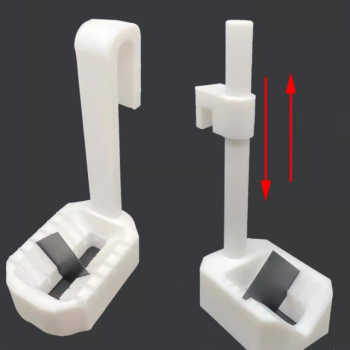
- Sample Support Body for Electrochemical Tests
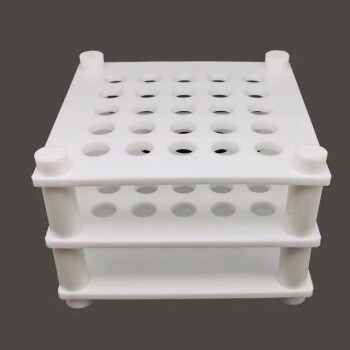
- Custom PTFE Wafer Holders for Lab and Semiconductor Processing
People Also Ask
- What are the applicable sample dimensions for the sample holder? Ensure a Perfect Fit for Your Lab Samples
- What are the specific storage requirements for a sample holder? Protect Your Lab's Critical Assets
- How can corrosion of the sample holder be prevented when using corrosive chemicals? Protect Your Lab's Integrity
- How should a suitable sample be selected and secured in the holder before an experiment? Ensure Unshakeable Stability for Reliable Data
- What are the general operating procedures for using a sample holder during experiments? Ensure Sample Integrity and Accurate Results