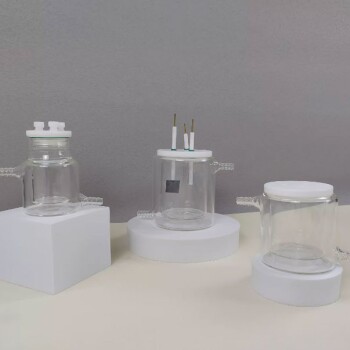
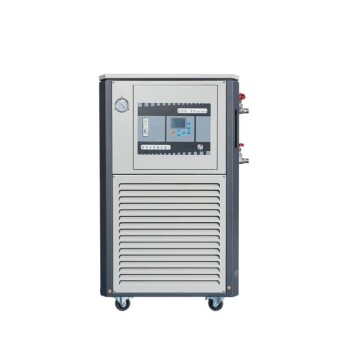
A controlled chemical reactor acts as the central processing unit for recycling waste PET bottles into concrete applications. It provides the precise thermal and mechanical environment required to chemically deconstruct solid plastic waste into unsaturated polyester resin, a high-value material used to enhance concrete performance.
By maintaining exact temperature ranges and ensuring thorough mixing, the reactor facilitates the efficient depolymerization of PET. This transforms plastic pollution into specific chemical intermediates necessary for creating durable, sustainable construction materials.
The Mechanics of Depolymerization
Creating the Ideal Chemical Environment
The primary function of the reactor is to establish a stable environment for glycolysis.
This is the chemical breakdown of the plastic.
To achieve this, the reactor must maintain a constant temperature, typically within the range of 20 to 200°C.
Ensuring Thorough Reactant Contact
Waste PET enters the process as solid fragments, while the reactants are liquids.
The reactor utilizes mechanical stirring to force these phases to mix.
This ensures the solid plastic maintains continuous contact with the solvent and catalyst, preventing stagnation and ensuring a uniform reaction.
From Waste to Chemical Resource
The Role of Solvents and Catalysts
Inside the reactor, the PET is mixed with specific chemical agents.
Propylene glycol acts as the solvent, while zinc acetate serves as the catalyst.
The reactor's controlled environment allows these agents to effectively attack the polymer chains of the plastic bottles.
Synthesizing the Building Blocks
Through a process called transesterification, the reactor converts the long-chain polymers of the bottles into smaller molecules.
The specific output is low molecular weight bis(hydroxypropyl) terephthalate (BHPT) oligomers.
These oligomers are the essential foundation for synthesizing the unsaturated polyester resins used as concrete additives.
Understanding the Operational Trade-offs
Sensitivity to Process Parameters
While effective, this process relies heavily on precision.
If the reactor fails to maintain the constant temperature, the reaction rate will drop, or the chemical structure of the resin may be compromised.
Complexity of Mixing
Mechanical stirring is not just about movement; it is about homogeneity.
Inadequate stirring leads to incomplete depolymerization, leaving behind unreacted solid plastic that ruins the quality of the final concrete additive.
Maximizing Value for Concrete Applications
To successfully leverage this technology for sustainable construction, consider your specific operational targets:
- If your primary focus is material purity: Ensure your reactor offers precise thermal regulation to prevent side reactions that degrade the quality of the BHPT oligomers.
- If your primary focus is process efficiency: Prioritize high-torque mechanical stirring to maximize the surface area contact between the solid PET fragments and the propylene glycol solvent.
The controlled reactor is the bridge between waste management and high-performance engineering, turning a disposal problem into a structural solution.
Summary Table:
| Feature | Role in PET Recycling Process |
|---|---|
| Temperature Control | Maintains 20-200°C for stable glycolysis and transesterification |
| Mechanical Stirring | Ensures thorough contact between solid PET fragments and liquid reactants |
| Chemical Conversion | Transforms long-chain polymers into BHPT oligomers |
| Catalyst Management | Optimizes the interaction between Zinc Acetate and Propylene Glycol |
| Output Quality | Produces high-purity unsaturated polyester resin for concrete additives |
Elevate Your Sustainable Material Research with KINTEK
Ready to transform waste into performance? KINTEK specializes in advanced laboratory equipment designed to handle the rigorous demands of chemical recycling. Whether you are optimizing PET glycolysis or synthesizing high-performance resins, our precision-engineered high-temperature high-pressure reactors and autoclaves provide the stability and control your research requires.
From crushing and milling systems for waste preparation to high-purity ceramics and crucibles for material synthesis, we provide the comprehensive tools needed for the next generation of sustainable construction materials. Our experts are here to help you scale your efficiency and ensure material purity.
Contact KINTEK today to find the perfect reactor solution for your lab!
References
- J.M. Mendivil-Escalante, Francisca Guadalupe Cabrera Covarrubias. Metamorphosis in the Porosity of Recycled Concretes Through the Use of a Recycled Polyethylene Terephthalate (PET) Additive. Correlations between the Porous Network and Concrete Properties. DOI: 10.3390/ma10020176
This article is also based on technical information from Kintek Solution Knowledge Base .
Related Products
- Customer Made Versatile CVD Tube Furnace Chemical Vapor Deposition Chamber System Equipment
- Customizable Laboratory High Temperature High Pressure Reactors for Diverse Scientific Applications
- High Pressure Laboratory Autoclave Reactor for Hydrothermal Synthesis
- Customizable High Pressure Reactors for Advanced Scientific and Industrial Applications
- Mini SS High Pressure Autoclave Reactor for Laboratory Use
People Also Ask
- What is a CVD tube furnace? A Complete Guide to Thin-Film Deposition
- What is the function of a high-temperature CVD tube furnace in 3D graphene foam prep? Master 3D Nanomaterial Growth
- How does a CVD tube furnace inhibit the sintering of silver supports? Boost Membrane Durability and Performance
- What is the function of a tube furnace in CVD SiC synthesis? Achieving Ultra-Pure Silicon Carbide Powders
- What is the difference between hot wall CVD and cold wall CVD? Choose the Right System for Your Process