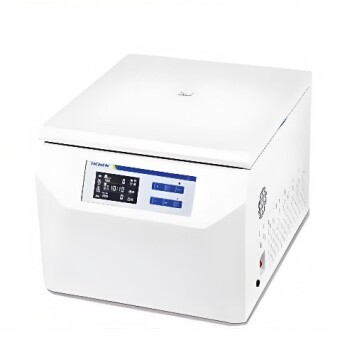
The high-pressure reactor acts as the containment vessel that enables the critical thermochemical "charging" phase of steam explosion pretreatment. It subjects biomass to saturated steam at temperatures typically ranging from 160°C to 260°C, forcing moisture deep into the material's fiber pores. The reactor's defining role, however, is to facilitate instantaneous decompression; this sudden release converts stored thermal energy into mechanical force, causing the biomass to physically disintegrate from the inside out.
Core Insight: The reactor is not merely a heating device; it is a mechanism for creating explosive potential. Its primary function is to pressurize moisture within the biomass structure so that, upon release, the liquid flashes into vapor, generating the shear forces necessary to expose cellulose for downstream processing.
Establishing the Reaction Environment
To deconstruct lignocellulosic biomass effectively, the reactor must first create a specific set of thermodynamic conditions.
Thermal Saturation and Pressure
The reactor maintains a sealed environment that allows pressure to build significantly (ranging from 0.7 to 48 bar).
This high-pressure atmosphere raises the boiling point of water, allowing saturated steam to penetrate the biomass at temperatures up to 260°C without evaporating prematurely.
Pore Penetration
Under this immense pressure, steam is forced into the microscopic pores of the plant fibers.
This creates a reservoir of potential energy inside the material, essentially turning the moisture within the biomass into a compressed spring waiting to be released.
Chemical Pre-Conditioning
While inside the reactor, the high temperature initiates autohydrolysis.
This process begins to partially dissolve hemicellulose and weaken the hydrogen bonds between lignin and cellulose, softening the structural integrity of the material before the physical "explosion" occurs.
The Mechanics of Decompression
The most distinct role of the high-pressure reactor occurs at the end of the residence time, when the release valve is triggered.
The Flash Evaporation Effect
When the reactor's pressure is released instantaneously, the superheated water inside the biomass fibers vaporizes immediately.
Because steam occupies a much larger volume than liquid water, this phase change creates a violent volumetric expansion within the material.
Mechanical Shear Generation
This rapid expansion acts as an internal explosion, generating powerful mechanical shear forces.
These forces tear the fibers apart at a microscopic level, causing the collapse and deconstruction of the original rigid structure.
Structural Transformation and Accessibility
The ultimate goal of the high-pressure reactor is to alter the physical architecture of the biomass to facilitate enzymatic activity.
Disruption of Lignocellulose
The mechanical tearing shatters the dense lignocellulosic matrix.
This process physically dissociates the cellulose from the lignin and hemicellulose that typically encase and protect it.
Increasing Surface Area
The explosion significantly increases the porosity and specific surface area of the biomass.
By fragmenting the material, the reactor ensures that enzymes can easily access the cellulose chains, thereby greatly improving the efficiency of enzymatic hydrolysis.
Understanding the Trade-offs
While the high-pressure reactor is highly effective, operating it requires managing specific process variables to ensure safety and efficiency.
Precision Control Requirements
The process relies on the speed of decompression. If the pressure release is too slow, the "flash" effect is minimized, and the mechanical tearing will be insufficient to expose the cellulose.
Operational Intensity
Operating at pressures up to 48 bar and temperatures of 260°C requires specialized equipment capable of withstanding extreme stress.
The equipment must be robust enough to handle repeated cycles of high pressurization followed by violent depressurization without structural fatigue.
Making the Right Choice for Your Goal
The specific configuration of your high-pressure reactor operations depends on your downstream processing needs.
- If your primary focus is maximizing enzymatic digestibility: Prioritize a reactor design that ensures the fastest possible pressure release to generate maximum mechanical shear and surface area.
- If your primary focus is hemicellulose recovery: Optimize the reactor's residence time and temperature (e.g., around 200°C) to favor autohydrolysis and solubilization before the explosive decompression occurs.
Ultimately, the high-pressure reactor serves as a kinetic trigger, transforming thermal energy into the physical force required to unlock the chemical potential of biomass.
Summary Table:
| Process Phase | Reactor Function | Impact on Biomass |
|---|---|---|
| Thermal Saturation | Maintains 160°C–260°C and up to 48 bar | Forces moisture into pores and initiates autohydrolysis |
| Pressure Holding | Seals environment for residence time | Weakens lignin-cellulose bonds and stores potential energy |
| Rapid Decompression | Instantaneous release of pressure | Causes flash evaporation and generates mechanical shear |
| Physical Transformation | Microscopic fiber disruption | Increases surface area and porosity for enzymatic access |
Elevate Your Biomass Research with KINTEK
Maximize the efficiency of your pretreatment processes with KINTEK’s industry-leading high-pressure high-pressure reactors and autoclaves. Specifically designed to withstand extreme thermal cycles and rapid decompression, our equipment ensures the precise control needed for superior mechanical shear and enzymatic digestibility.
Whether you are focusing on autohydrolysis or maximizing surface area expansion, KINTEK provides the robust technology and high-performance laboratory solutions—including crushing systems, cooling solutions, and specialized consumables—to drive your innovation forward.
Ready to optimize your lab's performance? Contact our experts today to find the perfect reactor system for your specific research goals.
References
- J. Rajesh Banu, Gopalakrishnan Kumar. Lignocellulosic Biomass Pretreatment for Enhanced Bioenergy Recovery: Effect of Lignocelluloses Recalcitrance and Enhancement Strategies. DOI: 10.3389/fenrg.2021.646057
This article is also based on technical information from Kintek Solution Knowledge Base .
Related Products
- Customizable Laboratory High Temperature High Pressure Reactors for Diverse Scientific Applications
- Customizable High Pressure Reactors for Advanced Scientific and Industrial Applications
- Stainless High Pressure Autoclave Reactor Laboratory Pressure Reactor
- Mini SS High Pressure Autoclave Reactor for Laboratory Use
- High Pressure Laboratory Autoclave Reactor for Hydrothermal Synthesis
People Also Ask
- How do high-pressure and high-temperature reactors ensure the effective treatment of lignocellulosic wastewater in WAO?
- What equipment is required for high-pressure high-temperature reactions? Master Extreme Chemistry Safely
- How do you control high pressure in a reactor? A Guide to Safe & Stable Operation
- How does initial oxygen pressure affect the wet oxidation of pharmaceutical sludge? Master Your Oxidation Depth
- Why is argon better than nitrogen for inert atmosphere? Ensure Absolute Reactivity & Stability