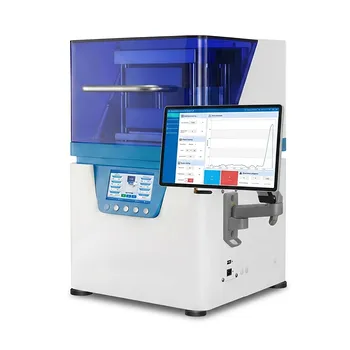
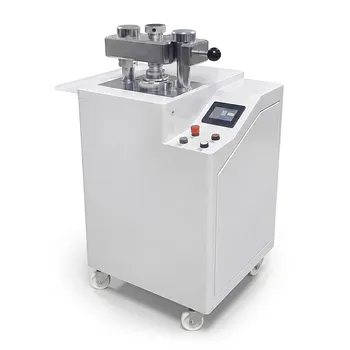
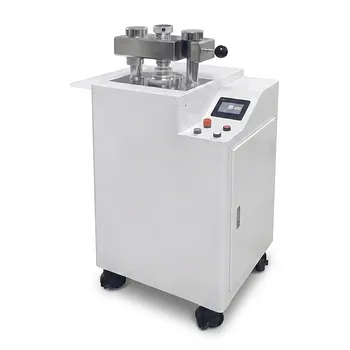
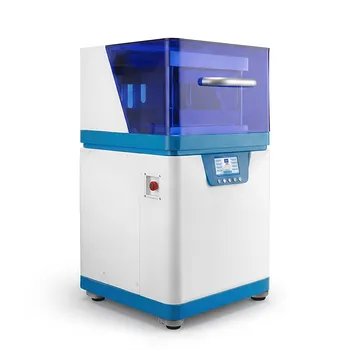
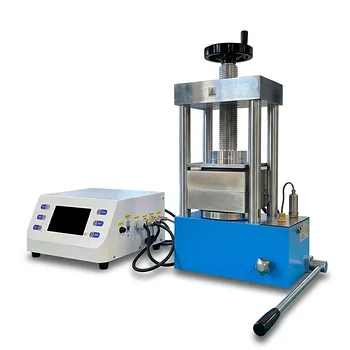
The primary role of a laboratory hydraulic press in LiCoO2 reduction experiments is the mechanical transformation of loose powder into dense, micro-cylindrical "green pellets." By applying precise high-pressure loads at room temperature, the press ensures that the raw material possesses a standardized geometry and a consistent internal density. This preparation is foundational for achieving uniform hydrogen reduction reactions and obtaining reproducible data during subsequent thermogravimetric analysis.
Core Takeaway: The hydraulic press bridges the gap between raw powder and a viable experimental sample by maximizing particle-to-particle contact and eliminating internal voids. This physical standardization is what allows for accurate kinetic measurements and prevents localized reaction variances during high-temperature processing.
Establishing a Standardized Physical Foundation
Geometric Consistency for Analytical Precision
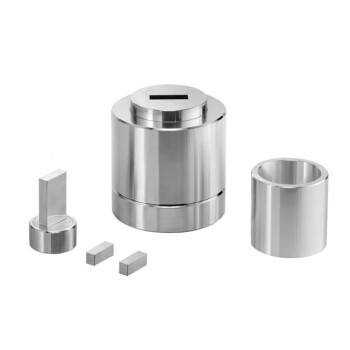
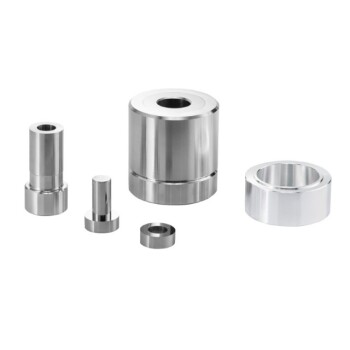
In a laboratory setting, the reproducibility of data depends on the uniformity of the sample's shape and size. The hydraulic press, equipped with a specialized steel mold, ensures that every LiCoO2 pellet maintains exact dimensions. This geometric stability is critical when samples are placed in tube furnaces, as it ensures that heat and gas flow are distributed evenly across the specimen surface.
Maximizing Internal Particle Contact
Loose powder contains significant air gaps that can act as thermal and chemical insulators, impeding the reduction process. The press applies high-intensity pressure to force individual particles into tight contact, creating a stable "green body." This close proximity is essential for efficient electron and ion transport once the reduction reaction begins.
Ensuring Stability for Thermogravimetric Analysis
During thermogravimetric analysis (TGA), samples must remain physically stable as they undergo mass changes. Pellets produced by a hydraulic press provide a stable physical foundation that resists crumbling or shifting. This structural integrity allows sensors to accurately track weight loss as oxygen is removed from the Lithium Cobalt Oxide lattice.
Enhancing Multi-Phase Reaction Kinetics
Reducing Diffusion Paths
By densifying the material, the hydraulic press effectively shortens the distances that reactants must travel. In LiCoO2 reduction, this means the diffusion paths for hydrogen gas and internal oxygen ions are more predictable. High density minimizes the random "dead zones" found in loose powder, leading to more linear and interpretable kinetic data.
Increasing Phase Interface Area
A well-pressed pellet increases the effective interface area where solid and gas phases interact. This is particularly important in the early stages of reduction before any liquid phases might form. Tight mechanical contact ensures that the chemical potential gradients are utilized efficiently across the entire volume of the sample.
Eliminating Internal Density Gradients
A high-quality hydraulic press provides a uniform vertical pressure, which is vital for preventing density gradients within the pellet. Without this uniformity, different parts of the sample might reduce at different rates, leading to "core-shell" effects where the outside is fully reduced while the center remains unreacted. This consistency is the key to achieving thermodynamic equilibrium in a shorter timeframe.
Understanding the Trade-offs and Limitations
The Risk of Over-Compaction
While high density is generally beneficial, excessive pressure (over-compaction) can be counterproductive. If a pellet is too dense, it may block the penetration of hydrogen gas into the core, effectively limiting the reaction to the surface. Furthermore, extreme pressure can lead to "pressure soreness" or internal micro-cracks that cause the pellet to disintegrate during high-temperature expansion.
Surface Scattering and Analytical Interference
In some analytical contexts, such as surface spectroscopy, the finish of the pellet matters as much as the density. If the mold is not perfectly smooth, the resulting surface irregularities can scatter analytical signals (like X-rays or lasers). Users must ensure that the mold faces are polished and clean to avoid introducing artifacts into the post-reduction analysis.
How to Apply This to Your Project
Recommendations Based on Research Goals
To achieve the best results with Lithium Cobalt Oxide reduction, tailor your pressing parameters to your specific analytical needs:
- If your primary focus is Kinetic Accuracy: Use moderate, consistent pressure to ensure uniform density without sealing off the internal pores to gas flow.
- If your primary focus is Material Densification: Apply higher pressure (e.g., nearing 500 MPa) to eliminate voids and maximize the relative density of the final solid structure.
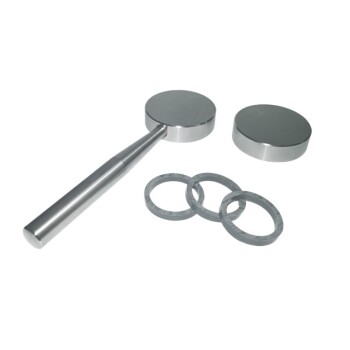
- If your primary focus is Surface Analysis (XRF/LIBS): Ensure the steel mold is highly polished to produce a flat, mirror-like surface that minimizes signal scattering.
The laboratory hydraulic press is not merely a shaping tool, but a precision instrument that dictates the physical limits and kinetic efficiency of the entire LiCoO2 reduction process.
Summary Table:
| Function | Benefit to LiCoO2 Experiment | Impact on Analytical Results |
|---|---|---|
| Mechanical Compaction | Eliminates internal air gaps and voids | Maximizes particle-to-particle contact for reactions |
| Geometric Standardization | Ensures exact pellet dimensions | Uniform heat and gas distribution in tube furnaces |
| Structural Stabilization | Prevents crumbling/shifting during TGA | High-precision tracking of mass loss and oxygen removal |
| Diffusion Optimization | Shortens and stabilizes gas paths | Predictable, linear, and interpretable kinetic data |
| Pressure Uniformity | Eliminates vertical density gradients | Prevents "core-shell" effects for total equilibrium |
Optimize Your Material Preparation with KINTEK
Precision in the preparation stage is the key to accuracy in analytical research. KINTEK specializes in providing high-performance laboratory equipment designed to meet the rigorous demands of battery research and material science.
From our robust hydraulic presses (pellet, hot, and isostatic) for creating the perfect "green body" to our specialized tube, vacuum, and atmosphere furnaces for reduction experiments, we offer a comprehensive ecosystem for your lab. Our portfolio also features high-pressure reactors, crushing and milling systems, and essential consumables like crucibles and ceramics.
Ensure your LiCoO2 experiments achieve maximum density and kinetic efficiency. Contact KINTEK today to discuss your research goals and discover how our equipment can enhance your laboratory’s precision!
References
- Bintang A. Nuraeni, M. Akbar Rhamdhani. Hydrogen Reduction of LiCoO2 Cathode Material: Thermodynamic Analysis, Microstructure, and Mechanisms. DOI: 10.1007/s11663-023-02813-5
This article is also based on technical information from Kintek Solution Knowledge Base .
Related Products
- Automatic Laboratory Hydraulic Pellet Press Machine for Lab Use
- Laboratory Manual Hydraulic Pellet Press for Lab Use
- Automatic Laboratory Hydraulic Press for XRF & KBR Pellet Press
- Laboratory Hydraulic Press Lab Pellet Press Machine for Glove Box
- Laboratory Hydraulic Press Split Electric Lab Pellet Press
People Also Ask
- What is the role of a laboratory hydraulic pellet press and stainless steel molds in the fabrication of RuO2/NbC anodes?
- What role does a laboratory pellet press play in the enhancement of biomass energy products? Optimize Fuel Efficiency
- What is the purpose of using a laboratory pellet press when evaluating the electronic conductivity of carbon powders? Guide
- How does a laboratory hydraulic pellet press contribute to SiCw/2024 aluminum composite preforms? Optimize Densification
- What is the significance of applying 200 MPa of pressure with a laboratory hydraulic pellet press for composite ceramics?