Knowledge What is the role of a laboratory oven in the post-processing phase of carbon fiber recycling? Optimize Fiber Morphology
Author avatar

Tech Team · Kintek Solution

Updated 1 day ago

What is the role of a laboratory oven in the post-processing phase of carbon fiber recycling? Optimize Fiber Morphology


The primary role of a laboratory oven in the post-processing of recycled carbon fiber is the definitive removal of residual fluids. Following the cleaning phase, the oven provides a controlled thermal environment—typically maintained at a constant temperature such as 40°C—to eliminate any remaining water or solvents without damaging the reclaimed material.

Precise drying in a laboratory oven is not merely about moisture removal; it is a critical conditioning step that restores the fiber's morphology and ensures accurate mechanical testing data by eliminating environmental variables.

The Mechanics of Post-Process Drying

Eliminating Residual Solvents

Once carbon fibers have gone through the recycling and cleaning stages, they inevitably retain moisture or chemical solvents.

The laboratory oven serves as the final drying stage, ensuring that these volatile components are completely evaporated from the fiber surface.

Maintaining Thermal Stability

The drying process relies on constant temperature regulation.

By maintaining a steady, moderate heat (specifically cited as 40°C in standard protocols), the oven drives off moisture effectively while avoiding thermal shock or degradation that might occur at higher, uncontrolled temperatures.

Impact on Fiber Morphology and Testing

Restoring "Fluffy" Morphology

Wet or solvent-heavy fibers tend to clump together, making them difficult to manipulate.

The drying process in the oven restores the fluffy morphology of the carbon fibers, returning them to a state where individual filaments separate naturally.

Enabling Specimen Preparation

The restoration of this fluffy texture is a prerequisite for further physical handling.

Specifically, it facilitates the isolation of filaments required for the preparation of single fiber tensile specimens, a task that is nearly impossible with clumped, damp material.

Preventing Data Interference

Moisture is a significant variable in materials testing.

By ensuring the fibers are completely dry, the laboratory oven prevents moisture from interfering with mechanical property tests, ensuring that the data reflects the true properties of the recycled carbon fiber rather than the influence of retained fluids.

Understanding the Trade-offs

Process Time vs. Temperature Control

While higher temperatures might dry fibers faster, the process prioritizes consistency over speed.

Adhering to a lower, constant temperature (like 40°C) extends the processing time but is necessary to preserve the integrity of the fiber surface for testing.

The Necessity of Complete Drying

There is no shortcut to this phase; "mostly dry" is insufficient for accurate analysis.

Failing to achieve total solvent removal will result in skewed mechanical data and difficulties in specimen separation, rendering previous recycling steps less valuable for research purposes.

Making the Right Choice for Your Goal

To maximize the utility of your recycled carbon fibers, align your oven usage with your specific downstream requirements:

  • If your primary focus is mechanical testing accuracy: Prioritize long-duration drying at constant low temperatures to eliminate all moisture artifacts from your data.
  • If your primary focus is sample preparation: Use the oven specifically to restore the "fluffy" texture, allowing you to easily separate single filaments for tensile specimens.

Proper conditioning in the oven is the bridge between raw recycled waste and verifiable, reusable material.

Summary Table:

Feature Role in Post-Processing Benefit to Recycled Fiber
Temperature Control Constant 40°C thermal environment Prevents thermal shock and degradation
Fluid Removal Evaporation of residual water/solvents Eliminates environmental variables in testing
Morphology Restoration Drying fibers to a "fluffy" state Facilitates easy isolation of single filaments
Testing Readiness Conditioning for tensile specimens Ensures data reflects true material properties

Elevate Your Material Research with KINTEK Precision

Maximize the integrity of your recycled carbon fibers with KINTEK’s advanced laboratory solutions. Whether you are conducting critical mechanical testing or preparing delicate single-fiber specimens, our high-precision laboratory ovens and drying solutions ensure the thermal stability and morphology restoration required for verifiable results.

Why choose KINTEK?

  • Comprehensive Laboratory Range: From specialized drying ovens and vacuum furnaces to high-pressure reactors and autoclaves.
  • Targeted Performance: Equipment designed to meet the rigorous demands of battery research, material science, and industrial recycling.
  • Reliable Consistency: Our tools, including crushing systems, pellet presses, and ceramic crucibles, provide the accuracy your lab deserves.

Ready to optimize your post-processing workflow? Contact KINTEK today to find the perfect equipment for your specific research needs!

Related Products

People Also Ask

Related Products

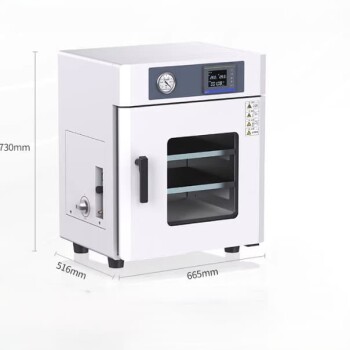
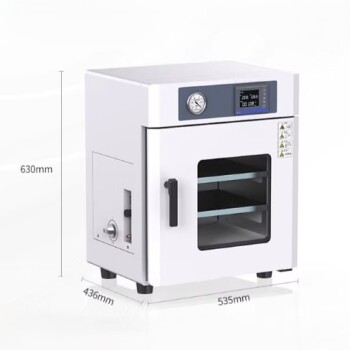
Laboratory Scientific Electric Heating Blast Drying Oven

Laboratory Scientific Electric Heating Blast Drying Oven

The desktop fast autoclave sterilizer is a compact and reliable device used for rapid sterilization of medical, pharmaceutical, and research items.

Small Vacuum Heat Treat and Tungsten Wire Sintering Furnace

Small Vacuum Heat Treat and Tungsten Wire Sintering Furnace

The small vacuum tungsten wire sintering furnace is a compact experimental vacuum furnace specially designed for universities and scientific research institutes. The furnace features a CNC welded shell and vacuum piping to ensure leak-free operation. Quick-connect electrical connections facilitate relocation and debugging, and the standard electrical control cabinet is safe and convenient to operate.

1200℃ Muffle Furnace Oven for Laboratory

1200℃ Muffle Furnace Oven for Laboratory

Upgrade your lab with our 1200℃ Muffle Furnace. Achieve fast, precise heating with Japan alumina fibers and Molybdenum coils. Features TFT touch screen controller for easy programming and data analysis. Order now!

High Temperature Muffle Oven Furnace for Laboratory Debinding and Pre Sintering

High Temperature Muffle Oven Furnace for Laboratory Debinding and Pre Sintering

KT-MD High temperature debinding and pre-sintering furnace for ceramic materials with various molding processes. Ideal for electronic components such as MLCC and NFC.

Vacuum Heat Treat and Pressure Sintering Furnace for High Temperature Applications

Vacuum Heat Treat and Pressure Sintering Furnace for High Temperature Applications

Vacuum pressure sintering furnaces are designed for high temperature hot pressing applications in metal and ceramic sintering. Its advanced features ensure precise temperature control, reliable pressure maintenance, and a robust design for seamless operation.

Heated Hydraulic Press Machine with Heated Plates for Vacuum Box Laboratory Hot Press

Heated Hydraulic Press Machine with Heated Plates for Vacuum Box Laboratory Hot Press

Enhance your lab's precision with our lab press for vacuum box. Press pills and powders with ease and precision in a vacuum environment, reducing oxidation and improving consistency. Compact and easy to use with a digital pressure gauge.

Vertical Laboratory Tube Furnace

Vertical Laboratory Tube Furnace

Elevate your experiments with our Vertical Tube Furnace. Versatile design allows for operation under various environments and heat treatment applications. Order now for precise results!

30T 40T Split Automatic Heated Hydraulic Press Machine with Heated Plates for Laboratory Hot Press

30T 40T Split Automatic Heated Hydraulic Press Machine with Heated Plates for Laboratory Hot Press

Discover our split automatic heated lab press 30T/40T for precise sample preparation in material research, pharmacy, ceramics, and electronics industries. With a small footprint and heating up to 300°C, it's perfect for processing under vacuum environment.

Lab-Scale Vacuum Induction Melting Furnace

Lab-Scale Vacuum Induction Melting Furnace

Get precise alloy composition with our Vacuum Induction Melting Furnace. Ideal for aerospace, nuclear energy, and electronic industries. Order now for effective smelting and casting of metals and alloys.

Benchtop Laboratory Freeze Dryer for Lab Use

Benchtop Laboratory Freeze Dryer for Lab Use

Premium benchtop laboratory freeze dryer for lyophilization, preserving samples with ≤ -60°C cooling. Ideal for pharmaceuticals & research.

Horizontal High Temperature Graphite Vacuum Graphitization Furnace

Horizontal High Temperature Graphite Vacuum Graphitization Furnace

Horizontal Graphitization Furnace: This type of furnace is designed with the heating elements placed horizontally, allowing for uniform heating of the sample. It's well-suited for graphitizing large or bulky samples that require precise temperature control and uniformity.

Vacuum Hot Press Furnace Machine for Lamination and Heating

Vacuum Hot Press Furnace Machine for Lamination and Heating

Experience clean and precise lamination with Vacuum Lamination Press. Perfect for wafer bonding, thin-film transformations, and LCP lamination. Order now!

Graphite Vacuum Furnace High Thermal Conductivity Film Graphitization Furnace

Graphite Vacuum Furnace High Thermal Conductivity Film Graphitization Furnace

The high thermal conductivity film graphitization furnace has uniform temperature, low energy consumption and can operate continuously.

Vacuum Cold Trap Chiller Indirect Cold Trap Chiller

Vacuum Cold Trap Chiller Indirect Cold Trap Chiller

Boost vacuum system efficiency and prolong pump life with our Indirect Cold Trap. Built-in chilling system with no need for fluid or dry ice. Compact design and easy to use.

Large Vertical Graphite Vacuum Graphitization Furnace

Large Vertical Graphite Vacuum Graphitization Furnace

A large vertical high-temperature graphitization furnace is a type of industrial furnace used for the graphitization of carbon materials, such as carbon fiber and carbon black. It is a high-temperature furnace that can reach temperatures of up to 3100°C.

Graphite Vacuum Furnace Bottom Discharge Graphitization Furnace for Carbon Materials

Graphite Vacuum Furnace Bottom Discharge Graphitization Furnace for Carbon Materials

Bottom-out graphitization furnace for carbon materials, ultra-high temperature furnace up to 3100°C, suitable for graphitization and sintering of carbon rods and carbon blocks. Vertical design, bottom discharging, convenient feeding and discharging, high temperature uniformity, low energy consumption, good stability, hydraulic lifting system, convenient loading and unloading.

Dental Porcelain Zirconia Sintering Ceramic Furnace Chairside with Transformer

Dental Porcelain Zirconia Sintering Ceramic Furnace Chairside with Transformer

Experience top-notch sintering with Chairside Sintering Furnace with Transformer. Easy to operate, noise-free pallet, and automatic temperature calibration. Order now!

Laboratory Hydraulic Press Lab Pellet Press for Button Battery

Laboratory Hydraulic Press Lab Pellet Press for Button Battery

Efficiently prepare samples with our 2T Button Battery Press. Ideal for material research labs and small-scale production. Small footprint, lightweight, and vacuum-compatible.

Graphite Vacuum Continuous Graphitization Furnace

Graphite Vacuum Continuous Graphitization Furnace

High-temperature graphitization furnace is a professional equipment for graphitization treatment of carbon materials. It is a key equipment for the production of high-quality graphite products. It has high temperature, high efficiency and uniform heating. It is suitable for various high-temperature treatments and graphitization treatments. It is widely used in metallurgy, electronics, aerospace, etc. industry.

Custom PTFE Teflon Parts Manufacturer for Culture Dish and Evaporation Dish

Custom PTFE Teflon Parts Manufacturer for Culture Dish and Evaporation Dish

The PTFE culture dish evaporating dish is a versatile laboratory tool known for its chemical resistance and high-temperature stability. PTFE, a fluoropolymer, offers exceptional non-stick properties and durability, making it ideal for various applications in research and industry, including filtration, pyrolysis, and membrane technology.


Leave Your Message