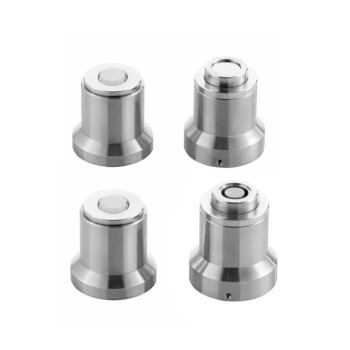
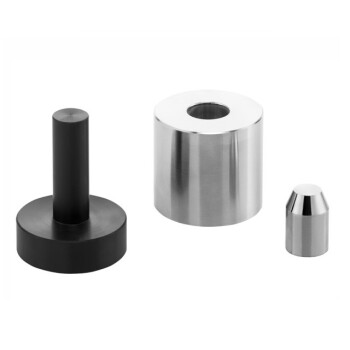
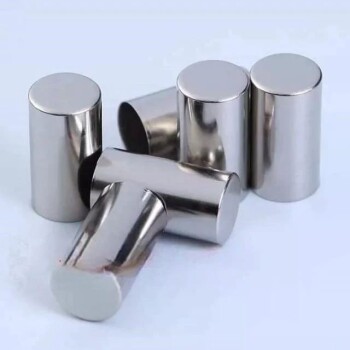
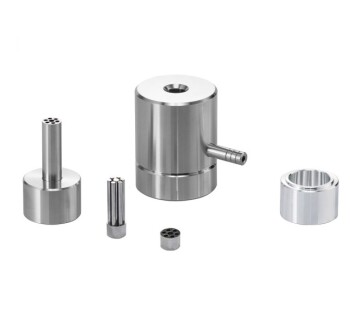
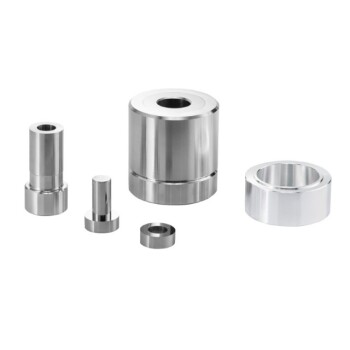
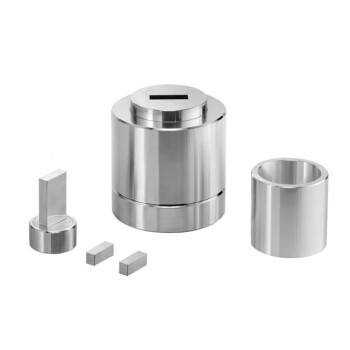
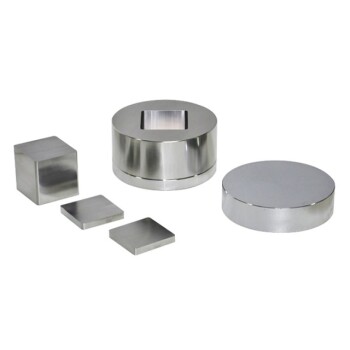
The stainless steel mold serves as the structural and electrical backbone of the assembly. During testing, it acts as the physical container for the cathode, electrolyte, and anode, while simultaneously functioning as the current collector to transfer electricity. Most critically, it maintains a high-pressure environment to ensure the battery layers remain in constant contact.
Core Insight: Unlike liquid batteries, solid-state cells rely entirely on physical pressure to function. The stainless steel casing is not just a passive box; it is an active mechanical constraint system that prevents the battery from failing due to internal separation and volume changes during cycling.
The Critical Role of Pressure
Maintaining Solid-Solid Contact
In all-solid-state batteries, the interfaces between layers are physical, not fluid. The stainless steel mold applies constant external high pressure (often exceeding 360 MPa) to the cell. This mechanical force is required to densify the materials, eliminating pores between electrolyte particles and reducing interfacial impedance.
Counteracting Volume Changes
Active materials in the battery expand and contract significantly during charge and discharge cycles. Without the rigid constraint of the steel casing, these volume changes would cause the layers to physically separate. The mold effectively offsets this expansion, preventing contact failure and ensuring the stack remains intact.
Electrical and Environmental Functions
Acting as a Current Collector
The stainless steel casing is conductive and integrates directly into the electrical circuit. It serves as the current collector, facilitating the flow of electrons in and out of the battery stack. This dual role eliminates the need for separate, bulky collection components within the test cell.
Environmental Isolation
Solid-state components, particularly lithium or sodium anodes, are highly sensitive to air. The steel mold provides a sealed environment that encapsulates the battery sandwich structure. This isolation prevents ambient moisture and oxygen from reacting with the active materials, which would otherwise degrade performance.
Understanding the Trade-offs
Chemical Stability vs. Conductivity
While stainless steel provides excellent pressure handling and conductivity, it is not chemically inert to all materials. In some high-precision tests (like Electrochemical Impedance Spectroscopy), side reactions between the steel and certain electrolytes can occur. In these scenarios, the steel provides the external pressure, but internal liners (such as PEEK) may be required to insulate specific components.
Ensuring Reliable Test Results
To maximize the effectiveness of your battery testing setup, align the mold's capabilities with your specific research goals:
- If your primary focus is cycle life: Prioritize a mold design that maintains constant stack pressure to mitigate volume expansion failure.
- If your primary focus is interfacial resistance: Ensure the mold is capable of high-pressure densification (up to 400 MPa) to eliminate particle pores.
- If your primary focus is material purity: Verify the sealing mechanism to guarantee total isolation from moisture and oxygen.
The stainless steel mold is the fundamental enabler of solid-state electrochemistry, converting loose powder components into a functional, unified energy storage device.
Summary Table:
| Function | Description | Key Benefit |
|---|---|---|
| Pressure Application | Provides 360+ MPa mechanical force | Densifies materials and reduces interfacial impedance |
| Structural Constraint | Rigidly contains active materials | Counteracts volume changes and prevents layer separation |
| Electrical Circuitry | Acts as an integrated current collector | Facilitates electron flow without extra bulky components |
| Environmental Seal | Encapsulates the battery sandwich | Protects air-sensitive anodes from moisture and oxygen |
Elevate Your Battery Research with KINTEK Precision Engineering
Unlock the full potential of your solid-state electrochemistry with high-performance laboratory solutions from KINTEK. Whether you are developing next-generation energy storage or conducting rigorous material analysis, our specialized equipment is designed to meet the extreme demands of modern research.
Our comprehensive portfolio includes:
- Battery Research Tools: Specialized stainless steel molds, battery casings, and testing consumables.
- High-Pressure Solutions: Hydraulic pellet presses (manual, hot, and isostatic) and crushing systems for material densification.
- Thermal Processing: Advanced muffle, tube, vacuum, and atmosphere furnaces for precise material synthesis.
- Laboratory Essentials: Electrolytic cells, electrodes, and high-purity ceramic crucibles.
Don't let interfacial resistance or environmental degradation compromise your results. Partner with KINTEK for reliable, high-precision tools tailored to your laboratory's needs. Contact our technical experts today to find the perfect equipment for your application.
Related Products
- Battery Lab Equipment 304 Stainless Steel Strip Foil 20um Thick for Battery Test
- Button Battery Disassembly and Sealing Mold for Lab Use
- Button Battery Tablet Press Sealing Mold for Lab Use
- Cylindrical Battery Steel Case for Battery Lab
- Special Shape Press Mold for Lab
People Also Ask
- How is a galvanostat used to evaluate F-rGO layers? Quantifying Protective Performance in Lithium Metal Batteries
- What is the sputtering cathode method? A Guide to Thin Film Deposition Technology
- What is sputtering target material? The Blueprint for High-Quality Thin Film Coatings
- What is organic thin film? A Guide to Engineered Molecular Layers for Advanced Tech
- What are the target materials for sputtering? From Metals to Ceramics for Precise Thin Films