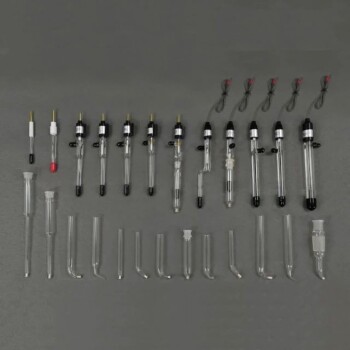
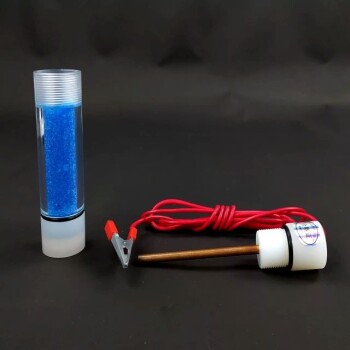
The primary role of a zirconia membrane reference electrode is to enable the continuous, stable monitoring of the Electrochemical Corrosion Potential (ECP) of FeCrAl alloys in extreme environments. Featuring a copper-copper oxide (Cu/CuO) junction, this device is specifically engineered to function reliably at 288°C and high pressure, providing critical data that standard electrodes cannot maintain.
By maintaining a stable reference potential in aggressive environments, this electrode serves as a critical early-warning system. It determines if FeCrAl alloys have drifted into a potential range that makes them susceptible to stress corrosion cracking.
The Challenge of High-Temperature Monitoring
Stability Under Extreme Conditions
Monitoring corrosion in high-pressure, high-temperature systems (specifically at 288°C) presents significant technical difficulties. Standard monitoring equipment often suffers from signal drift or failure under these conditions.
The zirconia membrane reference electrode is designed to overcome these thermal and pressure barriers. It maintains a stable reference potential over extended periods, ensuring that the data collected is accurate and actionable.
Versatility in Chemical Environments
FeCrAl alloys may be subjected to different water chemistries during operation. This electrode provides consistent performance regardless of whether the environment is oxygenated or hydrogenated.
This versatility is essential for continuous monitoring. It ensures that operators receive uninterrupted data on the material's status even as environmental variables shift.
Detecting Material Vulnerability
Monitoring Electrochemical Corrosion Potential (ECP)
The core function of the electrode is measuring the ECP of the alloy. This measurement is a direct indicator of the thermodynamic state of the metal surface relative to its environment.
Preventing Stress Corrosion Cracking
The data provided by the electrode has a specific safety application. It is used to determine if the FeCrAl alloy is operating within a potential range sensitive to Stress Corrosion Cracking (SCC).
By identifying when the material enters this danger zone, operators can assess the risk of catastrophic failure before it occurs.
Common Pitfalls to Avoid
The Limitation of Standard Electrodes
A critical "pitfall" in this specific application is the reliance on general-purpose reference electrodes. The primary reference explicitly notes that standard electrodes do not offer the same stability as the zirconia membrane design.
Using inadequate equipment in 288°C environments will likely lead to drifting data. This inaccuracy can mask the true corrosion potential of the alloy, potentially hiding the risk of SCC until it is too late.
Making the Right Choice for Your Goal
To effectively protect FeCrAl alloys in high-temperature systems, align your monitoring strategy with the specific capabilities of this technology.
- If your primary focus is preventing structural failure: Ensure your monitoring system is specifically calibrated to detect the potential ranges associated with Stress Corrosion Cracking (SCC).
- If your primary focus is data integrity: precise measurement requires replacing standard electrodes with zirconia membrane units featuring a Cu/CuO junction for any operations near 288°C.
Reliable monitoring of corrosion potential is the only way to confidently bridge the gap between operational efficiency and material safety.
Summary Table:
| Feature | Zirconia Membrane Reference Electrode | Standard Reference Electrode |
|---|---|---|
| Core Junction | Copper-Copper Oxide (Cu/CuO) | Variable/Non-Specialized |
| Max Operating Temp | 288°C (Stable) | Prone to failure/drift at high temp |
| Primary Function | Continuous ECP Monitoring | Basic potential measurement |
| Safety Application | Early-warning for Stress Corrosion Cracking (SCC) | Unreliable for high-pressure safety |
| Environment | Oxygenated and Hydrogenated water | Limited chemical stability |
Safeguard Your High-Temperature Systems with KINTEK Precision
Ensure the integrity of your FeCrAl alloys with reliable monitoring solutions from KINTEK. As specialists in advanced laboratory equipment and high-performance consumables, we understand the critical nature of stability in extreme environments. Whether you are managing high-temperature high-pressure reactors and autoclaves or conducting specialized material research, our comprehensive portfolio—including PTFE products, ceramics, and high-purity crucibles—is designed to meet the most demanding specifications.
Don't let signal drift compromise your safety. Contact KINTEK today to discover how our expertise in corrosion monitoring and laboratory systems can enhance your data accuracy and prevent catastrophic material failure.
References
- Raúl B. Rebak, Peter L. Andresen. Resistance of Ferritic FeCrAl Alloys to Stress Corrosion Cracking for Light Water Reactor Fuel Cladding Applications. DOI: 10.5006/3632
This article is also based on technical information from Kintek Solution Knowledge Base .
Related Products
- Reference Electrode Calomel Silver Chloride Mercury Sulfate for Laboratory Use
- Copper Sulfate Reference Electrode for Laboratory Use
- Proton Exchange Membrane for Batteries Lab Applications
People Also Ask
- What is the function of a reference electrode? Master Precision in Three-Electrode Reactor Reconstruction
- What is the recommended maintenance for the filling solution of a reference electrode? A Guide to Stable & Accurate Readings
- Which electrode is used as a ground reference? Master the Key to Accurate Electrochemical Measurements
- What is the reference electrode in potentiometry? The Key to Stable & Accurate Measurements
- Which electrode is used as a reference? A Guide to Accurate Electrochemical Measurements