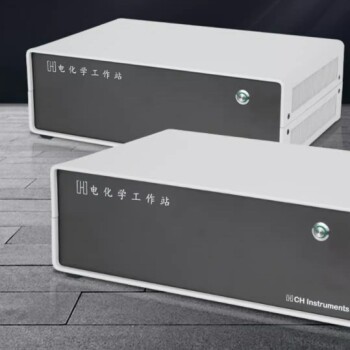
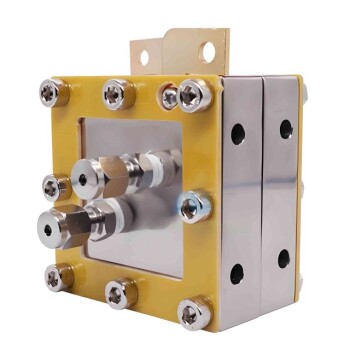
The primary role of an electrochemical workstation equipped with Electrochemical Impedance Spectroscopy (EIS) is to act as a high-precision diagnostic tool that dissects the total resistance of a Solid Oxide Fuel Cell (SOFC) into its specific, constituent components. By accurately separating ohmic, polarization, and diffusion resistances, this instrument transforms a general performance metric into a detailed map of internal cell behavior.
The core value of using EIS in this context is the ability to distinguish between different physical phenomena—separating electrolyte limitations from electrode reaction issues or gas flow problems—to guide precise material and engineering optimizations.
Dissecting Resistance for Targeted Optimization
An operating SOFC involves multiple simultaneous processes, all of which contribute to energy loss. The electrochemical workstation uses EIS to isolate these processes based on their frequency response.
Separating Resistance Types
A standard voltage-current measurement only provides the total resistance of the cell.
However, an EIS-capable workstation applies an alternating signal to differentiate between ohmic resistance (internal flows), polarization resistance (chemical reactions), and diffusion resistance (mass transport).
Identifying Performance Bottlenecks
Once resistances are separated, the workstation data reveals exactly where the cell is losing efficiency.
Researchers can determine if the primary bottleneck is the movement of ions, the speed of the catalytic reaction, or the physical transport of fuel gases.
Diagnosing Specific Failure Modes
By correlating specific resistance types with physical components, the workstation acts as a definitive guide for troubleshooting.
Analyzing Ion Conduction
The workstation measures high-frequency resistance to evaluate the electrolyte.
If this resistance is high, it indicates issues with ion conduction, suggesting the need for adjustments to the electrolyte material formula or thickness.
Evaluating Catalytic Activity
Mid-frequency responses analyzed by the workstation reflect the kinetics at the electrode interface.
High polarization resistance here points to poor catalytic activity, signaling that the electrode structure or composition requires optimization to facilitate faster charge transfer.
Assessing Gas Transport
Low-frequency data is used to characterize gas transport capabilities.
If the workstation detects high diffusion resistance, it implies that fuel or oxidant gases are struggling to reach the reaction sites, necessitating changes to the porosity of the electrodes or the flow field design.
Understanding the Trade-offs
While an electrochemical workstation with EIS is powerful, it is not without analytical challenges.
Complexity of Data Interpretation
The raw data provided by the workstation (typically Nyquist or Bode plots) is abstract and requires fitting to an equivalent circuit model.
If the model is chosen incorrectly, the physical attribution of the resistance—mistaking a reaction limit for a diffusion limit, for example—will be flawed.
Overlapping Time Constants
Sometimes, the physical processes within an SOFC occur at similar frequencies.
When this happens, the workstation may struggle to cleanly separate the resistances, leading to ambiguous results that require supplementary testing like Cyclic Voltammetry (CV) to clarify.
How to Apply This to Your Project
To maximize the utility of your electrochemical workstation, align your analysis strategy with your specific development goals.
- If your primary focus is material development: Prioritize high and mid-frequency analysis to isolate ion conduction and catalytic activity, ensuring your new formula actually lowers intrinsic resistance.
- If your primary focus is system prototyping: Concentrate on low-frequency diffusion data to optimize gas flow channels and electrode porosity for real-world operating conditions.
By isolating the root cause of resistance, you move from trial-and-error engineering to data-driven design.
Summary Table:
| Frequency Range | Resistance Type | Targeted Physical Process | Diagnostic Focus |
|---|---|---|---|
| High Frequency | Ohmic Resistance | Ion conduction through electrolyte | Electrolyte material & thickness |
| Mid Frequency | Polarization Resistance | Kinetics at electrode interface | Catalytic activity & charge transfer |
| Low Frequency | Diffusion Resistance | Mass transport of fuel/oxidant | Electrode porosity & gas flow design |
Elevate Your SOFC Research with KINTEK Precision
Unlock deep insights into your fuel cell performance with KINTEK’s advanced analytical solutions. As specialists in laboratory equipment, we provide the high-performance electrochemical workstations, electrolytic cells, and electrodes necessary to isolate resistance bottlenecks and accelerate material discovery.
Whether you are refining electrolyte formulas or optimizing gas transport in system prototypes, our comprehensive portfolio—including high-temperature furnaces, crushing systems, and specialized consumables—is designed to support every stage of your electrochemical research.
Ready to move from trial-and-error to data-driven design? Contact our technical experts today to find the perfect equipment configuration for your lab's success.
References
- Muhammad Sarfraz Arshad, Ghulam Yasin. Advances and Perspectives on Solid Oxide Fuel Cells: From Nanotechnology to Power Electronics Devices. DOI: 10.1002/ente.202300452
This article is also based on technical information from Kintek Solution Knowledge Base .
Related Products
- Lab Electrochemical Workstation Potentiostat for Laboratory Use
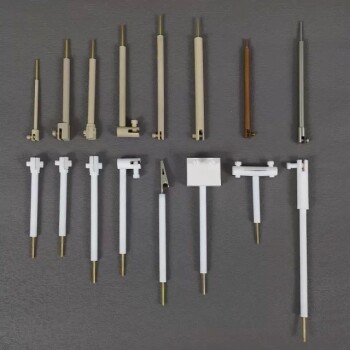
- Electrode Fixture for Electrochemical Experiments
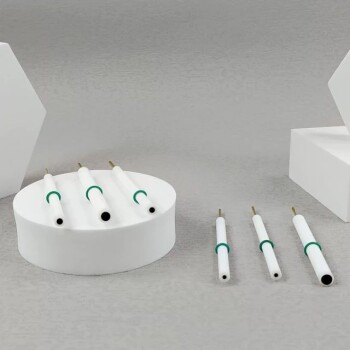
- Glassy Carbon Electrochemical Electrode
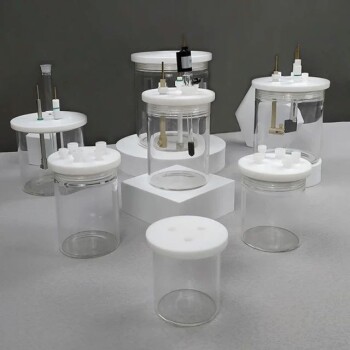
- Electrolytic Electrochemical Cell with Five-Port
- Sample Support Body for Electrochemical Tests
People Also Ask
- How does an electrochemical workstation assist in assessing corrosion resistance? Quantify Laser-Remelted Steel Performance
- How does an electrochemical testing system evaluate mesoporous oxide electrodes? Precision Analysis for Battery Research
- What are the primary functions of an electrochemical workstation (Potentiostat)? Expert Titanium Alloy Corrosion Analysis
- What is the primary function of a high-precision electrochemical workstation? Optimize Your Reactor Performance
- What role do electrochemical workstations play in researching the corrosion resistance of carbon coatings? Expert Guide