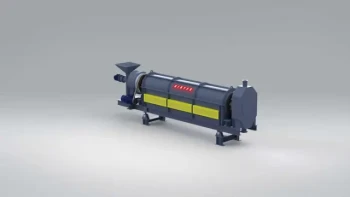
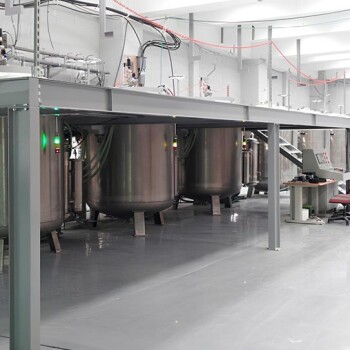
In an industrial-grade atmosphere furnace, carbon dioxide (CO2) and steam function as physical activating agents that fundamentally alter the internal structure of carbon materials. These gases initiate heterogeneous gasification reactions at high temperatures, effectively "etching" the carbon surface to unlock its potential.
The introduction of CO2 or steam transforms the furnace from a simple heating chamber into a chemical reactor. By selectively oxidizing carbon atoms, these gases clear blocked pathways and drill new channels, creating the hierarchical porous network required for high-performance applications.
The Mechanism of Physical Activation
Selective Oxidation
At elevated temperatures, CO2 and steam are not inert; they become mild oxidants.
They attack the carbon structure selectively, reacting with specific carbon atoms to convert them into gas phases (like carbon monoxide).
This process is distinct from combustion; it is a controlled gasification that removes carbon mass strategically rather than burning the material away entirely.
Clearing Tar-Clogged Micropores
During the initial carbonization of raw materials, volatile compounds often break down into tars.
These tars can clog the microscopic pores (micropores) of the carbon, rendering the material ineffective for adsorption.
The activating gases attack these amorphous carbon residues first, reopening the micropores and restoring the material’s baseline surface area.
Creation of Hierarchical Pores
Beyond simply clearing existing pores, these agents create new structures.
The etching process widens existing micropores into larger mesopores and macropores.
This results in a hierarchical porous network—a connected system of small, medium, and large channels that facilitates better fluid transport, such as oxygen diffusion or electrolyte infiltration.
Operational Context and Temperature
The Role of Temperature
The furnace environment must be precisely controlled to enable these reactions.
While initial carbonization (volatile removal) occurs between 500°C and 600°C, the physical activation with CO2 or steam requires significantly higher energy.
The Activation Zone
The effective activation window typically lies between 800°C and 1000°C.
Below this range, the gasification reactions are too slow to be effective; above it, the reaction may become too aggressive, destroying the carbon structure entirely.
Understanding the Trade-offs
Yield vs. Surface Area
The activation process involves a fundamental trade-off: burn-off.
To create pores, you must sacrifice carbon mass. The more you etch the material with CO2 or steam to increase surface area, the lower your final yield will be.
Process Control Risks
If the exposure time or temperature is uncontrolled, the "etching" can degrade the structural integrity of the carbon.
Over-activation can cause pore walls to collapse, reducing the surface area and creating a material that is too brittle for industrial use.
Conversely, under-activation leaves pores clogged with tar, resulting in poor adsorption performance.
Making the Right Choice for Your Goal
To optimize the activation process, you must align the furnace atmosphere with your specific material performance targets.
- If your primary focus is Maximum Surface Area: Prioritize a controlled, longer activation phase to thoroughly clear micropores without collapsing the structure.
- If your primary focus is Ion Transport Speed: Ensure the process creates sufficient mesopores and macropores to facilitate electrolyte infiltration and diffusion.
- If your primary focus is Material Yield: Limit the temperature and duration of gasification to balance pore opening with mass retention.
Mastering the use of CO2 and steam allows you to engineer the carbon's internal architecture, turning raw mass into a precision tool.
Summary Table:
| Feature | Physical Activation with CO2/Steam |
|---|---|
| Primary Role | Selective oxidation and gasification of carbon atoms |
| Reaction Mechanism | Clearing tar-clogged pores and etching new channels |
| Optimal Temperature | 800°C to 1000°C (Controlled environment) |
| Structural Impact | Creates hierarchical networks (Micro-, Meso-, and Macropores) |
| Key Trade-off | Surface area vs. Material yield (Burn-off control) |
| Common Result | High-performance adsorption and improved ion transport |
Unlock Precision Carbon Engineering with KINTEK
Are you looking to optimize your carbon material activation? KINTEK specializes in advanced industrial atmosphere and vacuum furnaces designed to deliver the precise temperature control and gas flow management required for superior surface area development.
Our extensive portfolio supports your entire research and production lifecycle, featuring:
- High-temperature Atmosphere & Rotary Furnaces for consistent physical activation.
- Crushing, Milling, and Sieving Systems for feedstock preparation.
- Pellet & Isostatic Presses for carbon structural shaping.
- High-pressure Reactors and Cooling Solutions for advanced material processing.
Whether you are developing next-generation battery anodes or high-efficiency adsorption filters, KINTEK provides the high-quality equipment and consumables (like ceramics and crucibles) to ensure your lab achieves maximum yield and performance.
Ready to elevate your material science? Contact our technical experts today!
References
- Shuling Liu, Baojun Li. Catalytically Active Carbon for Oxygen Reduction Reaction in Energy Conversion: Recent Advances and Future Perspectives. DOI: 10.1002/advs.202308040
This article is also based on technical information from Kintek Solution Knowledge Base .
Related Products
- Electric Rotary Kiln Small Rotary Furnace for Activated Carbon Regeneration
- 1200℃ Controlled Atmosphere Furnace Nitrogen Inert Atmosphere Furnace
- 1700℃ Controlled Atmosphere Furnace Nitrogen Inert Atmosphere Furnace
- 1400℃ Controlled Atmosphere Furnace with Nitrogen and Inert Atmosphere
- Controlled Nitrogen Inert Hydrogen Atmosphere Furnace
People Also Ask
- What is a rotary kiln electric furnace? Achieve Superior Uniform Heating for Your Materials
- What is the temperature of activated carbon regeneration? Unlock the 1000°F Process for Reuse
- What is the regeneration temperature of activated carbon? Optimize Your Process with the Right Method
- What are the characteristics of the slipping, slumping, and rolling modes of bed motion? Optimize Your Rotary Process
- What are the parts of a carbon regeneration kiln? A Guide to Its Core Components and Function