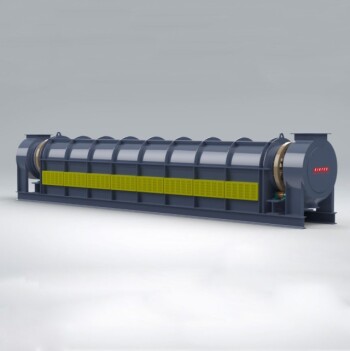
An industrial furnace is defined by a cooperative system of structural and thermal components designed to reach temperatures exceeding 752°F (400°C). The primary components utilized to achieve this include industrial furnace masonry, a dedicated exhaust system, a preheater, and a consuming device, all governed by high-stability control instruments.
Efficiency and product quality in industrial heating are not determined solely by the heat source, but by how effectively the containment structure (masonry) and regulation systems (controllers and preheaters) manage that thermal energy.
The Structural and Thermal Core
To understand how an industrial furnace operates, you must look at how it generates heat and how it contains it.
Industrial Furnace Masonry
The masonry acts as the structural body and the primary insulation layer of the unit.
It is responsible for containing the extreme heat required for industrial processes, ensuring thermal energy remains focused on the workload rather than dissipating into the surrounding environment.
The Consuming Device
This component serves as the heat generator for the system.
Depending on the specific design, this device converts fuel or electricity into the thermal energy required to drive the manufacturing process.
Efficiency and Airflow Management
A furnace requires active management of airflow and waste heat to operate economically and safely.
The Exhaust System
The exhaust system is critical for removing combustion byproducts and fumes from the furnace chamber.
Proper exhaust management ensures the internal environment remains stable and safe for operation.
The Preheater
The preheater is an essential component for thermal efficiency.
It captures waste heat from the exhaust stream and uses it to warm the incoming air or fuel, significantly reducing the energy required by the consuming device to reach target temperatures.
Precision and Control
The difference between a functional furnace and a high-performance one lies in its control systems.
Intelligent Control Instruments
Modern industrial furnaces utilize intelligent instruments to achieve high stability and reliability.
These systems move beyond simple on/off switching, allowing for nuanced adjustments to maintain a constant temperature profile.
Thyristor Phase Shift Controllers
For precise temperature management, these furnaces often employ a thyristor phase shift controller.
This technology regulates the power delivery to the heating elements with high precision, ensuring the internal temperature does not fluctuate and compromise the process.
Understanding the Trade-offs
While the mechanical components provide the heat, the chemical environment within the furnace presents a significant operational challenge.
The Impact of Atmosphere
The internal atmosphere of the furnace is rarely neutral; it acts as either a "carrier" to facilitate hardening or a "protector" to prevent damage.
If this atmosphere is not strictly controlled, unwanted chemical reactions can occur on the surface of the material.
Consequences of Poor Regulation
Failing to balance the atmosphere and temperature can render produced parts unsuitable for use.
While the masonry and consuming device provide the heat, the lack of precise atmospheric control can lead to material degradation regardless of the temperature stability.
Making the Right Choice for Your Goal
When selecting or evaluating an industrial furnace, your focus should shift based on your specific production requirements.
- If your primary focus is Energy Efficiency: Prioritize a high-quality preheater and superior masonry, as these components directly reduce the fuel required to maintain operating temperatures.
- If your primary focus is Product Consistency: Ensure the unit features a thyristor phase shift controller and intelligent instrumentation to eliminate temperature fluctuations that cause defects.
- If your primary focus is Surface Quality: rigorous attention must be paid to the atmospheric controls to prevent oxidation or unwanted chemical reactions during the heating cycle.
The most effective furnace is not necessarily the hottest, but the one that best integrates thermal containment with precise control logic.
Summary Table:
| Component | Primary Function | Impact on Performance |
|---|---|---|
| Masonry | Heat containment and insulation | Increases energy efficiency and safety |
| Consuming Device | Thermal energy generation | Determines the heating capacity |
| Exhaust System | Removal of fumes and byproducts | Ensures a stable and safe environment |
| Preheater | Waste heat recovery | Significantly reduces fuel consumption |
| Control Instruments | Precision monitoring and regulation | Ensures product consistency and stability |
| Thyristor Controller | Power delivery regulation | Prevents temperature fluctuations |
Elevate Your Thermal Processing with KINTEK
Don't let inefficient components or poor temperature control compromise your production quality. KINTEK specializes in advanced laboratory and industrial equipment, providing everything from high-performance muffle, vacuum, and atmosphere furnaces to precision crushing systems and hydraulic presses.
Our expert solutions empower researchers and manufacturers with superior masonry, intelligent control logic, and optimized thermal management. Whether you need reliable high-temperature reactors, cooling solutions, or essential crucibles and ceramics, KINTEK delivers the precision your lab demands.
Ready to optimize your heating processes? Contact our technical experts today to find the perfect furnace configuration for your specific application!
Related Products
- Rotary Tube Furnace Split Multi Heating Zone Rotating Tube Furnace
- High Temperature Muffle Oven Furnace for Laboratory Debinding and Pre Sintering
- Multi Heating Zones CVD Tube Furnace Machine Chemical Vapor Deposition Chamber System Equipment
- Vertical High Temperature Graphite Vacuum Graphitization Furnace
- Ultra-High Temperature Graphite Vacuum Graphitization Furnace
People Also Ask
- What are the advantages of using a rotary tube furnace for MoVOx catalysts? Elevate Uniformity and Crystallinity
- What are the process advantages of using a rotary tube furnace for WS2 powder? Achieve Superior Material Crystallinity
- Why is a rotary tube furnace recommended for the calcination stage of potassium vanadium oxide catalysts? Optimize Purity
- What is a rotary tube furnace? Achieve Superior Uniformity for Powders and Granules
- Why is a rotary tube furnace preferred over a fixed tube furnace for the carbonization of asphaltenes? Superior Quality