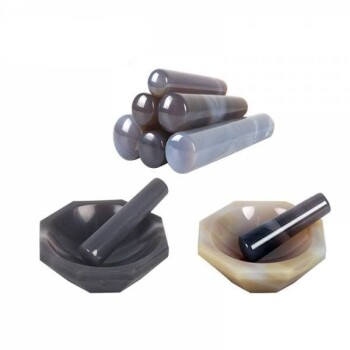
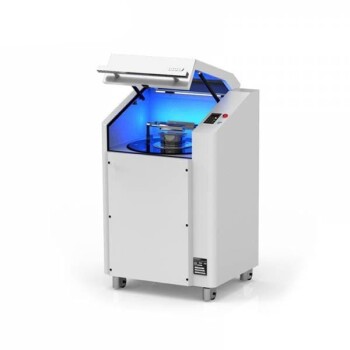
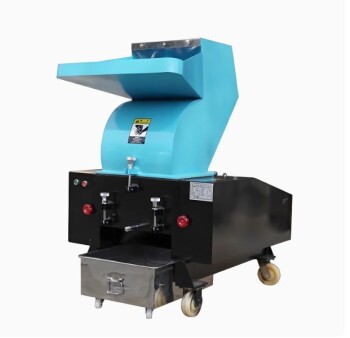
Grinding and milling equipment are the fundamental drivers of physical and chemical homogeneity in the preparation of nitrogen-doped carbon precursors. By reducing raw materials to a refined powder, these tools ensure that carbon sources, nitrogen sources, and activating agents are distributed at a molecular level, which is essential for consistent nitrogen doping and pore development.
The primary role of grinding equipment is to maximize the contact area between precursors and activators, ensuring that nitrogen atoms are uniformly integrated into the carbon framework. This physical refinement dictates the final adsorbent’s porosity, chemical functionality, and overall efficiency in capturing target molecules.
Achieving Molecular-Level Homogeneity
Microscopic Mixing of Precursors
Grinding equipment is utilized to thoroughly blend raw materials such as sucrose, melamine, and urea. This process ensures high microscopic uniformity, which is critical for the subsequent high-temperature activation phase.
Preventing Localized Doping Imbalances
By achieving a uniform distribution of nitrogen sources at the molecular level, grinding prevents localized doping imbalances. This leads to the consistent formation of amine groups and quaternary nitrogen (N–Q) active sites across the entire carbon framework.
Distribution of Metal Precursors
In specialized applications involving metal-doped structures, milling achieves a high degree of physical homogeneity for cobalt and nickel precursors. This high dispersion is necessary for the formation of uniform nitrogen-doped graphene structures during pyrolysis.
Optimizing Thermal and Chemical Reactivity
Enhancing Heat Transfer
Reducing dried biomass or polymers to a uniform particle size facilitates more consistent heat transfer during heating in a furnace. This prevents thermal gradients that can lead to uneven carbonization and structural defects.
Improving Activation Efficiency
Grinding increases the geometric specific surface area of the material, allowing activating agents like zinc chloride (ZnCl2) or potassium hydroxide (KOH) to penetrate more deeply. This enhanced contact improves the efficiency of pore formation and chemical functionalization.
Shortening Ion Diffusion Paths
Ultrafine powders created through high-rate grinding shorten ion diffusion paths within the material. This physical modification is essential for functionalized porous carbons, as it enhances ion accessibility and increases electrochemical capacity.
Structural and Morphological Control
Precise Particle Size Specification
Industrial crushing and sieving equipment process raw materials into specific ranges, typically between 0.5mm and 2mm. Precisely controlling these specifications ensures uniform chemical reagent penetration and removes attached impurities to enhance the purity of the final product.
Integration with Polymer Matrices
When preparing molded carbon devices, carbon sources must be processed to a particle size of less than 600 micrometers. This ensures high dispersion and uniform filling within organic solutions, directly impacting the mechanical strength and structural consistency of the final device.
Increasing Geometric Specific Surface Area
The mechanical refinement of carbonized products into a uniform powder increases the overall capture rate of dye molecules. This is particularly vital in wastewater treatment applications, where the surface area directly correlates to the adsorbent’s performance.
Understanding Technical Trade-offs
The Risk of Impurity Introduction
While intensive milling achieves high uniformity, it introduces the risk of contamination from the milling media (such as steel or ceramic wear). These impurities can interfere with the catalytic or adsorptive properties of the nitrogen-doped carbon.
Energy Consumption and Material Degradation
Excessive grinding requires significant energy and can generate localized heat that may prematurely degrade sensitive precursors. Over-processing can also lead to an excessively fine dust that is difficult to handle or recover in industrial-scale liquid-phase applications.
Strategies for Optimizing Precursor Preparation
How to Apply This to Your Project
To achieve the best results in your adsorbent preparation, your processing strategy should align with your specific performance targets:
- If your primary focus is maximum nitrogen doping: Prioritize high-energy milling of urea or melamine with your carbon source to ensure nitrogen atoms are available at every potential bonding site during pyrolysis.
- If your primary focus is high porosity and surface area: Use grinding to maximize the contact area between the precursor and chemical activators like ZnCl2 before the activation step begins.
- If your primary focus is industrial scalability and flow-through: Utilize precise sieving to maintain a particle size between 0.5mm and 2mm to ensure a balance between reactive surface area and manageable pressure drops in filtration systems.
By mastering the mechanical refinement of your precursors, you ensure the chemical and structural integrity of the final nitrogen-doped adsorbent.
Summary Table:
| Key Role | Impact on Precursor | Benefit to Final Adsorbent |
|---|---|---|
| Molecular Mixing | Homogeneous distribution of N-sources | Consistent amine & quaternary N active sites |
| Surface Refinement | Increased geometric surface area | Enhanced activation efficiency (KOH/ZnCl2) |
| Thermal Optimization | Improved heat transfer | Uniform carbonization & fewer structural defects |
| Size Control | Precisely specified particle ranges | Optimized ion diffusion and capture rates |
Elevate Your Material Synthesis with KINTEK Precision
Achieving molecular-level homogeneity is the first step toward high-performance nitrogen-doped adsorbents. KINTEK specializes in the high-quality laboratory equipment needed to master this process. From advanced crushing and milling systems that ensure perfect precursor blending to high-temperature furnaces (muffle, tube, vacuum) for precise carbonization, we provide the tools researchers need for superior results.
Our comprehensive portfolio also includes sieving equipment, hydraulic pellet presses, and high-purity ceramic crucibles, ensuring your research is supported by reliability and precision at every stage.
Ready to optimize your adsorbent production? Contact our experts today to find the perfect equipment solution for your lab’s specific needs!
References
- Fumiya Matsuzawa, Motoi Machida. Characteristics of phosphate ion adsorption by nitrogen-doped carbon-based adsorbents prepared from sucrose, melamine, and urea. DOI: 10.7209/carbon.020204
This article is also based on technical information from Kintek Solution Knowledge Base .
Related Products
- Laboratory High Throughput Tissue Grinding Mill Grinder
- Laboratory Grinding Mill Mortar Grinder for Sample Preparation
- Vibrating Disc Mill Small Laboratory Grinding Machine
- Laboratory Ball Mill Jar Mill with Metal Alloy Grinding Jar and Balls
- Laboratory Hybrid Tissue Grinding Mill
People Also Ask
- What is the purpose of using a laboratory grinder and standard sieves? Unlock Precise Rice Husk Pretreatment
- What is the purpose of using a laboratory grinder with specific mesh sieves for oat straw? Optimize Pellet Quality
- What is the role of laboratory-grade grinders and sieves in sample prep? Ensure High-Precision Corrosion Analysis
- How do laboratory grinders and standard sieving systems ensure the quality of feedstock for torrefaction?
- What does a grinder do in a laboratory? Achieve Homogeneous Sample Preparation for Accurate Analysis