Hot Isostatic Pressing (HIP) equipment serves as a critical post-processing tool designed to eliminate internal defects and maximize the density of Inconel 718/TiC composites.
By subjecting the sintered material to simultaneous high temperatures (typically around 1160 °C) and high-pressure argon gas (around 130 MPa), the equipment forces internal residual pores to close. This process significantly enhances the material's mechanical integrity, specifically improving fatigue strength and ductility.
Core Insight: Sintering alone often leaves microscopic voids that weaken a composite. HIP functions as a corrective densification step, using uniform pressure and heat to force the material to flow in a solid state, effectively "healing" internal defects through atomic diffusion.
The Mechanism of Densification
Simultaneous Heat and Pressure
The HIP process is defined by the concurrent application of thermal and mechanical energy. For Inconel 718/TiC composites, the equipment typically operates at temperatures near 1160 °C and pressures of 130 MPa.
Isostatic Application
Unlike standard pressing which applies force from one or two directions, HIP applies pressure isostatically. This means the argon gas exerts uniform force on the component from every direction simultaneously.
This uniformity ensures that the material consolidates evenly, preventing the distortion that might occur with uniaxial pressure.
Physical Transformation of the Material
Plastic Deformation and Creep
Under the intense conditions of the HIP vessel, the material yields and becomes plastic. The pressure differential causes the material surrounding internal voids to collapse inward.
This plastic deformation physically closes the gaps left behind during the initial sintering process.
Diffusion Bonding
Once the void surfaces are pressed into contact, the elevated temperature facilitates diffusion bonding. Atoms migrate across the boundary where the void used to be, fusing the surfaces together at an atomic level.
This effectively erases the defect, transforming a porous region into solid material.
Resulting Mechanical Improvements
Achieving Near-Theoretical Density
The primary metric of success for HIP is the final relative density of the composite. By eliminating microporosity, the process pushes the material density closer to its theoretical maximum.
Enhancing Fatigue Strength and Ductility
The removal of internal pores eliminates stress concentrators that can lead to crack initiation.
As a result, the treated Inconel 718/TiC composite exhibits substantially higher fatigue strength and improved ductility compared to its as-sintered state.
Critical Process Considerations
Environmental Control
The process must occur in a strictly controlled environment to preserve material purity. Inert argon gas is used as the pressure medium to prevent adverse chemical reactions with the composite components.
Solid-State Processing
It is crucial to note that HIP is a solid-state process. The temperature is carefully controlled to remain below the melting point of the material.
This allows the material to flow and bond without losing its shape or undergoing the phase changes associated with melting and resolidification.
Assessing the Value for Your Project
The decision to employ HIP depends on the specific performance requirements of your Inconel 718/TiC application.
- If your primary focus is maximum durability: HIP is essential for applications subject to cyclic loading, as it directly increases fatigue strength by removing crack-initiating pores.
- If your primary focus is material integrity: HIP provides the highest assurance of internal soundness, creating a fully dense, uniform composition suitable for critical safety components.
By integrating Hot Isostatic Pressing, you effectively convert a sintered part with potential internal weaknesses into a fully dense, high-performance composite component.
Summary Table:
| Process Parameter | Typical Value | Role in Densification |
|---|---|---|
| Temperature | ~1160 °C | Facilitates plastic deformation and atomic diffusion |
| Pressure | ~130 MPa | Provides isostatic force to collapse internal pores |
| Pressure Medium | Inert Argon Gas | Ensures uniform pressure and prevents oxidation |
| Material State | Solid-state | Maintains part geometry while bonding surfaces |
| Key Outcome | Near-Theoretical Density | Eliminates stress concentrators to boost durability |
Elevate Your Material Integrity with KINTEK
Are you looking to eliminate internal porosity and maximize the mechanical performance of your advanced composites? KINTEK specializes in high-precision laboratory equipment, including industry-leading isostatic presses, high-temperature furnaces, and crushing systems designed for the most demanding research and production environments.
Whether you are refining Inconel 718/TiC composites or developing next-generation aerospace components, our range of hot and cold isostatic presses (HIP/CIP) ensures your materials achieve near-theoretical density and superior fatigue strength. From high-temperature high-pressure reactors to essential ceramics and crucibles, KINTEK provides the end-to-end solutions your lab needs.
Ready to transform your sintered parts into high-performance components? Contact our technical experts today to find the perfect HIP solution for your project!
References
- Vadim Sufiiarov, Danil Erutin. Effect of TiC Particle Size on Processing, Microstructure and Mechanical Properties of an Inconel 718/TiC Composite Material Made by Binder Jetting Additive Manufacturing. DOI: 10.3390/met13071271
This article is also based on technical information from Kintek Solution Knowledge Base .
Related Products
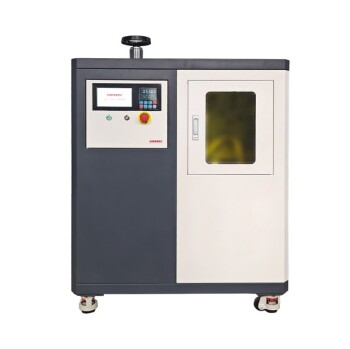
- Warm Isostatic Press for Solid State Battery Research
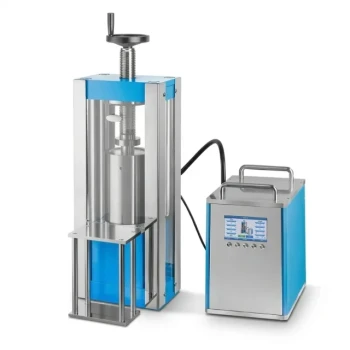
- Electric Split Lab Cold Isostatic Press CIP Machine for Cold Isostatic Pressing
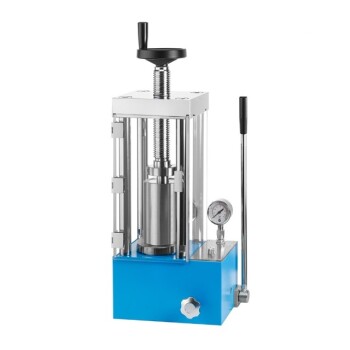
- Manual Cold Isostatic Pressing Machine CIP Pellet Press
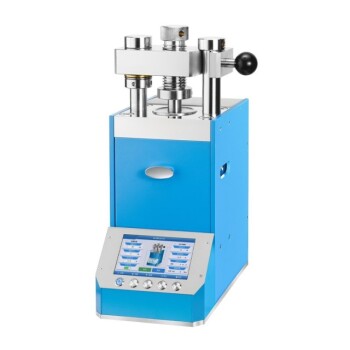
- Automatic Lab Cold Isostatic Press CIP Machine Cold Isostatic Pressing
- Isostatic Molding Pressing Molds for Lab
People Also Ask
- What is the temperature of a warm isostatic press? Achieve Optimal Densification for Your Materials
- What is the function of a Warm Isostatic Press (WIP) in all-solid-state pouch cells? Optimize Battery Density
- Why are Warm Isostatic Presses (WIP) necessary for solid-state batteries? Achieve Atomic-Level Contact
- What advantages does a warm isostatic press offer over a traditional uniaxial press for Li6PS5Cl electrolyte sheets?
- How do warm isostatic presses improve dry electrode performance? Enhance ASSB Conductivity with Heat & Pressure