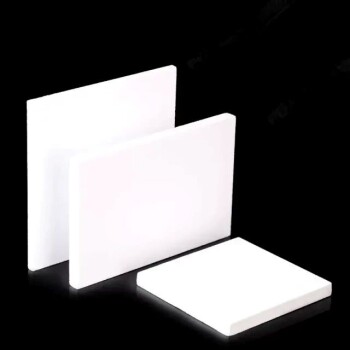
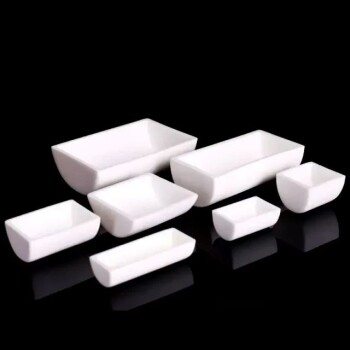
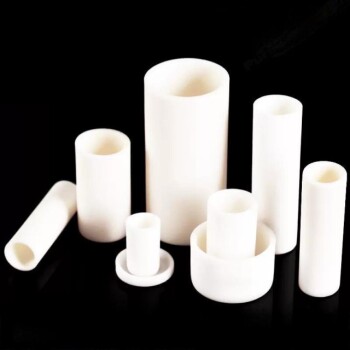
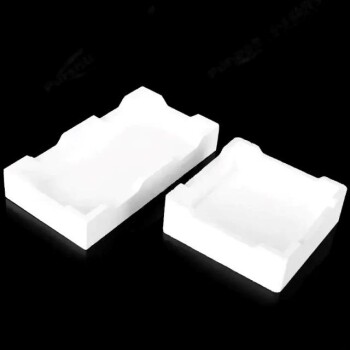
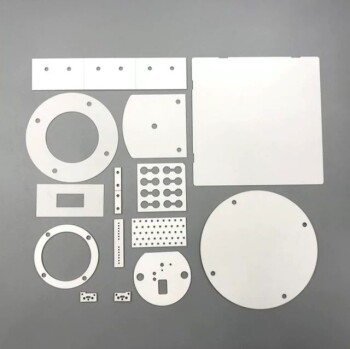
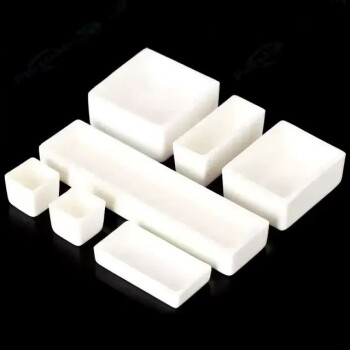
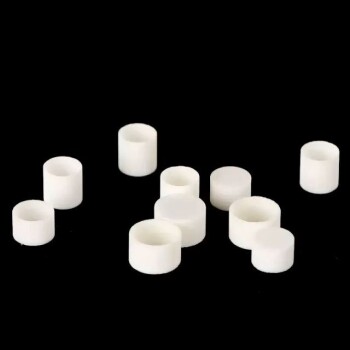
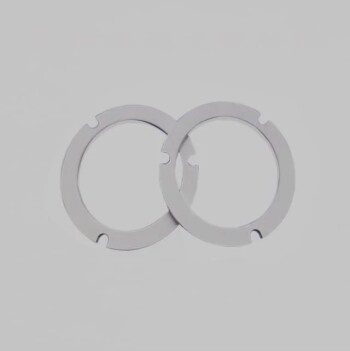
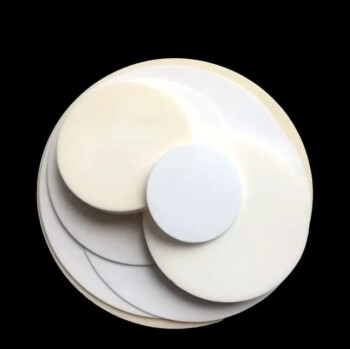
In field-assisted sintering, an alumina C-ring serves as a critical precision spacer and mechanical stabilizer. Placed around the green body sample between the electrodes, it regulates the physical gap and ensures that mechanical pressure remains constant throughout the process. This setup prevents electric field distortions and ensures uniform thermal and electrical conditions for the material being sintered.
The alumina C-ring acts as a dual-purpose regulator in field-assisted sintering, simultaneously stabilizing mechanical load and ensuring a uniform electric field distribution to maintain sample integrity and process repeatability.
The Role of Mechanical Support and Spacing
Maintaining Constant Pressure
The C-ring is positioned to bear a specific portion of the load, preventing the green body from being over-compressed or crushed as the material softens. This ensures that the mechanical pressure applied to the sample remains uniform and predictable throughout the heating and voltage cycles.
Precise Gap Control
By acting as a fixed spacer between the electrodes, the ring defines the exact volume and height of the sintering environment. This physical boundary prevents the displacement of the green body during the initial stages of the experiment, keeping the sample centered and secure.
Impact on Electrical Field Stability
Preventing Field Distortion
Stability is essential in field-assisted techniques where electrical current or voltage is applied directly. The C-ring prevents the electrodes from tilting or shifting, which would otherwise cause non-uniform electrical flux and lead to "hot spots" within the sample.
Improving Contact Reliability
Poor contact between the electrode and the sample can lead to arcing or localized melting. The alumina ring ensures a flush interface between the components, which maintains a stable electric field and promotes more consistent densification of the ceramic or metal powder.
Understanding the Trade-offs
Thermal Expansion Discrepancies
Alumina possesses its own specific thermal expansion coefficient. If the sample being sintered expands or contracts at a significantly different rate than the alumina ring, it can introduce unwanted mechanical stress or create gaps that compromise the electric field.
Chemical Reactivity and Contamination
At the high temperatures required for sintering, alumina may become chemically reactive with certain green body materials. This can result in the sample bonding to the ring or the diffusion of aluminum oxide impurities into the final product, potentially altering its properties.
Maximizing Experimental Consistency
Before beginning a field-assisted sintering run, evaluate the physical and chemical requirements of your specific material.
- If your primary focus is pressure sensitivity: Use a C-ring with high compressive strength and precise tolerances to ensure the green body experiences zero fluctuating loads during voltage application.
- If your primary focus is electric field uniformity: Prioritize the precision machining of the C-ring’s height to ensure perfectly parallel electrode contact across the entire surface of the sample.
- If your primary focus is material purity: Verify that the alumina grade is high-purity (99.9%+) or consider a protective barrier to avoid cross-contamination with the sample at peak temperatures.
Utilizing an alumina C-ring correctly ensures that the complex interplay of electricity and pressure results in a high-quality, fully dense material.
Summary Table:
| Function | Key Benefit | Critical Consideration |
|---|---|---|
| Mechanical Support | Maintains constant pressure and prevents sample over-compression | High compressive strength & tolerances |
| Gap Control | Defines precise volume and prevents sample displacement | Accurate height for parallel contact |
| Electrical Stability | Prevents field distortion, arcing, and localized hot spots | Interface flushness & alignment |
| Material Integrity | High-purity alumina (99.9%+) minimizes sample contamination | Chemical reactivity at peak temps |
Enhance Your Sintering Precision with KINTEK
Optimize your research outcomes with high-performance laboratory consumables and equipment. KINTEK specializes in precision-engineered alumina components and a comprehensive range of sintering solutions, including:
- Advanced Ceramics: High-purity alumina C-rings, crucibles, and specialized PTFE products.
- High-Temperature Furnaces: Muffle, vacuum, CVD, PECVD, and atmosphere furnaces for every application.
- Sample Preparation: Hydraulic presses, crushing and milling systems, and sieving equipment.
Ensure consistent densification, uniform electric fields, and material purity in every experiment. Contact our technical experts today to find the perfect high-temperature solutions and consumables tailored to your laboratory's needs!
References
- Jan‐Helmut Preusker, Wolfgang Rheinheimer. Impact of AC and DC Electric Fields on the Microstructure Evolution in Strontium Titanate. DOI: 10.1002/adem.202201848
This article is also based on technical information from Kintek Solution Knowledge Base .
Related Products
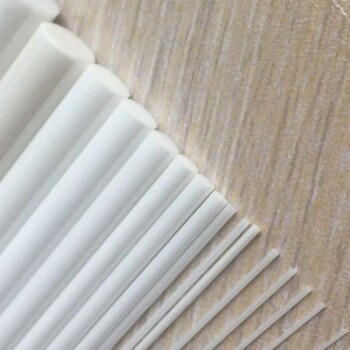
- Engineering Advanced Fine Alumina Al2O3 Ceramic Rod Insulated for Industrial Applications
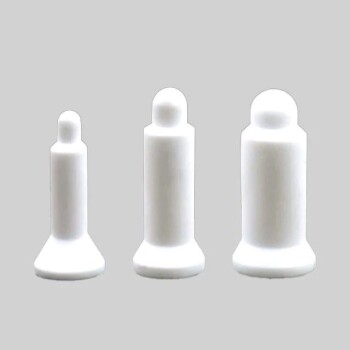
- Engineering Advanced Fine Alumina (Al₂O₃) Ceramic Positioning Pin Straight Bevel for Precision Applications
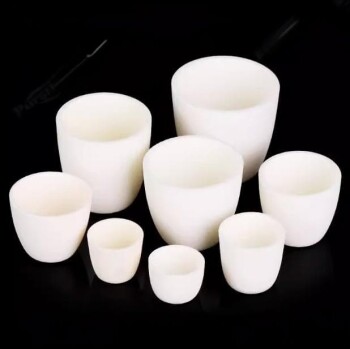
- Arc-Shaped Alumina Ceramic Crucible High Temperature Resistant for Engineering Advanced Fine Ceramics
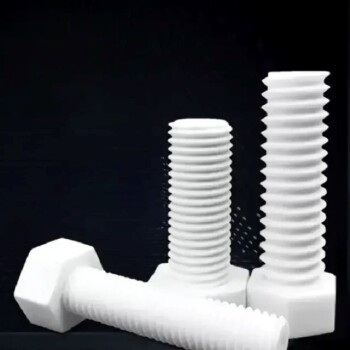
- High Quality Alumina Ceramic Screw for Engineering Advanced Fine Ceramics with High Temperature Resistance and Insulation
- High Temperature Wear-Resistant Alumina Al2O3 Plate for Engineering Advanced Fine Ceramics
People Also Ask
- Why are high-purity alumina rods used in LOCA experiments? Simulating Nuclear Fuel Gap and Steam Starvation
- How is alumina ceramic made? A Guide to Manufacturing Methods and Material Properties
- What ceramics are used for insulation? Choose the Right Material for Thermal or Electrical Needs
- Why are alumina insulation discs used as sample supports in CCPN? Ensure Arcing-Free, Uniform Plasma Nitriding
- How do alumina ceramic tubes address technical challenges in electrochemical devices? Ensure Peak Signal Integrity.