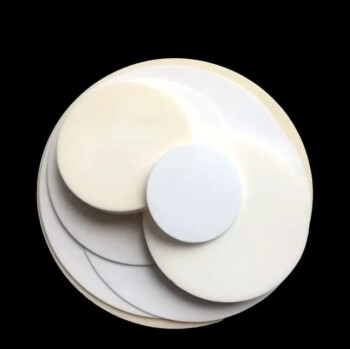
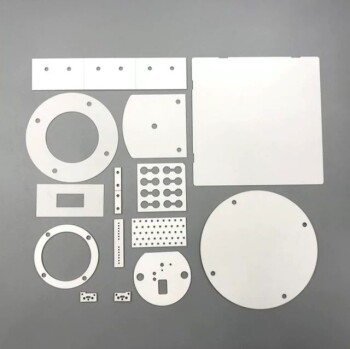
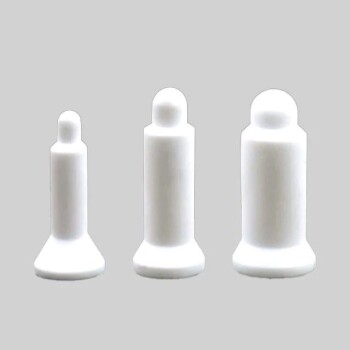
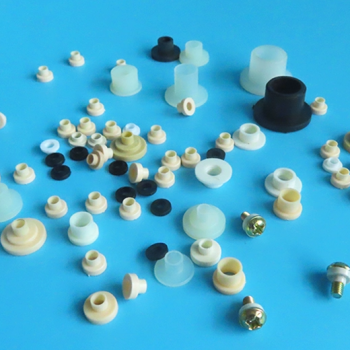
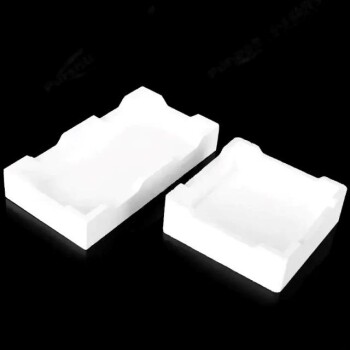
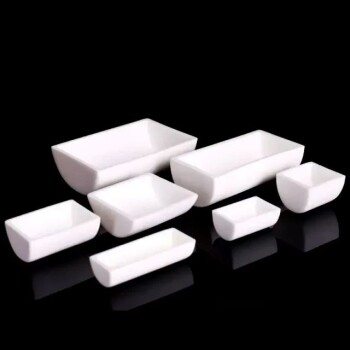
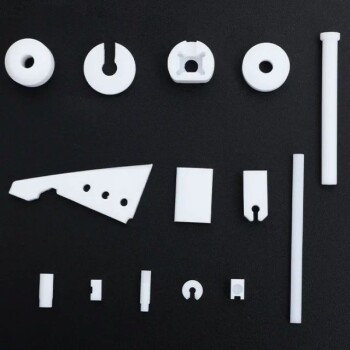
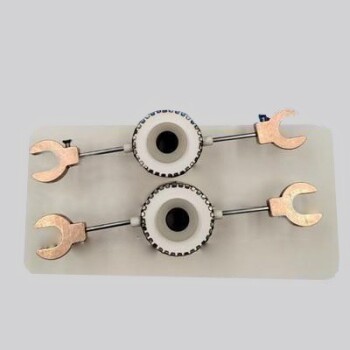
Alumina insulation discs serve as critical electrical isolators in the Cathode Cage Plasma Nitriding (CCPN) system. By separating the sample from the reactor’s conductive bottom plate, these ceramic components ensure the workpiece does not act as the primary electrode, forcing the nitriding process to occur indirectly via active particles generated by the surrounding cathode cage.
By electrically decoupling the sample from the discharge, alumina discs eliminate destructive arcing and ensure the formation of a uniform, high-quality nitrogen diffusion layer.
The Mechanics of Isolation in CCPN
Electrical Decoupling
The fundamental function of the alumina disc is to break the electrical circuit between the sample and the reactor.
Without this isolation, the sample would naturally become the cathode. The disc effectively "floats" the sample electrically, preventing it from participating directly in the high-voltage discharge.
Shifting the Plasma Source
Because the sample is isolated, the plasma discharge is forced to concentrate entirely on the cathode cage.
This ensures that the nitriding species are generated via sputtering from the cage material. These active particles then diffuse toward the sample, rather than being bombarded directly onto the sample surface.
Protecting Sample Integrity
Preventing Edge Discharge
Direct plasma nitriding often suffers from the "edge effect," where electrical discharge concentrates at sharp corners.
This concentration causes local overheating and arcing. The alumina disc prevents this by ensuring the sample creates no electrical potential that would attract these concentrated discharges.
Preserving Microstructure
The isolation provided by the disc is essential for maintaining the microstructural integrity of the workpiece.
This is particularly critical for samples with sensitive features, such as weld areas. By eliminating direct arcing, the disc ensures the nitrogen diffusion layer forms evenly without damaging the underlying material matrix.
Critical Considerations for Implementation
The Consequence of Insulation Failure
Since the process relies on the "remote" generation of particles, the integrity of the alumina disc is non-negotiable.
If the disc cracks or degrades, the electrical isolation fails. The sample will immediately re-couple with the discharge, leading to the very edge arcing and surface damage the process is designed to avoid.
Material Quality
The reference specifically notes these are high-performance ceramic consumables.
Using lower-grade insulation may result in dielectric breakdown under high voltage. This compromise would disrupt the protection of the nitrogen diffusion layer.
Making the Right Choice for Your Goal
The use of alumina discs is not merely a mounting choice; it is a process control requirement for CCPN.
- If your primary focus is Surface Finish: Prioritize checking the integrity of the alumina disc before every run to guarantee zero edge discharge or arcing.
- If your primary focus is Microstructural Preservation: Ensure the disc provides complete electrical isolation so that nitriding occurs solely through the gentle deposition of sputtered cage particles.
This approach transforms the sample support from a simple fixture into an active safeguard for your material properties.
Summary Table:
| Feature | Role of Alumina Disc in CCPN | Benefit to Process |
|---|---|---|
| Electrical State | Provides complete electrical decoupling | Prevents sample from acting as a cathode |
| Plasma Source | Forces discharge onto the cathode cage | Ensures indirect, uniform nitriding |
| Discharge Control | Eliminates edge effect and arcing | Protects sharp corners and sensitive features |
| Microstructure | Prevents direct high-voltage bombardment | Preserves base material and weld integrity |
Optimize Your Nitriding Outcomes with KINTEK
Precision in plasma nitriding requires high-performance components that can withstand rigorous thermal and electrical demands. KINTEK specializes in premium laboratory equipment and specialized consumables, providing the high-grade alumina insulation discs, ceramics, and crucibles essential for successful Cathode Cage Plasma Nitriding (CCPN).
Beyond insulation, our expertise extends to a comprehensive range of high-temperature furnaces (vacuum, CVD, atmosphere), crushing and milling systems, and advanced battery research tools. Whether you are looking to eliminate arcing or preserve the delicate microstructure of your samples, KINTEK offers the reliable solutions your research and production require.
Ready to elevate your material processing? Contact us today to find the perfect technical solution for your lab!
References
- Ferdinando Marco Rodrigues Borges, Rômulo Ríbeiro Magalhães de Sousa. Corrosion Resistance and Microstructural Evaluation of a Plasma Nitrided Weld Joint of UNS S32750 Super Duplex Stainless Steel. DOI: 10.1590/1980-5373-mr-2021-0087
This article is also based on technical information from Kintek Solution Knowledge Base .
Related Products
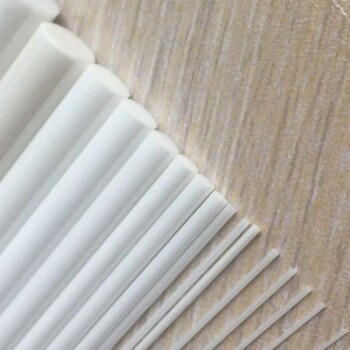
- Engineering Advanced Fine Alumina Al2O3 Ceramic Rod Insulated for Industrial Applications
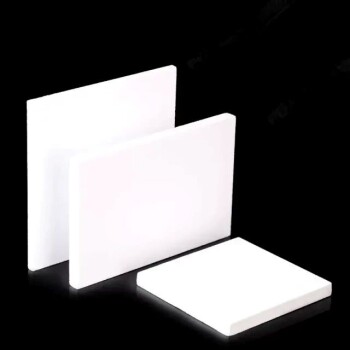
- High Temperature Wear-Resistant Alumina Al2O3 Plate for Engineering Advanced Fine Ceramics
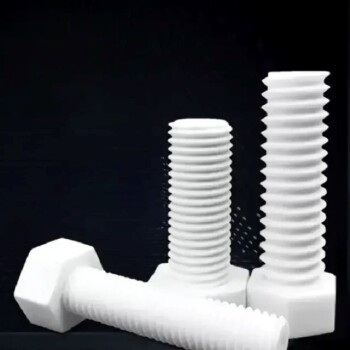
- High Quality Alumina Ceramic Screw for Engineering Advanced Fine Ceramics with High Temperature Resistance and Insulation
- Engineering Advanced Fine Ceramics Aluminum Oxide Al2O3 Heat Sink for Insulation
- Custom-Made Alumina Zirconia Special-Shaped Ceramic Plates for Engineering Advanced Fine Ceramics Processing
People Also Ask
- Why are high-purity alumina rods used in LOCA experiments? Simulating Nuclear Fuel Gap and Steam Starvation
- How is alumina ceramic made? A Guide to Manufacturing Methods and Material Properties
- What ceramics are used for insulation? Choose the Right Material for Thermal or Electrical Needs
- How do alumina ceramic tubes address technical challenges in electrochemical devices? Ensure Peak Signal Integrity.
- What is ceramic insulation used for? Master High-Temperature Solutions for Industrial Efficiency