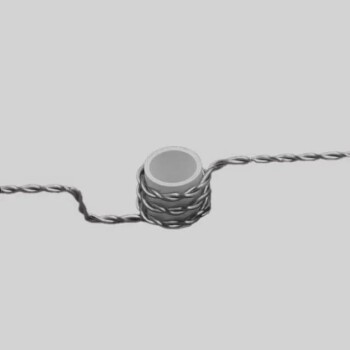
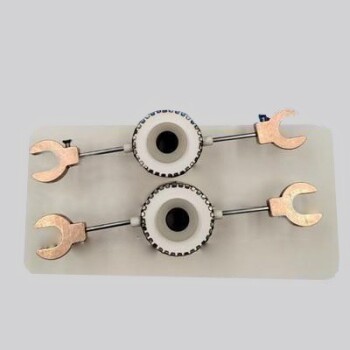
The technical necessity of wrapping ceramic crevice formers with Polytetrafluoroethylene (PTFE) tape lies in its ability to act as a conformable gasket that bridges the microscopic interface between the rigid ceramic and the metal alloy. This process eliminates irregular voids caused by surface texture, creating a uniform, controlled micro-crevice environment essential for accurate testing.
By filling microscopic gaps, PTFE tape decouples the test results from the specimen's initial surface roughness. This standardization is critical for ensuring that electrochemical parameters, such as repassivation potential, reflect the material's intrinsic properties rather than its surface finish.
The Mechanics of the Micro-Crevice
Bridging the Surface Gap
Ceramic formers are rigid, and metal specimens inevitably have surface texture. When these two materials are pressed together, microscopic gaps naturally occur between the high and low points of the metal's surface profile.
Creating Uniformity
PTFE tape is pliable and flows under pressure. Wrapping the former allows the tape to fill these microscopic irregularities, creating an extremely narrow and uniform micro-crevice that would be impossible to achieve with ceramic alone.
Impact on Electrochemical Data
Independence from Surface Roughness
A critical goal in corrosion testing is isolating the material's behavior from artifacts of preparation. Utilizing PTFE tape ensures that the test conditions are independent of the initial surface roughness of the metal specimen.
Stabilizing Repassivation Potential
Key electrochemical parameters, specifically the repassivation potential, can vary wildly if the crevice gap geometry is inconsistent. The tape standardizes this geometry, ensuring that the data collected is a true reflection of the alloy's corrosion resistance.
Understanding the Trade-offs (The Risk of Omission)
The Pitfall of Direct Contact
Attempting to use ceramic formers without PTFE tape introduces significant experimental error. Without the gasket effect, the crevice tightness becomes a function of how well the sample was polished, leading to data scatter.
Reliability vs. Complexity
While adding the tape adds a step to the assembly process, it is a necessary trade-off for data integrity. Skipping this step sacrifices the repeatability and reliability of the corrosion data, making it difficult to compare results across different tests or laboratories.
Making the Right Choice for Your Goal
To ensure your corrosion testing yields actionable engineering data, apply the following principles:
- If your primary focus is data repeatability: Ensure every ceramic former is wrapped to decouple your results from variations in specimen polishing or surface texture.
- If your primary focus is measuring intrinsic material properties: Use the PTFE wrap to stabilize the repassivation potential, ensuring you are measuring the alloy's limits rather than the test assembly's flaws.
Using PTFE tape transforms a variable physical interface into a standardized scientific control.
Summary Table:
| Feature | Ceramic Alone | Ceramic with PTFE Tape |
|---|---|---|
| Interface Type | Rigid-to-Rigid (Micro-gaps) | Conformable Gasket (Sealed) |
| Crevice Uniformity | Low / Variable | High / Controlled |
| Data Dependence | Tied to surface roughness | Independent of surface finish |
| Result Reliability | Prone to data scatter | High repeatability |
| Key Impact | Variable repassivation potential | Stabilized repassivation potential |
Precision Engineering for Your Corrosion Research
At KINTEK, we understand that reliable data starts with high-quality components. Our comprehensive range of laboratory equipment and consumables, including precision-machined ceramics and PTFE products, is designed to eliminate experimental variables.
Whether you are conducting electrochemical studies with our electrolytic cells and electrodes or performing high-stress testing in our high-temperature high-pressure reactors, we provide the tools necessary to isolate intrinsic material properties. Contact us today to discover how KINTEK’s specialized solutions can bring standardization and repeatability to your laboratory workflows.
References
- Ricardo M. Carranza, Martín A. Rodríguez. Crevice corrosion of nickel-based alloys considered as engineering barriers of geological repositories. DOI: 10.1038/s41529-017-0010-5
This article is also based on technical information from Kintek Solution Knowledge Base .
Related Products
- Engineering Advanced Fine Alumina Al2O3 Ceramic Crucible for Laboratory Muffle Furnace
- Advanced Engineering Fine Ceramics Alumina Ceramic Saggar for Fine Corundum
- Engineering Advanced Fine Ceramics Alumina Al2O3 Crucible With Lid Cylindrical Laboratory Crucible
- Arc-Shaped Alumina Ceramic Crucible High Temperature Resistant for Engineering Advanced Fine Ceramics
- Silicon Carbide (SIC) Ceramic Plate for Engineering Advanced Fine Ceramics
People Also Ask
- What crucible is used in muffle furnace? Select the Right Material for Your Application
- Why are alumina crucibles and mother powder essential for LATP sintering? Optimize Your Solid Electrolyte Performance
- Why are high-purity alumina crucibles used for liquid lead corrosion experiments? Ensure Data Accuracy at 550°C
- Why Use Alumina Crucibles & Powder Burial for NaSICON? Ensure Phase Purity and Prevent Elemental Volatilization
- What is the primary purpose of using alumina crucibles for LLTO ceramics? Optimize Your High-Temperature Sintering