The primary technical value of a vibratory sieve feeding system lies in its ability to deliver irregular raw glass powder into the high-temperature flame zone with precise, quantitative control. By maintaining a slow and extremely uniform feed rate, the system acts as a critical regulator, preventing the inconsistent surges that compromise thermal processing. This controlled entry is the foundational step for achieving high-quality spheroidization.
Precise feeding is the prerequisite for uniform thermal processing. A vibratory sieve system prevents particle agglomeration and ensures consistent heating, directly driving higher spheroidization rates and tighter particle size distribution in the final product.
Achieving Process Stability
Preventing Particle Clumping
In the high-temperature zone, raw glass powder becomes tacky and prone to sticking. If the feed rate fluctuates or surges, particles are forced too close together.
A vibratory sieve ensures particles enter the flame individually or in a dispersed state. This spacing is critical to prevent the powder from agglomerating (fusing together) into unusable clumps before they have a chance to spheroidize.
Ensuring Uniform Heating
For a particle to become a perfect sphere, it must absorb a specific amount of thermal energy.
The vibratory system guarantees that every particle experiences the same residence time within the flame. This uniformity ensures that each grain melts to the correct viscosity required for surface tension to pull it into a sphere.
Enhancing Product Consistency
When heating and residence time are uniform, the final output becomes predictable.
This control mechanism significantly improves the spheroidization rate, ensuring a higher percentage of the batch achieves the desired shape. It also results in a consistent particle size distribution, reducing the need for extensive post-process sorting.
Understanding the Trade-offs
Throughput vs. Precision
While the vibratory sieve excels at quality control, the reference emphasizes the need for a "slow" feed rate.
There is an inherent trade-off between production speed and particle perfection. Increasing the vibration speed to boost throughput may overwhelm the flame's thermal capacity, leading to inconsistent heating or increased agglomeration. The system is designed for precision, not necessarily for maximizing bulk volume per second.
Optimizing Your Spheroidization Strategy
To maximize the value of this system, align your settings with your specific production goals:
- If your primary focus is maximum quality: Set the feed rate to the lowest stable setting to ensure absolute particle separation and maximum spheroidization rates.
- If your primary focus is production volume: incrementally increase the feed rate only until you detect a drop in particle size consistency or the onset of agglomeration.
Ultimately, the vibratory sieve converts a chaotic raw material flow into a controlled, high-precision thermal process.
Summary Table:
| Technical Feature | Impact on Spheroidization | Core Benefit |
|---|---|---|
| Quantitative Feed Control | Prevents surges and surges in flame zone | Stable thermal processing environment |
| Dispersed Particle Entry | Eliminates particle agglomeration/clumping | Higher yield of individual spherical particles |
| Uniform Residence Time | Ensures consistent energy absorption per grain | Tighter particle size distribution (PSD) |
| Adjustable Vibration | Balances throughput vs. processing precision | Optimized production for specific quality goals |
Elevate Your Powder Processing with KINTEK Precision
Achieving the perfect spherical particle requires more than just heat—it demands absolute control. At KINTEK, we specialize in high-performance laboratory equipment including vibratory sieving systems, crushing and milling tools, and high-temperature furnaces designed to meet the rigorous demands of material science.
Whether you are refining glass powders or developing advanced battery materials, our comprehensive range of rotary furnaces, vacuum systems, and sieving solutions ensures your research yields consistent, high-quality results. Don't let inconsistent feeding compromise your spheroidization rates.
Ready to optimize your thermal processing workflow? Contact our technical experts today to find the perfect equipment solution for your laboratory.
References
- Bekir Karasu, Burak Özdemir. Glass Microspheres. DOI: 10.31202/ecjse.562013
This article is also based on technical information from Kintek Solution Knowledge Base .
Related Products
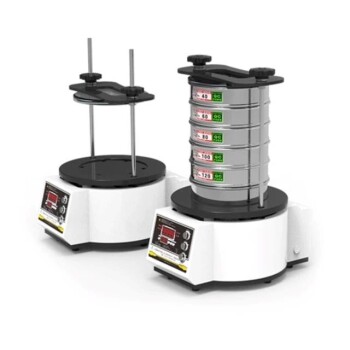
- Vibratory Sieve Shaker Machine Dry Three-Dimensional Vibrating Sieve
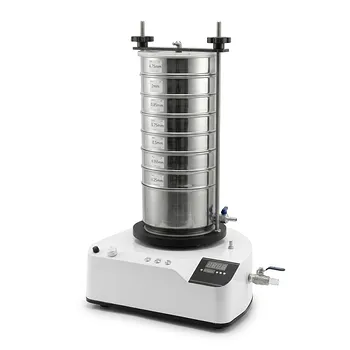
- Laboratory Vibratory Sieve Shaker Machine for Dry and Wet Three-Dimensional Sieving
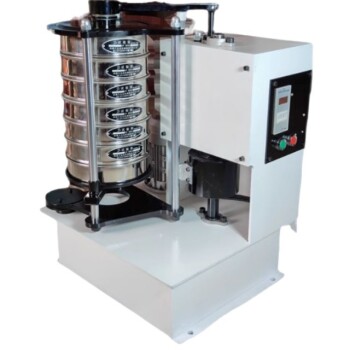
- Laboratory Vibratory Sieve Shaker Machine Slap Vibrating Sieve
- Laboratory Test Sieves and Vibratory Sieve Shaker Machine
- Laboratory Wet Three-Dimensional Vibratory Sieve Shaker Machine
People Also Ask
- How is a vibratory sieve shaker used in the particle size analysis of mechanically alloyed powders? Expert Guide
- Why use a vibratory sieve shaker for PET powder? Achieve Precise Particle Size Control for Chemical Research
- What is the principle of vibratory sieve shaker? Achieve Accurate Particle Size Analysis
- What is the function of a vibratory sieve shaker? Achieve Precise Particle Size Analysis
- What is the use of vibratory sieve shaker? Achieve Precise Particle Size Analysis for Your Lab