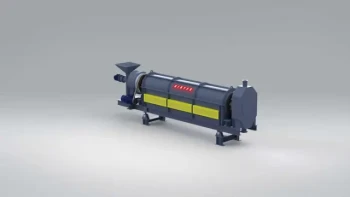
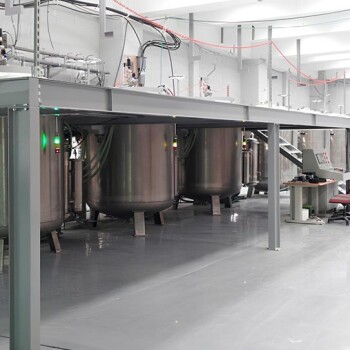
The primary role of carbonization and activation furnaces is to execute precise structural regulation. These furnaces serve as the critical processing environment where organic polycondensation products (xerogels) are thermally converted into highly conductive, porous carbon frameworks. Through controlled heating profiles and specific atmospheres, they remove volatile components to form a stable carbon skeleton and subsequently etch that skeleton to drastically increase its specific surface area.
Core Takeaway The furnace is the instrument of "structural engineering" for the electrode. It determines the final electrochemical properties by balancing electrical conductivity (via carbonization) with ion storage capacity (via activation), directly dictating the supercapacitor’s energy and power density.
The Mechanics of Transformation
The preparation of active carbon xerogels is a dual-stage thermal process. The furnace facilitates two distinct physical and chemical transformations that are impossible to achieve under standard ambient conditions.
Phase 1: Carbonization (Skeleton Formation)
The first role of the furnace is to perform pyrolysis, typically in an inert or oxygen-free environment. This process heats the polymer precursor (often resorcinol-formaldehyde gels) to decompose organic material.
During this phase, volatile non-carbon elements are removed through thermal decomposition. This leaves behind a rigid carbon skeleton, which serves as the conductive backbone of the electrode.
Phase 2: Activation (Pore Development)
Following carbonization, the furnace performs an activation step, often raising temperatures significantly (e.g., 800 to 1000 degrees Celsius). This step frequently utilizes oxidizing gases like steam or carbon dioxide.
This process physically or chemically etches the carbon material, creating a vast network of micropores and mesopores. This "tuning" of the pore structure is essential for maximizing the specific surface area available for charge storage.
Impact on Electrochemical Performance
The structural changes induced by the furnace directly translate to the metrics that define a "high-performance" supercapacitor.
Enhancing Electrical Conductivity
By converting the organic gel into a pure carbon structure, the furnace ensures low internal resistance.
A highly conductive framework facilitates rapid electron transport, which is critical for achieving high power density (the ability to deliver energy quickly).
Maximizing Specific Capacitance
The activation phase creates a high specific surface area.
This increased surface area allows for greater ion adsorption at the electrode-electrolyte interface. This directly increases the specific capacitance, which determines the total energy storage capacity.
Ensuring Cyclic Stability
The furnace treats the material to ensure thermal and chemical stability.
A stable carbon structure resists degradation during repeated charge-discharge cycles, ensuring the supercapacitor maintains its performance over a long service life.
Critical Operational Trade-offs
While the furnace enables high performance, precise control is required to avoid diminishing returns. Understanding the trade-offs in furnace operation is vital for process optimization.
Activation vs. Conductivity
Aggressive activation increases surface area (and thus capacitance) but can degrade the carbon skeleton.
If the furnace etches away too much material, the electrical conductivity may drop, and the mechanical structure may collapse. This results in a capacitor with high theoretical storage but poor power delivery.
Pore Size Distribution
The furnace atmosphere and heating curve determine pore size.
If pores are too small (micropores), ions may be trapped, slowing down diffusion. If pores are too large (macropores), surface area is wasted. The furnace must be tuned to produce the optimal mesoporous structure for the specific electrolyte being used.
Making the Right Choice for Your Goal
The "best" furnace protocol depends entirely on the specific performance requirements of your final device.
- If your primary focus is Energy Density (Storage): Prioritize the activation phase. optimize the furnace atmosphere (e.g., steam activation) to maximize specific surface area and micropore volume.
- If your primary focus is Power Density (Speed): Prioritize the carbonization phase. Ensure complete graphitization and structural integrity to minimize internal resistance and maximize conductivity.
Ultimately, the furnace is not merely a heater, but a precision tool for tailoring the atomic architecture of your electrode to meet specific energy demands.
Summary Table:
| Process Phase | Primary Function | Structural Outcome | Impact on Performance |
|---|---|---|---|
| Carbonization | Pyrolysis in inert atmosphere | Formation of rigid carbon skeleton | High electrical conductivity & low resistance |
| Activation | Physical/chemical etching | Development of micro/mesopores | Increased surface area & specific capacitance |
| Optimization | Controlled heating & atmosphere | Precise pore size distribution | Balanced energy density and power delivery |
Elevate Your Material Research with KINTEK
Precision thermal processing is the key to unlocking the full potential of your carbon xerogel electrodes. KINTEK specializes in advanced laboratory equipment designed for the rigorous demands of battery and supercapacitor research. From high-temperature tube and vacuum furnaces for precise carbonization to CVD and atmosphere furnaces for controlled activation, we provide the tools necessary to engineer your material’s atomic architecture.
Our value to you:
- Versatile Heating Solutions: A comprehensive range of furnaces (muffle, rotary, and dental) to suit any scale of research.
- Total Laboratory Support: We offer everything from high-pressure reactors and electrolytic cells to crushing systems and pellet presses.
- Reliable Consumables: High-quality ceramics, crucibles, and PTFE products to ensure experimental purity.
Ready to achieve superior electrochemical performance? Contact KINTEK today for a customized equipment solution!
References
- Madalina Cruceru. Small detectors with inorganic scintillator crystals of CsI(Tl) for gamma radiation and heavy ions detection. DOI: 10.21175/rad.abstr.book.2023.32.5
This article is also based on technical information from Kintek Solution Knowledge Base .
Related Products
- Electric Rotary Kiln Small Rotary Furnace for Activated Carbon Regeneration
- Graphite Vacuum Furnace Bottom Discharge Graphitization Furnace for Carbon Materials
- Graphite Vacuum Furnace Negative Material Graphitization Furnace
- Large Vertical Graphite Vacuum Graphitization Furnace
- Graphite Vacuum Continuous Graphitization Furnace
People Also Ask
- What is a rotary kiln electric furnace? Achieve Superior Uniform Heating for Your Materials
- What is the temperature of activated carbon regeneration? Unlock the 1000°F Process for Reuse
- What is the regeneration temperature of activated carbon? Optimize Your Process with the Right Method
- What are the characteristics of the slipping, slumping, and rolling modes of bed motion? Optimize Your Rotary Process
- What are the parts of a carbon regeneration kiln? A Guide to Its Core Components and Function