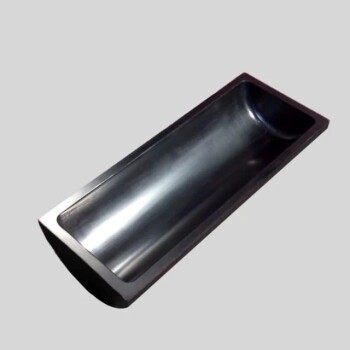
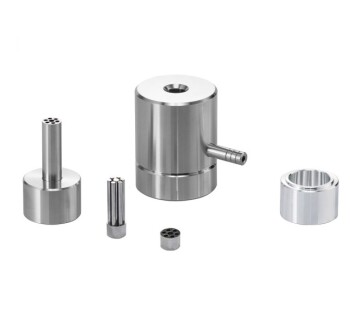
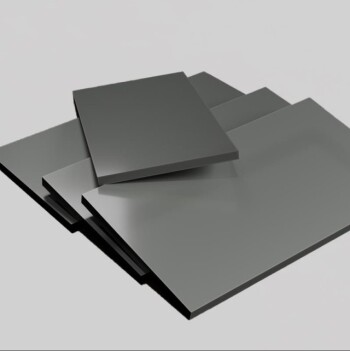
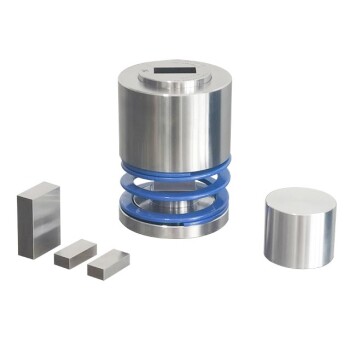
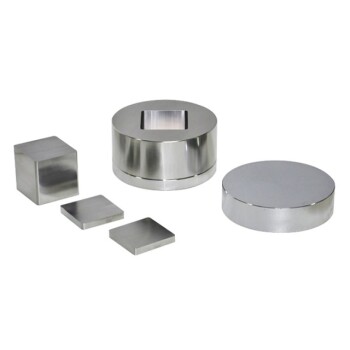
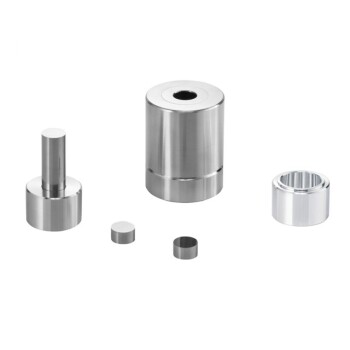
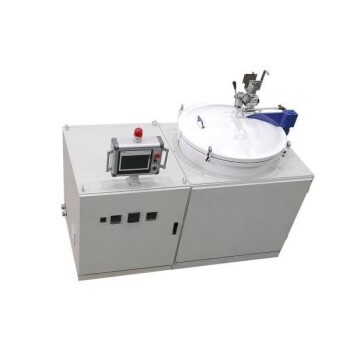
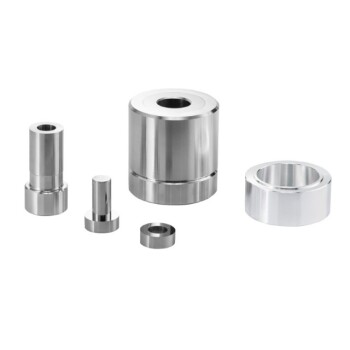
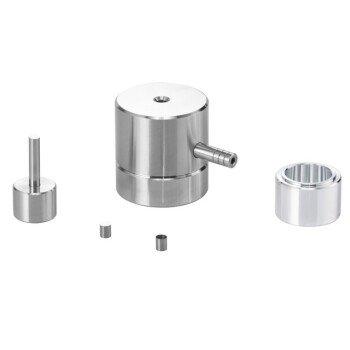
High-purity graphite molds act as the critical interface between the machinery and the material, serving a dual function as both a high-pressure containment vessel and a thermal conductor. Specifically for Aluminum Nitride (AlN) ceramics, these molds must withstand extreme sintering temperatures between 1550°C and 1650°C while simultaneously transmitting significant hydraulic pressure, typically around 32 MPa, directly to the ceramic green body.
Core Insight: The graphite mold is not merely a container; it is an active participant in the sintering process. Its ability to resist deformation (creep) at high temperatures allows it to convert external hydraulic force into the internal compressive stress necessary for the pressure-assisted densification of the ceramic.
The Mechanics of Pressure Transmission
Acting as the Hydraulic Interface
In vacuum hot pressing, the mold does more than hold the powder; it acts as a mechanical transmission system. The hydraulic press applies force to the mold assembly, which must effectively transfer this load to the AlN powder.
Achieving High-Pressure Densification
For Aluminum Nitride, the mold is subjected to pressures around 32 MPa. The graphite must be rigid enough to transfer this pressure evenly to the "green body" (the unfired ceramic) to reduce porosity and increase density.
Resistance to High-Temperature Creep
"Creep" refers to the tendency of a solid material to slowly deform under mechanical stress. The mold must possess exceptional resistance to creep to maintain the applied pressure without warping, even when pushed to the thermal limits of the process.
Thermal Management at Extreme Temperatures
Withstanding the Sintering Window
Aluminum Nitride requires a specific and intense thermal environment to sinter correctly. The graphite mold provides structural integrity within the critical temperature range of 1550°C to 1650°C, a point where many other container materials would fail or chemically react.
Ensuring Uniform Heat Distribution
Graphite is utilized for its high thermal conductivity. This property ensures that heat is drawn rapidly and uniformly from the furnace elements and distributed evenly throughout the ceramic powder.
Preventing Thermal Gradients
By eliminating cold spots or uneven heating, the mold helps prevent structural defects in the final ceramic product. Uniform heat transfer is essential for consistent grain growth and densification.
Containment and Shape Definition
Defining the Component Geometry
The mold serves as the primary forming tool. It confines the loose ceramic powder into a specific macroscopic shape, holding it in place before and during the application of pressure.
Dimensional Stability
Because the mold resists thermal expansion and deformation, it ensures the final sintered part retains precise dimensions. It acts as a strict guide during the shrinkage and consolidation phases of the ceramic.
Critical Material Requirements and Trade-offs
The Necessity of High Purity
The prompt specifies "high-purity" graphite for a reason. At temperatures exceeding 1500°C, impurities in the graphite could vaporize or diffuse into the Aluminum Nitride, contaminating the ceramic and degrading its electrical or thermal properties.
The Limits of Structural Integrity
While graphite is robust, it is not indestructible. The trade-off in hot pressing is balancing the pressure applied with the mold's yield strength. Exceeding the pressure limit (e.g., significantly beyond 32 MPa) or the temperature limit (1650°C+) risks fracturing the mold or causing excessive creep, which would distort the final product.
Making the Right Choice for Your Goal
To optimize your Aluminum Nitride sintering process, evaluate your mold selection based on your specific performance targets:
- If your primary focus is Maximum Density: Ensure the graphite grade chosen has certified high-temperature compressive strength to withstand the full 32 MPa load without creep.
- If your primary focus is Dimensional Precision: Prioritize graphite with high thermal conductivity to ensure uniform heating, preventing warping caused by uneven thermal expansion during the 1550°C–1650°C cycle.
Success in sintering AlN relies on viewing the graphite mold not as a consumable accessory, but as a precision tool that dictates both the structural and thermal history of the final part.
Summary Table:
| Parameter | Specification/Role | Impact on Sintering |
|---|---|---|
| Sintering Temperature | 1550°C to 1650°C | Ensures structural integrity without material failure. |
| Pressure Transmission | ~32 MPa Hydraulic Force | Facilitates high-pressure densification and reduced porosity. |
| Thermal Conductivity | High / Uniform | Prevents thermal gradients and ensures consistent grain growth. |
| Material Purity | High-Purity Graphite | Prevents chemical contamination and preserves electrical properties. |
| Mechanical Property | High Creep Resistance | Maintains dimensional stability and prevents mold deformation. |
Maximize Your Material Density with KINTEK Expertise
Precision in Aluminum Nitride sintering requires more than just high temperatures; it demands high-performance equipment that survives the pressure. KINTEK specializes in advanced laboratory solutions, providing high-purity graphite components alongside our industry-leading high-temperature furnaces (vacuum, CVD, and muffle) and hydraulic presses.
Whether you are conducting battery research or developing advanced AlN ceramics, our specialized crushing systems, milling equipment, and precision molds are designed to help you achieve zero-defect results. Optimize your lab’s efficiency and dimensional precision today—Contact our specialists at KINTEK to find the perfect fit for your application!
Related Products
- High Purity Pure Graphite Crucible for Evaporation
- High Purity Pure Graphite Crucible for Electron Beam Evaporation
- Ultra-High Temperature Graphite Vacuum Graphitization Furnace
- Horizontal High Temperature Graphite Vacuum Graphitization Furnace
- Vertical High Temperature Graphite Vacuum Graphitization Furnace
People Also Ask
- Why are high-purity graphite crucibles preferred for sulfide solid electrolytes? Achieve Superior Material Purity
- Why is a high-purity graphite crucible required for Chromel-TaC composites? Ensure Peak Purity at 1400°C
- What role do high-purity graphite crucibles play in molten salt corrosion research? Ensure Reactor-Grade Precision
- Why are high-purity graphite crucibles used for magnesium distillation? Ensure 3N8 Purity & Thermal Stability
- Why is a high-purity graphite crucible ideal for nitrogen-doped graphene at 1500 °C? Maximize Purity and Stability