High-purity graphite molds serve as the critical processing interface that enables the simultaneous heating, shaping, and densification of Mo fiber-reinforced TiAl composites. During vacuum hot pressing, these molds function as resistive heating elements maintaining temperatures between 1000°C and 1200°C, while acting as a mechanical medium to transfer uniaxial pressures up to 35 MPa to the composite.
Core Takeaway The success of the sintering process relies on the graphite mold’s ability to withstand high pressure without deformation while generating intense heat. This combination forces the TiAl matrix into a state of rheological flow, ensuring it completely fills the voids between molybdenum fibers for full composite densification.
The Mechanics of Densification
Acting as a Resistive Heating Element
In this specific vacuum hot pressing setup, the mold is not merely a passive container; it is an active component of the thermal system. The graphite functions as a resistive heating element, generating the necessary processing heat.
The mold must sustain stable temperatures ranging from 1000°C to 1200°C. This high thermal energy is transferred directly to the composite preforms, activating the sintering mechanism within the titanium aluminide matrix.
Facilitating Rheological Flow
The most complex role of the mold is enabling the matrix material to flow like a fluid around the rigid fibers.
By transferring pressures up to 35 MPa, the mold forces the powder matrix to undergo rheological flow. This flow is essential to penetrate and fill the microscopic gaps between the molybdenum fibers, eliminating porosity and ensuring a solid, fully dense structure.
Precision Pressure Transfer
The mold serves as the direct link between the hydraulic ram and the delicate composite stack.
It must act as a pressure transmission medium, delivering the external load uniformly across the surface of the preform. This uniformity is vital to prevent density gradients, which would lead to weak spots or warping in the final composite plate.
Structural Integrity Under Extremes
Dimensional Containment
Graphite molds are responsible for defining and fixing the final geometry of the composite.
They act as rigid containers that hold the stacked preforms in alignment. Even under extreme thermal and mechanical stress, the mold maintains the "net shape" of the part, reducing the need for post-process machining.
Resistance to Deformation
To achieve full densification, the mold material itself must be harder and more stable than the material inside it during the process.
The high-purity graphite is selected for its ability to withstand 35 MPa of uniaxial pressure at sintering temperatures without yielding. If the mold were to deform or bulge, the pressure on the composite would drop, resulting in incomplete densification and voids around the fibers.
Understanding the Trade-offs
The Necessity of Vacuum Environments
While high-purity graphite offers excellent thermal and mechanical properties, it is highly susceptible to oxidation at sintering temperatures.
The process must occur in a protective vacuum. This not only prevents the graphite from degrading (burning up) but also extends the service life of the mold, making the process more cost-effective compared to non-vacuum alternatives.
Mechanical Limits
Graphite is brittle and has a finite mechanical limit. While it can handle the 35 MPa required for this specific TiAl composite, exceeding the mold’s pressure rating can lead to catastrophic fracture rather than gradual deformation. Process parameters must be strictly controlled to stay within the graphite's safe operating window.
Making the Right Choice for Your Goal
When designing a sintering process for fiber-reinforced composites, the mold selection dictates the quality of the interface between the matrix and the fiber.
- If your primary focus is Maximum Density: Ensure your graphite grade is rated for pressures slightly above your target (e.g., >35 MPa) to guarantee the matrix undergoes sufficient rheological flow without risking mold failure.
- If your primary focus is Dimensional Accuracy: Prioritize graphite grades with high thermal stability and low thermal expansion to maintain precise alignment of the fiber stacks during the heating cycle.
The graphite mold is not just a vessel; it is the active tool that forces the matrix to conform to the reinforcement, defining the structural integrity of the final composite.
Summary Table:
| Feature | Function in Vacuum Hot Pressing | Impact on TiAl Composites |
|---|---|---|
| Resistive Heating | Generates 1000°C - 1200°C | Activates matrix sintering mechanism |
| Pressure Transfer | Delivers up to 35 MPa uniaxial load | Forces rheological flow to eliminate porosity |
| Structural Rigidity | High resistance to thermal deformation | Maintains net-shape geometry and fiber alignment |
| Material Purity | High-purity graphite in vacuum | Prevents contamination and mold oxidation |
Optimize Your Advanced Material Synthesis with KINTEK
At KINTEK, we understand that the success of your Mo fiber-reinforced composites depends on precision thermal and mechanical control. Whether you are performing vacuum hot pressing or advanced sintering, our high-performance vacuum furnaces, hot presses, and high-purity graphite consumables provide the stability needed to achieve full densification and superior structural integrity.
Why choose KINTEK?
- Comprehensive Laboratory Solutions: From crushing and milling systems for powder preparation to isostatic presses and high-temperature furnaces, we cover every stage of your workflow.
- Specialized Expertise: Our range includes high-pressure reactors, CVD/PECVD systems, and specialized PTFE and ceramic consumables tailored for extreme research environments.
- Targeted Performance: We empower researchers and manufacturers to reach precise rheological flow and dimensional accuracy in every cycle.
Ready to elevate your lab's capabilities? Contact our technical experts today to find the perfect equipment solution for your high-temperature processing needs!
Related Products
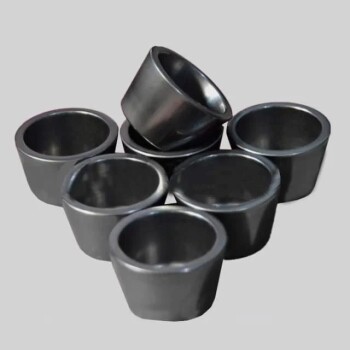
- High Purity Pure Graphite Crucible for Evaporation
- High Purity Pure Graphite Crucible for Electron Beam Evaporation
- High Purity Alumina Granulated Powder for Engineering Advanced Fine Ceramics
- Horizontal High Temperature Graphite Vacuum Graphitization Furnace
- Ultra-High Temperature Graphite Vacuum Graphitization Furnace
People Also Ask
- Why are high-purity graphite crucibles preferred for sulfide solid electrolytes? Achieve Superior Material Purity
- Why is a high-purity graphite crucible required for Chromel-TaC composites? Ensure Peak Purity at 1400°C
- What role do high-purity graphite crucibles play in molten salt corrosion research? Ensure Reactor-Grade Precision
- Why are high-purity graphite crucibles used for magnesium distillation? Ensure 3N8 Purity & Thermal Stability
- Why is a high-purity graphite crucible ideal for nitrogen-doped graphene at 1500 °C? Maximize Purity and Stability