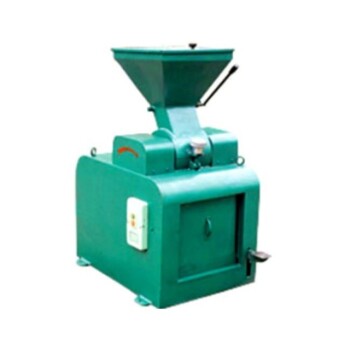
Industrial crushers and laboratory grinders serve as the critical first step in transforming waste plastic into usable raw materials for Wood-Plastic Composites (WPC). By processing recycled Polyethylene Terephthalate (PET) bottles into uniform particles or fine powders, these machines physically prepare the material for necessary chemical breakdown and structural integration.
The primary function of this machinery is physical size reduction, which drastically increases the material's specific surface area. This physical transformation is a prerequisite for efficient chemical depolymerization and ensures the plastic distributes evenly as a bonding matrix within the final composite.
The Mechanics of Material Preparation
Converting Waste to Raw Material
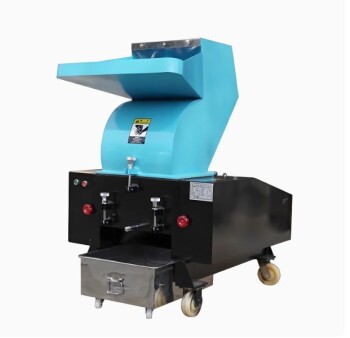
The recycling phase begins with the mechanical breakdown of post-consumer waste, specifically PET plastic bottles. Industrial crushers handle the initial bulk processing, while laboratory grinders refine the material further.
Achieving Uniform Particle Size
The goal is not just destruction, but precision. These machines are calibrated to produce uniform particles or powders rather than random shards.
Consistency in particle size is essential for predictable behavior during the subsequent manufacturing stages.
Increasing Specific Surface Area
The most important physical outcome of this grinding process is a significant increase in specific surface area.
By turning a solid object (like a bottle) into a fine powder, you expose more of the material's molecular structure. This exposure is the key enabler for the chemical reactions that follow.
Facilitating Chemical and Structural Integrity
Enabling Depolymerization Reactions
WPC preparation often involves chemical recycling methods, such as glycolysis.
This depolymerization process relies on the contact area between the plastic and the chemical reagents. The high surface area created by grinding ensures the reaction proceeds efficiently and completely.
Ensuring Matrix Distribution
In a Wood-Plastic Composite, the plastic acts as the matrix material, binding the wood fibers together.
If the recycled plastic is not ground into a fine, uniform state, it cannot distribute evenly throughout the composite system. Proper grinding ensures a homogeneous mixture, preventing structural weak points in the final product.
Understanding the Trade-offs
The Risk of Inconsistent Grinding
If the size reduction process is inconsistent, the downstream chemical reactions will be uneven.
Large particles may not fully depolymerize during glycolysis, leading to impurities in the raw material. This results in a composite with unpredictable physical properties.
The Balance of Particle Size
While finer powders generally react faster, achieving extreme fineness requires more energy and precise equipment.
Operators must balance the need for a high specific surface area with the practical limitations of their grinding equipment. Failing to achieve the necessary fineness can compromise the plastic's ability to act as a uniform matrix.
Optimizing the Recycling Workflow
To ensure high-quality WPC production, you must tailor your mechanical processing to your specific chemical and structural goals.
- If your primary focus is Chemical Efficiency: Prioritize grinders that produce fine powders to maximize specific surface area for rapid depolymerization (glycolysis).
- If your primary focus is Structural Homogeneity: Focus on equipment that guarantees particle uniformity to ensure the plastic distributes evenly as a matrix material.
Success in WPC manufacturing is defined by how effectively you convert waste into a consistent, chemically reactive feedstock.
Summary Table:
| Process Phase | Equipment | Key Function & Benefit |
|---|---|---|
| Initial Breakdown | Industrial Crusher | Converts bulk PET waste into uniform, manageable particles |
| Material Refining | Laboratory Grinder | Produces fine powders to maximize specific surface area |
| Chemical Recycling | Reactors/Autoclaves | Enables efficient glycolysis and rapid depolymerization |
| Final Integration | Composite Matrix | Ensures homogeneous plastic distribution and structural integrity |
Elevate Your WPC Recycling Efficiency with KINTEK
Precision in size reduction is the foundation of high-quality Wood-Plastic Composites. KINTEK provides the specialized equipment you need to transform waste into high-performance raw materials. Our industry-leading crushing and milling systems ensure optimal surface area for chemical reactions, while our high-temperature high-pressure reactors and hydraulic presses facilitate seamless depolymerization and composite forming.
Whether you are refining laboratory samples or scaling industrial production, our comprehensive portfolio—including high-temperature furnaces, cooling solutions, and essential ceramics—ensures structural homogeneity and superior product quality.
Ready to optimize your recycling workflow? Contact KINTEK today for expert guidance and tailored equipment solutions!
References
- Halla Shehap, Saif Hussien. Recycling of Wood – Plastic Composite Prepared from Poly (Ethylene Terephthalate) and Wood Sawdust. DOI: 10.30684/etj.v39i11.2203
This article is also based on technical information from Kintek Solution Knowledge Base .
Related Products
- Powerful Plastic Crusher Machine
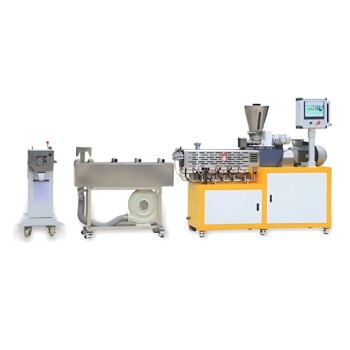
- Twin Screw Extruder Plastic Granulation Machine
- Laboratory Jaw Crusher
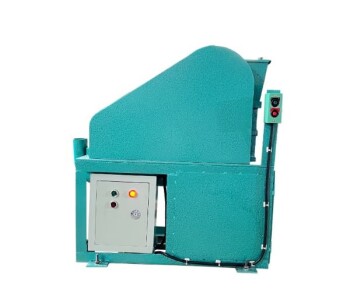
- Sealed Jaw Crusher High Efficiency Environmental Protection Safe and Reliable
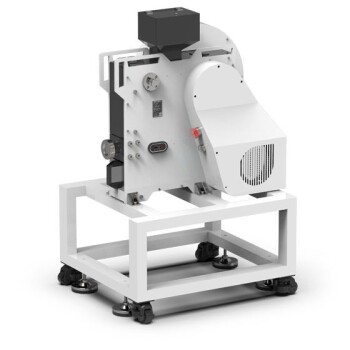
- Laboratory Sealed Hammer Crusher for Efficient Sample Preparation
People Also Ask
- What is the primary purpose of using an industrial-grade grinder for flax straw? Optimize Biomass Pretreatment Now
- What is the primary function of a crushing system? Optimize Rice Husk Fractionation with Precise Size Reduction
- What is the primary function of industrial crushers in battery dismantling? Optimize Your Recovery Feedstock
- What are the contaminants in plastic pyrolysis oil? Manage Impurities for Commercial Success
- Why is it necessary to use an ultrasonic cell disruptor before yeast flow cytometry? Ensure Data Accuracy