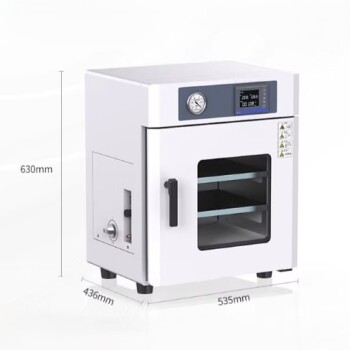
Laboratory drying ovens are the gatekeepers of pyrolysis efficiency, functioning primarily to eliminate moisture from sieved sugarcane bagasse through long-term exposure to temperatures around 110°C. This step is not simply about dehydration; it is a fundamental pre-treatment required to standardize the feedstock and ensure the thermodynamic viability of the conversion process.
Core Insight: The presence of water is the enemy of high-quality biofuel. Drying the bagasse is the only way to maximize the Gross Calorific Value (GCV) of the resulting bio-oil while preventing the reaction instability caused by excess steam generation.
The Physics of Preparation
To understand the critical nature of the drying oven, one must look beyond the simple evaporation of water and understand how moisture content dictates the chemistry of pyrolysis.
Thermal Pre-treatment
The oven provides a controlled environment for long-term drying.
By maintaining a consistent temperature of 110°C, the oven drives off physically adsorbed water without triggering the chemical decomposition of the biomass itself.
Standardization of Feedstock
Raw sugarcane bagasse is naturally wet and variable.
Using a drying oven ensures that every batch of sieved material enters the reactor with a consistent, low-moisture profile. This allows for reproducible data regarding reaction kinetics and product yield.
Impact on Pyrolysis Outcomes
The effort spent on oven-drying correlates directly with the quality of the final energy product.
Enhancing Energy Density
The primary goal of pyrolysis is to convert biomass into high-energy fuels.
Lowering the moisture content significantly increases the Gross Calorific Value (GCV) of the final bio-oil. If the bagasse is wet, energy is wasted vaporizing water rather than breaking down chemical bonds to create fuel.
Improving Bio-oil Stability
Water in the feedstock inevitably ends up in the final product.
Proper oven drying minimizes the water content in the condensed liquid bio-oil. Excess water in bio-oil can lead to phase separation, instability, and lower combustion efficiency.
Ensuring Reaction Efficiency
Pyrolysis is a thermochemical reaction dependent on precise heating rates.
Wet biomass acts as a heat sink, causing temperature fluctuations inside the reactor. Dried bagasse ensures the thermal energy is used efficiently for decomposition, maintaining the stability of the reaction.
Understanding the Trade-offs
While drying is essential, the process requires careful management to avoid introducing new variables into your experiment.
Time vs. Throughput
The primary reference notes the need for "long-term" drying.
This creates a bottleneck in the laboratory workflow. Rushing this step by increasing temperatures beyond 110°C risks scorching or pre-oxidizing the sample, which would skew elemental analysis.
Atmosphere Considerations
While standard bagasse drying is often done in air, it is worth noting that some carbonaceous materials (like coal) require inert atmospheres (nitrogen) during drying to prevent oxidation.
For bagasse, the priority is moisture removal at 110°C, but researchers should remain aware that prolonged exposure to heat and oxygen can subtly alter surface chemistry.
Making the Right Choice for Your Goal
The rigorous use of a drying oven is not optional for serious pyrolysis research. How you manage this step depends on your specific analytical targets.
- If your primary focus is Bio-oil Quality: Prioritize extending the drying duration to ensure the absolute minimum moisture content, preventing water contamination in your final liquid product.
- If your primary focus is Energy Efficiency: Focus on the correlation between drying levels and GCV to determine the optimal balance between pre-treatment energy costs and fuel output.
Ultimately, the drying oven transforms variable agricultural waste into a predictable, high-energy chemical feedstock.
Summary Table:
| Process Step | Primary Function | Impact on Pyrolysis Performance |
|---|---|---|
| Thermal Pre-treatment | Long-term drying at 110°C | Prevents premature decomposition while removing moisture |
| Feedstock Standardization | Homogenizing sieved material | Ensures reproducible reaction kinetics and consistent yields |
| Moisture Reduction | Minimizing water content | Increases Gross Calorific Value (GCV) and bio-oil stability |
| Thermal Stability | Eliminating heat sinks | Prevents reactor temperature fluctuations for efficient reaction |
Maximize Your Biofuel Research with KINTEK Precision
Precision in the pre-treatment phase is critical for high-quality pyrolysis outcomes. At KINTEK, we specialize in providing high-performance laboratory equipment designed to standardize your feedstocks and optimize your experiments.
Our comprehensive range includes:
- Laboratory Drying Ovens & Muffle Furnaces: Achieve perfect thermal pre-treatment for biomass.
- Crushing, Milling, & Sieving Systems: Ensure uniform particle size for your sugarcane bagasse.
- Pyrolysis Reactors & CVD Systems: Advanced high-temperature solutions for efficient thermal decomposition.
- Pellet Presses & Consumables: Everything you need from sample preparation to final analysis.
Ready to enhance the energy density and stability of your bio-oil? Contact our technical experts today to find the perfect drying and thermal solution for your lab!
References
- Mohammad Rofiqul Islam, Md. Shazib Uddin. Thermochemical Conversion of Sugarcane Bagasse into Bio-Crude Oils by Fluidized-Bed Pyrolysis Technology. DOI: 10.1299/jtst.5.11
This article is also based on technical information from Kintek Solution Knowledge Base .
Related Products
- Laboratory Scientific Electric Heating Blast Drying Oven
- 56L Vertical Laboratory Vacuum Drying Oven
- 23L Laboratory Vacuum Drying Oven
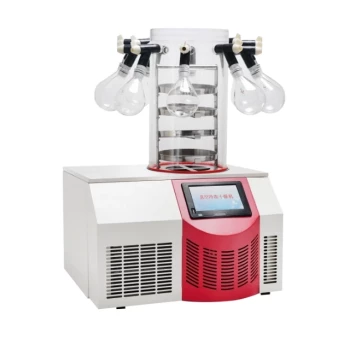
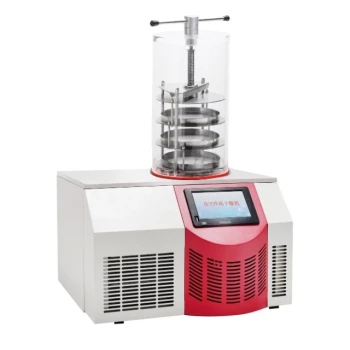
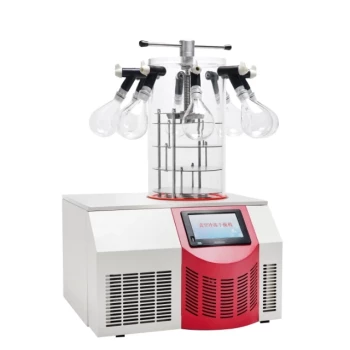
- High Performance Laboratory Freeze Dryer
- High Performance Laboratory Freeze Dryer for Research and Development
People Also Ask
- How does a laboratory electric drying oven contribute to the formation of the initial coating? Expert Insights
- What role does a precision laboratory drying oven play in the synthesis of GO-PANI nanocomposites? Protect Material Integrity
- What role does a laboratory drying oven play in the preparation of zinc oxide nanoparticle precursors?
- What is the necessity of using a laboratory drying oven when processing MoO3/GO composite nanopowders? Find out here.
- What is the role of a laboratory drying oven in cellulose citrate production? Ensure Material Stability & Purity