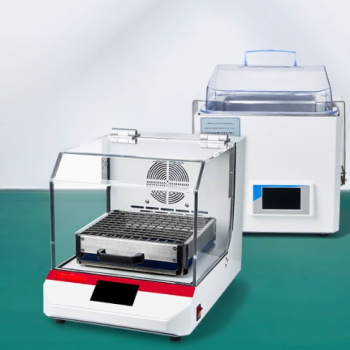
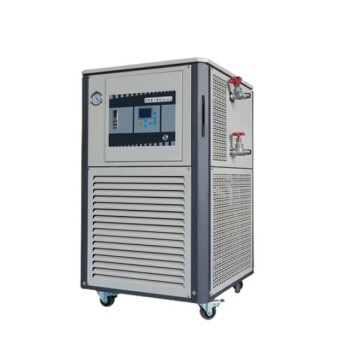
A constant temperature incubator shaker functions as the primary control mechanism in the anaerobic degradation of 2,4,6-Trichlorophenol (2,4,6-TCP). It ensures experimental validity by maintaining a precise 35°C environment for microbial survival while simultaneously oscillating at 150 rpm to force necessary interactions between the pollutant, anaerobic granular sludge, and amino-functionalized nanoparticles.
In synergistic degradation experiments, the incubator shaker bridges the gap between biological viability and chemical kinetics. By stabilizing temperature and eliminating mass transfer limitations, it guarantees that measured degradation rates reflect true reactivity rather than environmental inconsistencies.
Optimizing the Biological Environment
Thermal Regulation for Microbial Activity
Anaerobic digestion relies on specific microorganisms that are highly sensitive to thermal fluctuations. The incubator shaker maintains a constant temperature of 35°C, which is critical for sustaining the optimal metabolic activity of the anaerobic granular sludge.
If the temperature deviates, the biological component of the degradation process becomes unreliable. Precise thermal control ensures that the sludge remains active enough to work synergistically with the chemical catalysts.
Stability Across Long Durations
Degradation experiments often require extended periods to reach completion. The incubator provides a stable, closed environment that protects the samples from external thermal shifts in the laboratory.
This stability prevents temperature shocks that could stall microbial activity or alter the chemical reaction rates mid-experiment.
Enhancing Contact and Reaction Efficiency
Driving Three-Phase Interactions
The degradation process involves a complex mixture: liquid pollutants, solid biological sludge, and solid amino-functionalized nanoscale zero-valent iron (NZVI@SiO2-NH2).
Without mechanical intervention, these solids would settle, reducing their effectiveness. Continuous oscillation at 150 rpm keeps these components in suspension, forcing frequent collisions between the nanoparticles, the microorganisms, and the 2,4,6-TCP molecules.
Eliminating Mass Transfer Limitations
A critical aspect of kinetic studies is ensuring that the reaction is not limited by how fast molecules can move through the liquid.
The shaker provides continuous stirring power that enhances convective mass transfer. This moves pollutant molecules from the bulk liquid phase to the surface of the nZVI catalyst efficiently.
Ensuring Kinetic Accuracy
By removing macroscopic mass transfer barriers, the incubator allows researchers to measure the intrinsic chemical and biological reaction rates.
This ensures that the data collected represents the actual speed of degradation, rather than the speed of diffusion. This is the only way to obtain accurate, reproducible kinetic data.
Understanding Experimental Variables
The Consequence of Inadequate Agitation
If the oscillation speed is too low, the system creates a "diffusion-limited" environment.
In this scenario, the degradation rate will appear artificially slow because the reagents cannot physically reach each other. This leads to false conclusions regarding the efficiency of the catalyst or the sludge.
Balancing Biological and Physical Needs
While high agitation helps chemical mixing, it must be balanced against biological integrity.
The specific setting of 150 rpm is optimized to maximize mixing without subjecting the granular sludge to shear forces that might disrupt or destroy the biofilm structure.
Ensuring Validity in Your Experimental Design
To obtain publication-quality data from your degradation experiments, you must view the incubator shaker as a variable that requires strict calibration.
- If your primary focus is Biological Viability: Ensure the device is calibrated to maintain exactly 35°C to support the metabolic requirements of the anaerobic sludge.
- If your primary focus is Kinetic Data Accuracy: Verify that oscillation is set to 150 rpm to eliminate mass transfer limitations between the bulk liquid and the catalyst surface.
Precise control over heat and motion is the defining factor that transforms a simple mixture into a scientifically valid, reproducible reaction system.
Summary Table:
| Parameter | Setting | Role in Experiment |
|---|---|---|
| Temperature | 35°C | Maintains optimal metabolic activity of anaerobic granular sludge. |
| Agitation Speed | 150 rpm | Eliminates mass transfer limitations and ensures 3-phase interaction. |
| Environment | Closed/Stable | Prevents thermal shocks and protects long-duration biological reactions. |
| Key Outcome | Kinetic Accuracy | Ensures measured degradation rates reflect true chemical/biological reactivity. |
Elevate Your Research Precision with KINTEK
To achieve publication-quality results in environmental degradation and kinetic studies, precision control is non-negotiable. KINTEK specializes in advanced laboratory equipment designed for the most demanding research environments.
Whether you are performing anaerobic digestion, nanoparticle synthesis, or complex chemical reactions, our comprehensive range of products supports your workflow from start to finish. Our portfolio includes:
- Precise Shakers & Homogenizers: For perfect mass transfer and biological stability.
- High-Temperature Furnaces & Reactors: Including vacuum, CVD, and high-pressure autoclaves for material synthesis.
- Advanced Battery Research Tools: Specialized equipment and consumables for energy storage innovation.
- Cooling & Preservation: ULT freezers and freeze dryers for sensitive biological samples.
- Essential Consumables: High-purity ceramics, crucibles, and PTFE products.
Don't let equipment variability compromise your data. Partner with KINTEK for reliable, high-performance solutions tailored to your lab's needs.
Contact us today to find the perfect equipment for your laboratory!
References
- Zeyu Guan, Yajie Shu. Application of Novel Amino-Functionalized NZVI@SiO<sub>2</sub>Nanoparticles to Enhance Anaerobic Granular Sludge Removal of 2,4,6-Trichlorophenol. DOI: 10.1155/2015/548961
This article is also based on technical information from Kintek Solution Knowledge Base .
Related Products
- Shaking Incubators for Diverse Laboratory Applications
- Laboratory Small Constant Temperature Heated Magnetic Stirrer Heater and Stirrer
- 50L Chiller Water Bath Cooling Circulator Low Temperature Constant Temperature Reaction Bath
- High Temperature Constant Temperature Heating Circulator Water Bath Chiller Circulator for Reaction Bath
- 5L Chilling Circulator Cooling Water Bath Circulator for Low Temperature Constant Temperature Reaction Bath
People Also Ask
- What physical conditions does a shaking incubator provide for bioethanol fermentation? Optimize Yeast Productivity
- Why is the mechanical agitation provided by a shaking incubator necessary for the enzymatic hydrolysis of biomass?
- What critical reaction conditions does a shaking incubator provide? Optimize Cassava Cellulose Enzymatic Hydrolysis
- What are the primary functions of a shaking incubator? Optimize Biomass Fenton Pretreatment Efficiency
- What function does a laboratory shaking incubator serve for halophilic archaea? Optimize Your Seed Cultivation Today