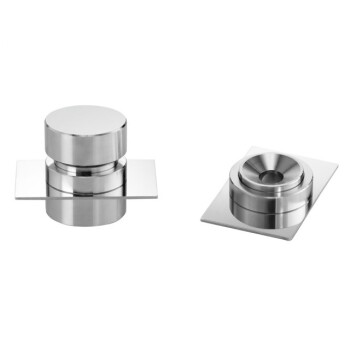
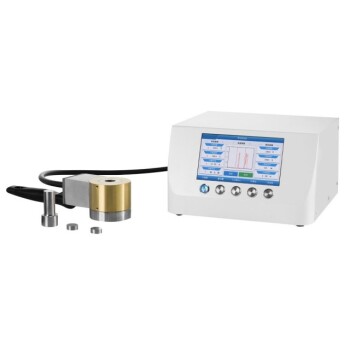
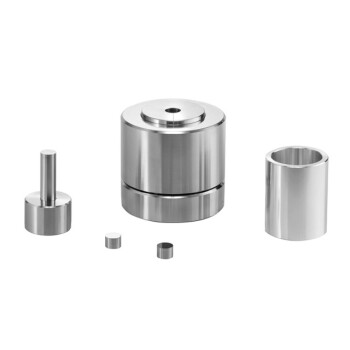
In the Spark Plasma Sintering (SPS) of LLZTO electrolytes, the graphite mold functions as a critical, multifunctional interface that acts simultaneously as a powder container, an electrical current carrier, and a medium for mechanical pressure transmission. It is the central component that enables the conversion of electrical energy into thermal energy while maintaining structural integrity under significant force.
By guiding pulsed current to generate Joule heat and transmitting high hydraulic pressure, the graphite mold facilitates the rapid densification of LLZTO powder. This dual functionality allows the material to be sintered at 1100°C under 50 MPa of pressure, creating a dense ceramic electrolyte suitable for solid-state batteries.
The Functional Pillars of the Graphite Mold
The graphite mold is not merely a passive vessel; it is an active participant in the sintering process. Its role is defined by three distinct physical functions that occur simultaneously.
Acting as an Electrical Conductor
The mold serves as the primary carrier for the electrical current within the SPS system. Because graphite possesses high electrical conductivity, it guides the pulsed direct current through the assembly. This flow of current generates Joule heat within the mold itself, allowing for rapid and direct heating of the enclosed ceramic powder.
Serving as a Pressure Transmitter
While heating the sample, the mold must also act as a mechanical piston. It transmits force from the system's hydraulic rams directly to the LLZTO powder. The mold is designed to withstand and transfer mechanical pressures of roughly 50 MPa without failing.
Shaping the Ceramic Powder
At a fundamental level, the mold provides the geometric constraints for the powder. It holds the loose LLZTO particles in a specific shape—typically a cylinder or pellet. This ensures that when the heat and pressure are applied, the powder fuses into a cohesive, properly shaped solid.
Operational Conditions for LLZTO Sintering
Sintering LLZTO electrolytes requires an extreme environment that most standard mold materials cannot survive. Graphite is selected specifically for its resistance to these harsh parameters.
Withstanding Extreme Temperatures
To achieve high density, LLZTO requires a sintering temperature of approximately 1100°C. The graphite mold maintains its structural integrity at this temperature, ensuring heat is transferred uniformly to the ceramic powder. This high-temperature capability is essential for the rapid densification process.
Enduring High Mechanical Load
The densification process relies on a pressure load of 50 MPa applied for roughly 10 minutes. The graphite mold must endure this axial pressure while simultaneously being heated to 1100°C. Its ability to resist deformation under these combined thermal and mechanical stresses is critical for producing a viable electrolyte pellet.
Understanding the Trade-offs
While graphite is the standard material for this process, it introduces specific constraints and operational realities that must be managed.
The "Consumable" Nature of the Mold
Graphite molds are classified as consumables. They are subjected to immense stress and heat cycles which eventually degrade the material. This necessitates regular replacement to ensure consistent pressure application and heating profiles across different batches.
Balancing Heat and Grain Growth
The efficiency of the graphite mold allows for very rapid heating. While this is generally positive, the parameters must be tightly controlled. The goal is to achieve densification without triggering excessive grain growth, which can degrade the electrolyte's performance.
Making the Right Choice for Your Goal
The successful sintering of LLZTO relies on leveraging the graphite mold's capabilities to balance pressure and heat.
- If your primary focus is High Density: Maximize the mold's pressure transmission capabilities by maintaining a steady 50 MPa load throughout the 1100°C hold time.
- If your primary focus is Microstructure Control: Utilize the mold's conductivity to apply rapid pulsed current, shortening the sintering window to inhibit excessive grain growth.
The graphite mold is the indispensable tool that transforms loose LLZTO powder into a dense, high-performance solid-state electrolyte through the precise application of heat and force.
Summary Table:
| Function | Description | Impact on LLZTO |
|---|---|---|
| Electrical Conduction | Guides pulsed DC to generate Joule heat | Enables rapid heating and short sintering cycles |
| Pressure Transmission | Transfers up to 50 MPa of hydraulic force | Facilitates high densification and reduces porosity |
| Material Containment | Shapes loose powder into dense ceramic pellets | Ensures geometric accuracy and structural integrity |
| Thermal Stability | Maintains integrity at 1100°C temperatures | Allows for reliable processing of high-temp ceramics |
Elevate Your Materials Synthesis with KINTEK
Ready to achieve superior density and microstructure in your LLZTO electrolytes? KINTEK specializes in high-performance laboratory equipment designed for the most demanding research environments.
Our extensive portfolio includes precision Spark Plasma Sintering (SPS) accessories, graphite molds, high-temperature furnaces, and hydraulic presses tailored for solid-state battery development. From crushing and milling systems to PTFE consumables and crucibles, we provide the end-to-end solutions you need to push the boundaries of energy storage.
Contact our technical experts today to find the perfect tools for your lab!
Contact KINTEK for a Quote
Related Products
- Spark Plasma Sintering Furnace SPS Furnace
- Special Shape Press Mold for Lab
- Square Lab Press Mold for Laboratory Applications
- Assemble Square Lab Press Mold for Laboratory Applications
- Ultra-High Temperature Graphite Vacuum Graphitization Furnace
People Also Ask
- What is SPS sintering method? A Guide to High-Speed, High-Performance Material Fabrication
- Why are Spark Plasma Sintering (SPS) furnaces or hot presses utilized in the preparation of Li3PS4 solid electrolytes?
- What is the difference between spark plasma sintering and flash sintering? A Guide to Advanced Sintering Methods
- What technical advantages does a Spark Plasma Sintering (SPS) furnace offer for LZP ceramics? Enhance Ionic Conductivity
- What is the theory of spark plasma sintering? A Guide to Rapid, Low-Temperature Densification