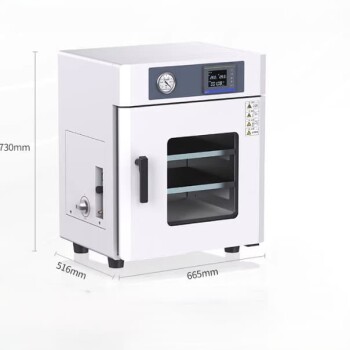
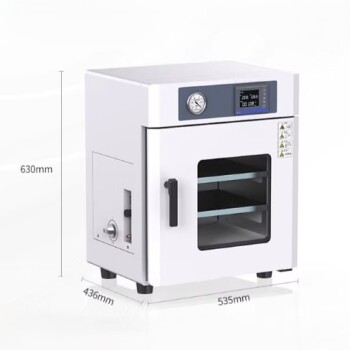
A laboratory high-precision oven functions as the primary external stabilizer for high-pressure bioreactor systems, acting as a thermal envelope that isolates the reactor from ambient fluctuations. By maintaining a constant temperature—such as 37°C—the oven ensures that the complex interplay between pressure, gas solubility, and biological activity remains uniform throughout the experiment.
Core Takeaway In high-pressure systems, temperature is a governing variable that dictates physical and biological behavior. A high-precision oven is essential not just for heating, but for locking in the environmental parameters required to accurately simulate deep subsurface formations and guarantee reproducible data.
The Critical Link Between Temperature and Stability
Stabilizing Internal Pressure
The physical relationship between temperature and pressure is direct and unforgiving. In a closed high-pressure reactor, even minor fluctuations in external temperature can cause significant spikes or drops in internal pressure.
High-precision ovens mitigate this risk by providing a thermal consistency that standard heating methods cannot match. This prevents pressure hysteresis, ensuring the mechanical stress on the system remains constant.
Controlling Gas Solubility
Gas solubility is highly sensitive to thermal changes. For bioreactors relying on dissolved gases (such as methane or hydrogen) for microbial fuel, a stable temperature is non-negotiable.
If the oven temperature drifts, the amount of gas available to the microbes changes. Precision ensures that nutrient availability remains steady, preventing artificial "starvation" or "saturation" events during the study.
Impact on Biological Fidelity
Regulating Microbial Metabolic Rates
Microbial metabolism is strictly governed by thermodynamics. The reference specifically notes that metabolic rates are highly sensitive to temperature.
A high-precision oven maintains the specific set point (e.g., 37°C) required to keep metabolic activity consistent. Without this control, data regarding growth rates or metabolite production becomes unreliable, as it would reflect temperature variance rather than biological reality.
Accurately Simulating Subsurface Environments
Many high-pressure experiments aim to replicate deep subsurface formations. These environments possess distinct, stable geothermal temperatures.
To validate an experiment, the laboratory conditions must mirror these "in situ" conditions. The oven allows researchers to recreate the exact thermal signature of a geological formation, lending credibility to the simulation.
Understanding the Trade-offs
Thermal Lag and Response Time
While high-precision ovens provide excellent air-temperature stability, they rely on convection. There is often a thermal lag between the oven air reaching the set point and the liquid inside the heavy steel reactor reaching equilibrium.
Operators must account for this delay when starting experiments. The oven indicates the environment is ready, but the reactor core may need additional time to stabilize.
Spatial Uniformity vs. Single Point Control
An oven controls the ambient environment, but it does not directly measure the sample temperature unless equipped with internal probes.
Relying solely on the oven's display can be misleading if the reactor is large or has poor thermal conductivity. High precision in the air does not guarantee immediate homogeneity inside a static reactor.
Making the Right Choice for Your Goal
To maximize the utility of your high-precision oven, align your usage with your primary experimental objective:
- If your primary focus is Data Reproducibility: Ensure the oven is calibrated to minimize hysteresis, eliminating temperature as a variable in metabolic rate calculations.
- If your primary focus is Environmental Simulation: rigorous adherence to the specific geothermal temperature of your target formation is required to validate your model of the deep subsurface.
Precision in temperature is the prerequisite for accuracy in high-pressure biology.
Summary Table:
| Feature | Impact on High-Pressure Systems | Role in Stability |
|---|---|---|
| Thermal Consistency | Prevents internal pressure spikes/drops | Mitigates pressure hysteresis & mechanical stress |
| Gas Solubility Control | Regulates dissolved gas availability | Prevents nutrient saturation or starvation events |
| Metabolic Regulation | Maintains constant microbial growth rates | Ensures data reflects biology, not thermal drift |
| In Situ Simulation | Replicates deep subsurface geothermal temps | Validates environmental fidelity for research |
Elevate Your Research Precision with KINTEK
Achieve unmatched stability in your complex experiments. KINTEK specializes in advanced laboratory equipment designed to meet the rigorous demands of modern research. Whether you need high-temperature high-pressure reactors and autoclaves for subsurface simulation, or high-precision muffle and vacuum furnaces for thermal control, our solutions guarantee reproducibility.
From battery research tools to crushing systems and PTFE consumables, we provide the comprehensive portfolio your lab requires. Contact KINTEK today to optimize your system configuration and ensure your biological and physical data remains uncompromisingly accurate.
References
- Michael J. Wilkins, Ronald C. Taylor. CO2 exposure at pressure impacts metabolism and stress responses in the model sulfate-reducing bacterium Desulfovibrio vulgaris strain Hildenborough. DOI: 10.3389/fmicb.2014.00507
This article is also based on technical information from Kintek Solution Knowledge Base .
Related Products
- High Temperature Muffle Oven Furnace for Laboratory Debinding and Pre Sintering
- 1400℃ Muffle Oven Furnace for Laboratory
- Laboratory Muffle Oven Furnace Bottom Lifting Muffle Furnace
- Ultra-High Temperature Graphite Vacuum Graphitization Furnace
- Graphite Vacuum Furnace High Thermal Conductivity Film Graphitization Furnace
People Also Ask
- Why is the annealing treatment in a high-temperature muffle furnace critical for the preparation of an Sb-SnO2 interlayer?
- What role does a high-temperature muffle furnace play in the synthesis of manganese/cobalt-modified ceramic catalysts?
- What conditions does a muffle furnace provide for molten salt energy storage? Expert Simulation for CSP Environments
- What is the primary function of high-temperature muffle or tube furnaces for ceramic coatings? Ensure Peak Durability
- What is the role of a muffle furnace in magnetite pellet roasting? Optimize Mineral Phase & Compressive Strength