In the processing of ZrB2–SiC–TaC ceramics, the laboratory oven serves as the critical solvent removal stage immediately following the ball milling process. Its specific role is to subject the mixed slurry to a constant temperature (typically 120°C) to completely evaporate the alcohol media, ensuring the raw material is fully dried before consolidation.
Core Takeaway The laboratory oven acts as a safeguard for structural integrity, transforming the raw slurry into a viable powder. By eliminating all traces of solvent prior to high-temperature processing, it prevents the catastrophic formation of pores and cracks that compromise the final ceramic body.
The Critical Drying Phase
Post-Milling Solvent Removal
After the raw materials (ZrB2, SiC, and TaC) undergo ball milling, they exist as a slurry mixed with an alcohol medium.
The laboratory oven is responsible for the transition from a wet suspension to a dry powder. It facilitates the thorough removal of the alcohol, which acts purely as a processing aid and must not remain in the final composition.
Controlled Thermal Environment
The drying process relies on maintaining a constant temperature, such as 120°C.
This specific thermal environment allows for a controlled evaporation rate. By holding this temperature for an extended period, the oven ensures that drying is uniform throughout the powder bed, preventing pockets of trapped moisture.
Preventing Structural Defects
The Risk of Residual Solvent
If the oven drying step is rushed or incomplete, residual alcohol remains trapped within the mixed powder.
This residue becomes a volatile contaminant during the subsequent processing stages. It represents a latent defect waiting to trigger structural failure.
Impact on Sintering and Hot-Pressing
The true value of the oven is realized during the high-temperature hot-pressing and sintering phases.
If solvent remains, the intense heat causes it to evaporate rapidly and violently within the compacted green body. This gas expansion creates internal pressure, leading directly to the formation of pores or the cracking of the ceramic structure, rendering the part unusable.
Understanding the Trade-offs
Time vs. Throughput
A common pitfall is prioritizing processing speed over drying thoroughness.
Thorough solvent removal requires an extended period in the oven. Attempting to shorten this cycle to increase throughput creates a high risk of residual solvent defects, which are often undetectable until the final sintering is complete.
Temperature Precision
While higher temperatures might dry materials faster, strict adherence to the target temperature (e.g., 120°C) is necessary to ensure safety and material stability.
The goal is controlled evaporation, not rapid boiling which could disrupt particle distribution. Consistency in the oven's temperature profile is just as important as the absolute temperature setting.
Making the Right Choice for Your Goal
To ensure the structural integrity of your ZrB2–SiC–TaC ceramics, prioritize the completeness of the drying phase over speed.
- If your primary focus is Defect Prevention: Extend the oven residence time to ensure zero residual solvent, eliminating the root cause of porosity and cracking.
- If your primary focus is Process Consistency: Maintain a strictly constant temperature (e.g., 120°C) to ensure every batch undergoes the exact same evaporation profile.
The laboratory oven is not merely a drying tool; it is the gatekeeper that determines whether your green body will survive the sintering process intact.
Summary Table:
| Process Stage | Oven Function | Key Parameter | Outcome |
|---|---|---|---|
| Post-Milling | Solvent (Alcohol) Removal | 120°C Constant Temp | Transition from slurry to dry powder |
| Drying Phase | Uniform Evaporation | Extended Residence Time | Elimination of trapped moisture pockets |
| Pre-Sintering | Structural Safeguard | Controlled Thermal Profile | Prevention of gas-induced pores & cracks |
Elevate Your Material Integrity with KINTEK Precision
Don't let residual solvents compromise your advanced ceramic research. KINTEK specializes in high-performance laboratory equipment designed for the rigorous demands of material science. From our precision laboratory ovens for flawless drying to our industry-leading high-temperature furnaces (vacuum, tube, and atmosphere) and hot-pressing systems, we provide the tools you need for superior structural integrity.
Whether you are working on ZrB2-SiC-TaC composites or advanced battery research, our comprehensive portfolio—including crushing and milling systems, isostatic presses, and specialized ceramics—ensures consistency at every stage of your workflow.
Ready to optimize your processing results? Contact our technical experts today to find the perfect equipment solution for your lab.
Related Products
- Laboratory Scientific Electric Heating Blast Drying Oven
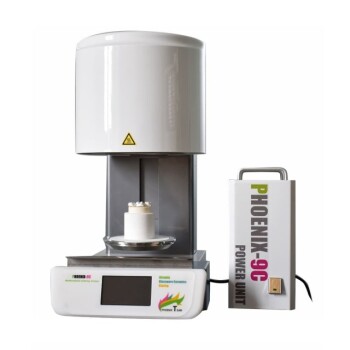
- Dental Porcelain Zirconia Sintering Ceramic Furnace Chairside with Transformer
- Dental Porcelain Zirconia Sintering Ceramic Vacuum Press Furnace
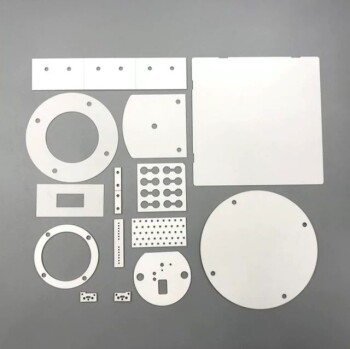
- Custom-Made Alumina Zirconia Special-Shaped Ceramic Plates for Engineering Advanced Fine Ceramics Processing
- High Temperature Muffle Oven Furnace for Laboratory Debinding and Pre Sintering
People Also Ask
- How does a laboratory electric drying oven contribute to the formation of the initial coating? Expert Insights
- What role does a precision laboratory drying oven play in the synthesis of GO-PANI nanocomposites? Protect Material Integrity
- What role does a laboratory drying oven play in the preparation of zinc oxide nanoparticle precursors?
- What is the necessity of using a laboratory drying oven when processing MoO3/GO composite nanopowders? Find out here.
- What is the role of a laboratory drying oven in cellulose citrate production? Ensure Material Stability & Purity