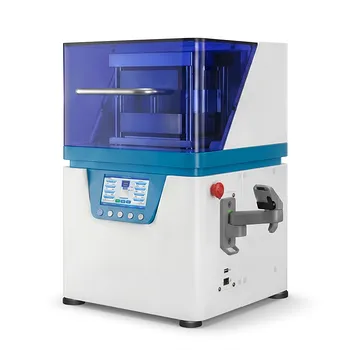
A laboratory pellet press is the critical link between raw biomass waste and high-efficiency fuel. By utilizing high-pressure mechanical extrusion, these machines transform loose, low-density forestry or agricultural waste into standardized, high-energy-density pellets. This process not only facilitates easier logistics but also fundamentally improves the combustion characteristics of the biomass.
The laboratory pellet press enables the densification of biomass through lignin plastification, converting bulky waste into standardized fuel. It serves as a vital R&D tool for optimizing industrial process parameters and improving the energy-to-volume ratio of renewable materials.
Physical Transformation and Densification
Overcoming Volumetric Limitations
Loose biomass, such as sawdust or agricultural residue, possesses a low bulk density, making it expensive to transport and difficult to store. The pellet press applies mechanical force to eliminate internal pores and expel excess moisture, significantly increasing the material's energy density.
The Mechanics of Extrusion
The equipment utilizes a flat or ring die structure combined with press rollers to force material through precision die holes. This mechanical extrusion typically produces standardized pellets with diameters of 6mm to 10mm, ensuring a uniform physical profile.
Enhancement of Combustion Stability
By creating a homogeneous product, the pellet press ensures that the resulting fuel burns with greater stability and predictability. The physical uniformity of the pellets allows for precise control over air-to-fuel ratios in combustion chambers, reducing fluctuations in energy output.
The Role of Chemical and Structural Binding
Activating Lignin as a Natural Binder
Under the high-pressure and high-temperature conditions generated during pressing, the lignin within the biomass reaches its glass transition point. This "plastification" allows the lignin to act as a natural adhesive, binding the waste powder into a solid, regular geometric shape without the mandatory need for external chemical binders.
Improving Material Homogenization
The intense compression forces various biomass components into a dense, unified structure. This homogenization is essential for experimental accuracy, especially when researchers need to maintain specific mixing ratios—such as 5% or 15%—with other fuels like bituminous coal for co-firing simulations.
Research and Process Optimization
Simulating Industrial Conditions
Laboratory-scale presses allow researchers to replicate industrial pressing environments on a small scale. By adjusting variables like compaction pressure and die temperature, engineers can gather the experimental data necessary to optimize large-scale production equipment and reduce energy consumption during manufacturing.
Evaluating Material Characteristics
The lab press is used to test the compression characteristics of different wood species, such as larch or oak. These tests provide critical insights into how specific raw materials will behave under mass production, predicting the physical quality and durability trends of the final product.
Understanding the Trade-offs and Challenges
Energy Consumption vs. Pellet Quality
While higher pressures result in denser, more durable pellets, they also increase the energy intensity of the production process. Finding the "sweet spot" where the pellet is stable enough for transport but doesn't require excessive mechanical energy is a primary challenge in biomass engineering.
Moisture Content Sensitivity
The pelletization process is highly sensitive to the initial moisture content of the raw material. If the biomass is too dry, the lignin may not plastify effectively; if it is too wet, the internal steam pressure can cause the pellets to "pop" or decompose upon exiting the die.
Equipment Wear and Abrasiveness
Biomass materials can be highly abrasive, leading to significant wear and tear on the die and rollers. In a laboratory setting, this requires frequent calibration and maintenance to ensure that experimental data remains consistent and accurate over time.
How to Apply These Insights to Your Project
Identifying the specific role of a pellet press depends on your position in the biomass value chain.
- If your primary focus is Research and Development: Use the laboratory press to determine the exact glass transition point of your material's lignin to minimize energy expenditure during densification.
- If your primary focus is Logistics and Supply Chain: Prioritize the press settings that maximize bulk density to reduce the number of shipments required for a given energy volume.
- If your primary focus is Combustion Testing: Ensure the press produces standardized diameters and lengths to eliminate physical variables when comparing the caloric output of different biomass blends.
By mastering the variables of the pelletization process, you transform inconsistent waste into a high-value, standardized energy commodity.
Summary Table:
| Aspect | Mechanism | Impact on Biomass Energy |
|---|---|---|
| Densification | High-pressure mechanical extrusion | Increases bulk energy density and lowers logistics costs. |
| Binding | Lignin plastification (Natural adhesive) | Ensures pellet durability and shape without chemical binders. |
| Combustion | Physical homogenization & sizing | Provides stable, predictable heat output and easy control. |
| R&D Value | Parameter simulation (Pressure/Temp) | Optimizes industrial production and reduces energy waste. |
Elevate Your Biomass R&D with KINTEK Precision
Transform inconsistent raw waste into high-value, standardized energy commodities with KINTEK’s industry-leading laboratory solutions. We specialize in high-performance hydraulic presses (pellet, hot, isostatic) and crushing and milling systems designed to optimize your densification and material characterization processes.
Why partner with KINTEK?
- Comprehensive Range: From sieving equipment to high-temperature furnaces (CVD, vacuum, atmosphere) for combustion testing.
- Advanced Research Tools: Specialized high-temperature high-pressure reactors, electrolytic cells, and high-precision consumables like crucibles and ceramics.
- Tailored Expertise: Whether you are refining lignin plastification or simulating industrial-scale extrusion, our equipment ensures experimental accuracy and repeatable results.
Ready to maximize your renewable energy output? Contact KINTEK today to consult with our experts and find the perfect equipment for your laboratory needs.
References
- Muhammet Enes Önür, Sema Yurdakul. Quality Properties and Torrefaction Characteristics of Pellets: Rose Oil Distillation Solid Waste and Red Pine Sawdust. DOI: 10.3390/su151410971
This article is also based on technical information from Kintek Solution Knowledge Base .
Related Products
- Laboratory Hydraulic Pellet Press for XRF KBR FTIR Lab Applications
- Automatic Laboratory Hydraulic Pellet Press Machine for Lab Use
- Laboratory Manual Hydraulic Pellet Press for Lab Use
- Laboratory Manual Hydraulic Pellet Press for Lab Use
- Automatic Laboratory Hydraulic Press for XRF & KBR Pellet Press
People Also Ask
- What is the role of a laboratory hydraulic pellet press and stainless steel molds in the fabrication of RuO2/NbC anodes?
- What is the significance of applying 200 MPa of pressure with a laboratory hydraulic pellet press for composite ceramics?
- What is the necessity of using a laboratory hydraulic pellet press in the preparation of biomass fuel pellets? Guide
- How does a laboratory hydraulic pellet press contribute to SiCw/2024 aluminum composite preforms? Optimize Densification
- What function does a laboratory pellet press or rolling mill serve? Enhance Electrode Density and Performance