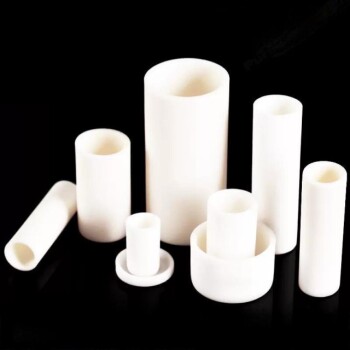
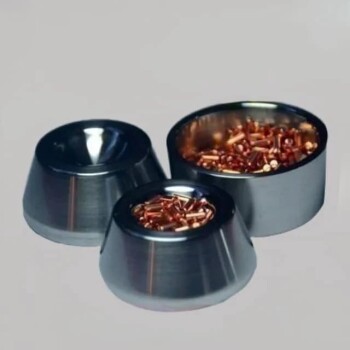
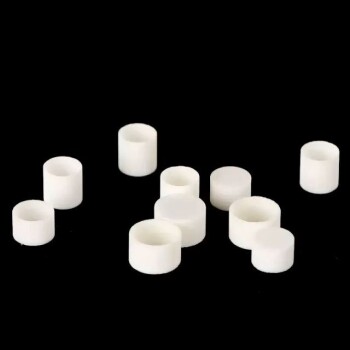
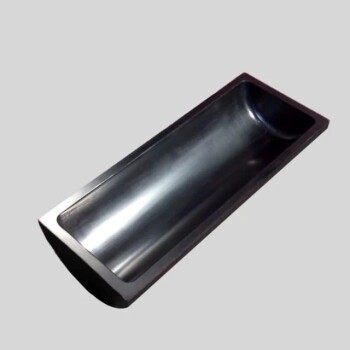
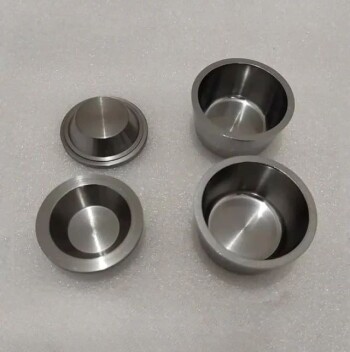
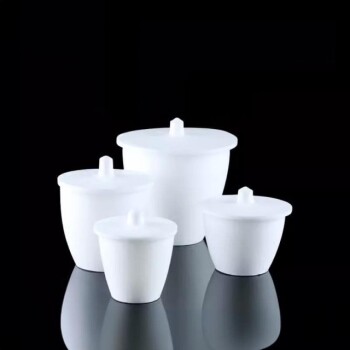
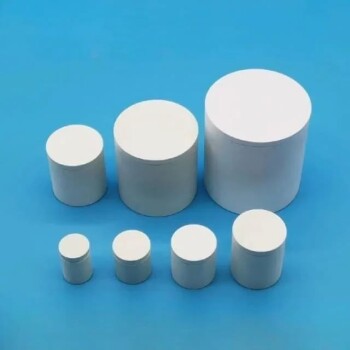
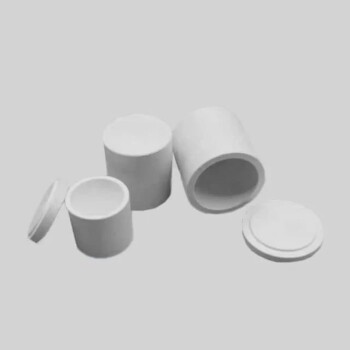
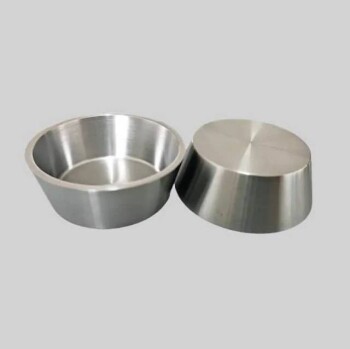
A sapphire crucible acts as a highly specialized containment vessel designed to withstand the aggressive environment of molten alkali carbonate experiments. It serves a dual purpose: providing structural integrity for lithium/sodium carbonate mixtures and creating a chemically neutral barrier that resists erosion at temperatures reaching 923 K.
In high-precision studies, the material of the container is just as critical as the sample itself. By preventing chemical leaching, sapphire crucibles ensure that the experimental melt remains pure, which is a prerequisite for valid spectroscopic analysis and thermodynamic calculations.
The Critical Role of Material Inertness
Resisting Chemical Erosion
The primary function of the sapphire crucible is to contain lithium and sodium carbonate eutectic mixtures without degrading.
Unlike standard materials that might react with aggressive molten salts, sapphire is selected for its extreme chemical inertness. This prevents the vessel walls from eroding and contaminating the sample.
Stability at High Temperatures
Experiments involving molten carbonates require sustained high heat to maintain the liquid phase.
Sapphire crucibles are specifically validated for stability at temperatures up to 923 K. This thermal resilience ensures the vessel maintains its physical shape and chemical properties throughout the heating cycle.
Impact on Data Integrity
Preserving Raman Spectroscopic Data
For researchers utilizing Raman spectroscopy, the purity of the melt is non-negotiable.
Impurity ions introduced by a degrading crucible can alter the optical properties of the sample. Sapphire eliminates this variable, ensuring that the spectral data reflects only the vibrational modes of the salt mixture, not the container.
Ensuring Accurate Equilibrium Constants
Calculating equilibrium constants requires a precise knowledge of the chemical composition of the melt.
Any introduction of foreign contaminants from the vessel would skew these calculations. By maintaining a closed, non-reactive system, sapphire allows for the determination of accurate, reproducible thermodynamic data.
Understanding the Operational Limits
The Temperature Ceiling
While sapphire is robust, it is not infinitely resistant.
The primary limitation noted is the specific thermal operating range. The resistance to chemical erosion is confirmed up to 923 K; operating beyond this threshold may risk compromising the inertness of the vessel or the stability of the experiment.
Making the Right Choice for Your Experiment
To determine if a sapphire crucible is the correct vessel for your specific application, consider your data requirements:
- If your primary focus is Spectroscopic Purity: Choose sapphire to prevent container-derived impurities from creating noise or artifacts in your Raman data.
- If your primary focus is Thermodynamic Accuracy: Use sapphire to ensure the chemical composition remains unaltered for precise equilibrium constant measurements.
Success in molten salt chemistry begins with isolating the variable of the container itself.
Summary Table:
| Feature | Benefit in Molten Salt Experiments |
|---|---|
| Material Inertness | Prevents chemical leaching and sample contamination |
| Thermal Stability | Maintains integrity at temperatures up to 923 K |
| Optical Clarity | Ideal for accurate Raman spectroscopic analysis |
| Chemical Resistance | Resists erosion from aggressive lithium/sodium carbonates |
| Data Precision | Ensures accurate thermodynamic & equilibrium calculations |
Elevate Your Research Precision with KINTEK
High-precision experiments demand high-performance materials. At KINTEK, we specialize in providing advanced laboratory equipment designed for the most challenging environments. Whether you are performing molten salt chemistry or high-pressure synthesis, our range of sapphire crucibles, ceramics, and high-temperature reactors ensures your samples remain pure and your data remains accurate.
From muffle and vacuum furnaces to high-pressure autoclaves and specialized consumables, KINTEK provides the tools researchers need for reliable results in material science and battery research.
Ready to upgrade your lab's thermal processing capabilities? Contact us today to find the perfect solution for your application!
References
- Timothy A. Barckholtz, Bárbara Bosio. Experimental and Modeling Investigation of CO3=/OH– Equilibrium Effects on Molten Carbonate Fuel Cell Performance in Carbon Capture Applications. DOI: 10.3389/fenrg.2021.669761
This article is also based on technical information from Kintek Solution Knowledge Base .
Related Products
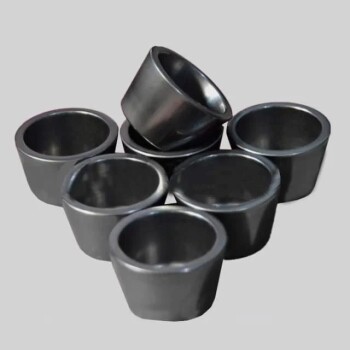
- High Purity Pure Graphite Crucible for Evaporation
- High Purity Pure Graphite Crucible for Electron Beam Evaporation
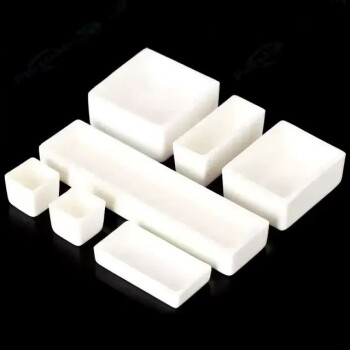
- Arc-Shaped Alumina Ceramic Crucible High Temperature Resistant for Engineering Advanced Fine Ceramics
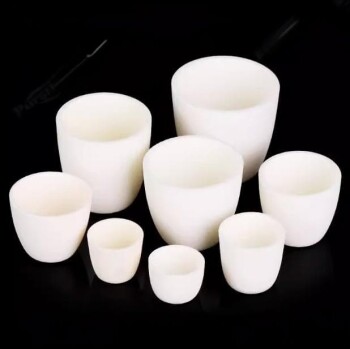
- Engineering Advanced Fine Alumina Al2O3 Ceramic Crucible for Laboratory Muffle Furnace
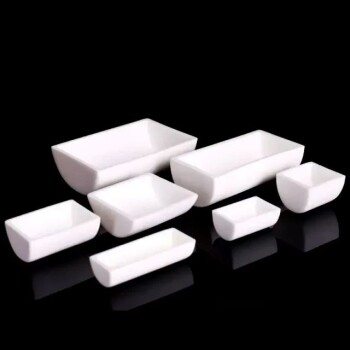
- Alumina Al2O3 Ceramic Crucible Semicircle Boat with Lid for Engineering Advanced Fine Ceramics
People Also Ask
- Why are high-purity graphite crucibles preferred for sulfide solid electrolytes? Achieve Superior Material Purity
- Why is a high-purity graphite crucible required for Chromel-TaC composites? Ensure Peak Purity at 1400°C
- What role do high-purity graphite crucibles play in molten salt corrosion research? Ensure Reactor-Grade Precision
- Why are high-purity graphite crucibles used for magnesium distillation? Ensure 3N8 Purity & Thermal Stability
- Why is a high-purity graphite crucible ideal for nitrogen-doped graphene at 1500 °C? Maximize Purity and Stability