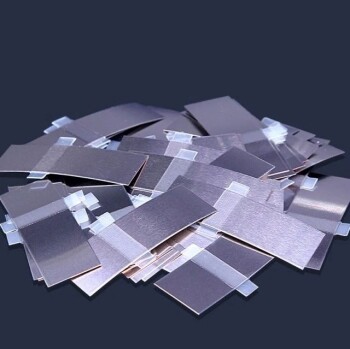
The critical role of a specialized battery separator in minimizing internal resistance lies in its ability to facilitate efficient ion migration while maintaining physical isolation. By leveraging specific porosity and hydrophilic properties, the separator absorbs electrolyte to form stable ion channels, ensuring that ions flow freely between electrodes without the impedance that characterizes poor-quality interfaces.
The separator acts as more than just a wall; it is a conductive gateway. By combining high hydrophilicity with a porous structure, it retains electrolyte to create low-resistance pathways for ions, while simultaneously blocking physical contact and dendrite growth to ensure safety.
The Mechanics of Ion Migration
Creating Stable Ion Channels
To minimize internal resistance, a separator must actively facilitate charge transport rather than just occupying space. When the separator is pre-soaked in electrolyte, its internal structure allows the fluid to permeate completely.
This saturation creates stable, continuous channels that allow ions to migrate from the anode to the cathode with minimal obstruction.
The Importance of Hydrophilicity
The effectiveness of these channels relies heavily on the material's hydrophilicity—its ability to attract and hold water-based fluids. A hydrophilic surface ensures that the electrolyte wets the separator thoroughly and stays within the pores.
Without this property, "dry spots" could occur, breaking the ion path and drastically increasing internal resistance.
Balancing Resistance with Protection
Isolating the Electrodes
While facilitating ion flow, the separator must serve as a robust physical barrier. Its fundamental purpose is to isolate the anode and cathode to prevent short circuits.
Specifically, it prevents direct contact between the zinc particles of the anode and the air electrode. This separation is non-negotiable for the battery's basic functionality.
Blocking Zinc Dendrites
Internal resistance can fluctuate dangerously if the internal structure of the battery degrades. During operation, zinc can form sharp, needle-like projections known as dendrites.
A specialized separator is engineered to block the penetration of these dendrites. This protection preserves the battery's internal architecture, ensuring consistent performance and extending cycle life.
Understanding the Trade-offs
Porosity vs. Mechanical Strength
There is a delicate balance between minimizing resistance and maintaining safety. Highly porous separators hold more electrolyte, which generally lowers resistance and improves efficiency.
However, if a separator is too porous, it may lack the mechanical density required to stop zinc dendrites. This increases the risk of internal short circuits despite the initial low resistance.
Thickness vs. Barrier Integrity
Minimizing the distance ions must travel—by using a thinner separator—is a common method to reduce resistance.
Yet, a separator that is too thin effectively lowers the safety margin. It becomes more susceptible to puncture from anode particles or dendrites, potentially leading to catastrophic failure.
Making the Right Choice for Your Goal
Selecting the correct separator involves prioritizing the specific requirements of your Zinc-Air system.
- If your primary focus is High Power Efficiency: Prioritize materials with high hydrophilicity and optimized porosity to maximize electrolyte retention and minimize ionic resistance.
- If your primary focus is Safety and Cycle Life: Prioritize separators with higher mechanical strength and density to ensure robust protection against dendrite penetration.
The optimal separator solution effectively minimizes resistance without compromising the physical isolation essential for a safe, long-lasting energy source.
Summary Table:
| Key Feature | Impact on Internal Resistance | Secondary Benefit |
|---|---|---|
| High Hydrophilicity | Ensures complete electrolyte wetting to eliminate high-resistance "dry spots." | Improves electrolyte retention. |
| Optimized Porosity | Creates stable, continuous ion channels for faster charge transport. | Enhances overall power density. |
| Mechanical Density | Maintains uniform electrode spacing to stabilize resistance. | Blocks zinc dendrite penetration. |
| Reduced Thickness | Minimizes the travel distance for ions between anode and cathode. | Increases volumetric energy density. |
Optimize Your Zinc-Air Battery Performance with KINTEK
Are you struggling with internal resistance or dendrite-related failures in your battery research? KINTEK specializes in providing high-performance laboratory equipment and consumables designed for precision electrochemical applications. From specialized separators and battery research tools to electrolytic cells and electrodes, we offer the essential components needed to enhance your system's efficiency and cycle life.
Whether you require high-temperature furnaces for material synthesis or precise hydraulic presses for electrode preparation, KINTEK is your partner in advanced energy research. Contact us today to discover our full range of solutions and elevate your laboratory's capabilities!
References
- Thangavel Sangeetha, K. David Huang. Electrochemical polarization analysis for optimization of external operation parameters in zinc fuel cells. DOI: 10.1039/d0ra04454g
This article is also based on technical information from Kintek Solution Knowledge Base .
Related Products
- Polyethylene Separator for Lithium Battery
- High Purity Zinc Foil for Battery Lab Applications
- Proton Exchange Membrane for Batteries Lab Applications
- Aluminum Foil Current Collector for Lithium Battery
- Li-Air Battery Case for Battery Lab Applications
People Also Ask
- What role do high-performance battery separators play in RT Na-S batteries? Enhancing Stability and Cycle Life
- How to tell if a lithium-ion battery is bad? Spot the critical signs of failure before it's too late.
- Is there a way to test lithium batteries? Understand Voltage vs. True Health
- How to check if a lithium battery is good? Safely Test Voltage, Capacity & Internal Resistance
- How to check the power of a lithium-ion battery? Master the difference between charge level and battery health.