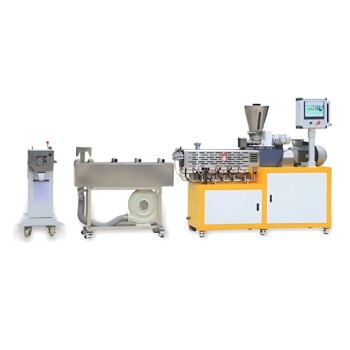
The stainless steel shell functions as the critical backbone for structural integrity and thermal management in a micro-Continuous Stirred-Tank Reactor (CSTR) series. It serves a dual purpose: providing the mechanical strength necessary to withstand internal pressures and utilizing high thermal conductivity to ensure uniform heat distribution across the reaction components.
Core Takeaway: While the internal kettle houses the chemistry, the stainless steel shell ensures the process remains viable. By bridging the gap between mechanical durability and thermal efficiency, the shell stabilizes reaction kinetics and minimizes temperature gradients that could otherwise disrupt sensitive chemical processes.
Ensuring Mechanical and Structural Integrity
Providing Pressure Protection
The primary mechanical role of the shell is to contain the internal reaction kettle. It acts as a pressure vessel, resisting the internal forces generated during chemical processes and preventing mechanical failure or rupture.
Supporting Reactor Alignment
A micro-CSTR series requires precise alignment for continuous feeding and discharging. The stainless steel shell provides a rigid, durable housing that maintains the structural configuration of the reactor series, even under physical stress.
Optimizing Thermal Dynamics
Facilitating Efficient Heat Transfer
Beyond simple containment, the shell is an active thermal component. The high thermal conductivity of stainless steel allows heat to transfer efficiently from external sources (such as heating jackets) through to the internal reactants.
Minimizing Temperature Gradients
In micro-reactors, uneven heating can lead to inconsistent yields. The shell acts as a thermal buffer, distributing heat uniformly across the reactor. This reduction in temperature gradients prevents localized hot or cold spots caused by external heating sources.
Stabilizing Reaction Kinetics
Maintaining Kinetic Conditions
Chemical reactions in CSTR systems require precise environmental control to proceed stably. By ensuring a uniform temperature distribution, the shell ensures that the reaction kinetics remain constant and predictable throughout the process.
Enabling High-Temperature Operations
For endothermic processes requiring significant heat input—such as those operating at 530°C with high heat demands (e.g., 129.2 kJ/mol)—the shell allows for the necessary energy influx while maintaining the structural stability required for continuous decomposition and product separation.
Understanding the Trade-offs
Thermal Inertia
While the shell promotes uniformity, the mass of the stainless steel adds thermal inertia to the system. This stabilizes the temperature against small fluctuations but can make the system slower to respond if rapid cooling or rapid temperature cycling is required.
Material Limitations
Stainless steel is robust, but it is not impervious to all chemical environments. While it supports the internal kettle, care must be taken to ensure the shell itself does not degrade if exposed to corrosive external heating environments or if the internal kettle fails.
Making the Right Choice for Your Goal
- If your primary focus is Safety and Durability: Rely on the stainless steel shell to provide the necessary pressure protection and mechanical support for the internal components.
- If your primary focus is Process Precision: Leverage the shell’s thermal conductivity to eliminate temperature gradients, ensuring your kinetic data remains accurate and reproducible.
The stainless steel shell is not merely a container; it is an active thermal interface that defines the stability and safety limits of your micro-reactor system.
Summary Table:
| Feature | Role of Stainless Steel Shell | Benefit to Micro-CSTR Operations |
|---|---|---|
| Structural Integrity | High-strength pressure containment | Ensures safety under high internal pressure and mechanical stress |
| Thermal Management | High thermal conductivity & distribution | Minimizes temperature gradients for consistent reaction kinetics |
| System Alignment | Rigid housing and support | Maintains precise configuration for continuous feed and discharge |
| Thermal Buffer | Adds controlled thermal inertia | Stabilizes temperature against fluctuations for predictable yields |
Elevate Your Chemical Engineering with KINTEK Precision
Are you looking to optimize your reaction kinetics or scale your continuous flow processes? KINTEK specializes in advanced laboratory solutions designed for the most demanding research environments. From our robust high-temperature high-pressure reactors and autoclaves to precise crushing, milling, and hydraulic press systems, we provide the tools you need for structural and thermal excellence.
Whether you are developing next-generation battery materials or conducting complex chemical synthesis, our comprehensive portfolio—including muffle furnaces, rotary reactors, and cooling solutions—ensures your lab operates at peak efficiency. Let our experts help you select the right materials and equipment to ensure process safety and reproducibility.
Contact KINTEK today to discuss your reactor needs!
References
- Yiming Mo, Klavs F. Jensen. A miniature CSTR cascade for continuous flow of reactions containing solids. DOI: 10.1039/c6re00132g
This article is also based on technical information from Kintek Solution Knowledge Base .
Related Products
- Laboratory Small Constant Temperature Heated Magnetic Stirrer Heater and Stirrer
- Mini SS High Pressure Autoclave Reactor for Laboratory Use
- High Performance Laboratory Stirrers for Diverse Applications
- Customizable High Pressure Reactors for Advanced Scientific and Industrial Applications
- 10L Chilling Circulator Cooling Water Bath Low Temperature Constant Temperature Reaction Bath
People Also Ask
- What role does a magnetic stirrer with heating play in ZnO nanoparticle synthesis? Precision Control for Quality Results
- What role does a constant temperature heating magnetic stirrer play in MFC-HAp synthesis? Achieve Material Homogeneity
- What is the function of a laboratory magnetic stirrer in Ni–Cr–P electrodeposition? Optimize Ion Transport & Coating
- Why is a laboratory magnetic stirrer required for benzoic acid esters? Boost Reaction Speed & Yield with High RPM
- What role does a laboratory magnetic stirrer play in TiO2 and TiO2-Ag sol preparation? Master Chemical Kinetics