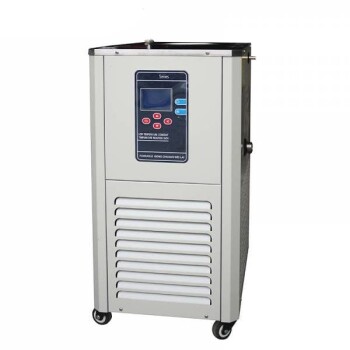
The temperature-controlled reactor acts as the central vessel for the chemical recycling of Polyethylene Terephthalate (PET) waste through glycolysis. It provides a rigorously controlled environment, maintaining a temperature range of 20°C to 200°C, while utilizing mechanical stirring to facilitate the breakdown of solid plastic into reusable chemical components.
By ensuring constant thermal conditions and uniform mixing, the reactor enables the efficient conversion of PET waste into low molecular weight oligomers, which serve as the essential feedstock for creating new unsaturated polyester resins.
The Mechanics of PET Glycolysis
Facilitating Transesterification
The core function of the reactor is to drive transesterification. This is the chemical reaction where the long polymer chains of the solid PET waste are broken down into smaller, usable molecules.
The reactor does not simply melt the plastic; it creates the specific conditions necessary for the chemical bonds to be cleaved and restructured effectively.
The Role of Propylene Glycol
Inside the reactor, PET fragments are submerged in propylene glycol (PG) along with specific catalysts.
The reactor ensures that the PG acts as a solvent and a reactant, penetrating the PET structure to initiate the degradation process.
Production of BHPT Oligomers
The ultimate output of this reactor-driven process is the production of bis(hydroxypropyl) terephthalate (BHPT) oligomers.
These low molecular weight compounds are distinct from the original waste; they are purified chemical building blocks used as the foundation for synthesizing unsaturated polyester resins.
Critical Operational Parameters
Temperature Stability
The reactor creates a constant temperature environment, capable of operating anywhere within the 20°C to 200°C range depending on the specific stage of the reaction.
Maintaining a stable temperature is non-negotiable, as fluctuations can stall the reaction or degrade the quality of the resulting BHPT.
Mechanical Agitation
Chemical degradation requires more than just heat; it requires physical interaction between the solid waste and the liquid reagents.
The reactor employs mechanical stirring to keep the PET fragments in constant motion, ensuring they maintain thorough contact with the propylene glycol and catalysts throughout the process.
Understanding the Operational Constraints
Energy and Precision Requirements
While the reactor enables valuable upcycling, it introduces specific operational demands. The requirement to maintain temperatures as high as 200°C implies a significant energy input to sustain the reaction kinetics.
Furthermore, the process relies heavily on the mechanical reliability of the stirring mechanism; if agitation fails, the contact between the PET and PG becomes uneven, leading to incomplete degradation and inconsistent product quality.
Applying This to Your Recycling Strategy
If your primary focus is process efficiency: Ensure your reactor specifications prioritize robust mechanical stirring to maximize the surface area contact between solid PET and liquid reagents.
If your primary focus is product versatility: Verify that the reactor can maintain precise thermal stability across the full 20°C to 200°C spectrum to optimize the yield of BHPT oligomers.
Success in PET glycolysis is defined not just by the chemistry, but by the precise control of the reaction environment.
Summary Table:
| Parameter | Role in PET Glycolysis | Benefit |
|---|---|---|
| Temperature (20-200°C) | Maintains stable thermal kinetics | Ensures complete bond cleavage and prevents product degradation |
| Mechanical Stirring | Promotes interaction between PET & Propylene Glycol | Increases surface area contact for uniform chemical breakdown |
| Reaction Medium | Facilitates transesterification with PG & catalysts | Converts solid waste into purified bis(hydroxypropyl) terephthalate |
| Atmosphere Control | Provides a sealed, controlled environment | Guarantees consistent quality of low molecular weight oligomers |
Elevate Your Chemical Recycling Efficiency with KINTEK
Maximize your PET upcycling yields with KINTEK’s advanced laboratory solutions. Whether you are performing glycolysis, transesterification, or synthesis, our high-temperature high-pressure reactors and autoclaves provide the precision stability and robust mechanical agitation required for consistent BHPT production.
From high-temperature furnaces for material testing to crushing and milling systems for waste preparation, KINTEK specializes in laboratory equipment designed for the most demanding research environments. Our portfolio also includes essential PTFE products, ceramics, and crucibles to ensure your chemical processes remain contaminant-free.
Ready to optimize your recycling strategy? Contact KINTEK today to discuss your equipment needs and see how our expertise in thermal and mechanical laboratory systems can accelerate your results.
References
- Adrián Bórquez-Mendivil, Jorge Luis Almaral Sánchez. Hybrid Coatings of SiO2–Recycled PET Unsaturated Polyester Resin by Sol-Gel Process. DOI: 10.3390/polym14163280
This article is also based on technical information from Kintek Solution Knowledge Base .
Related Products
- Customizable Laboratory High Temperature High Pressure Reactors for Diverse Scientific Applications
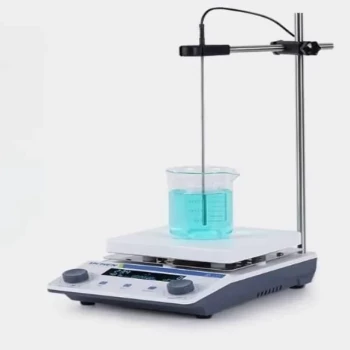
- Laboratory Small Constant Temperature Heated Magnetic Stirrer Heater and Stirrer
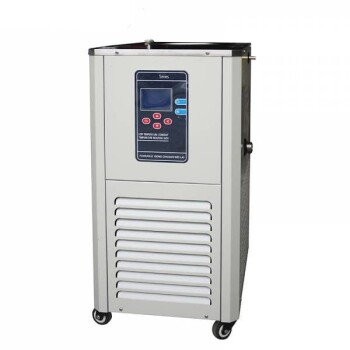
- 5L Chilling Circulator Cooling Water Bath Circulator for Low Temperature Constant Temperature Reaction Bath
- 1700℃ Controlled Atmosphere Furnace Nitrogen Inert Atmosphere Furnace
- Double-Layer Water Bath Electrolytic Electrochemical Cell
People Also Ask
- How do high-pressure and high-temperature reactors ensure the effective treatment of lignocellulosic wastewater in WAO?
- What equipment is required for high-pressure high-temperature reactions? Master Extreme Chemistry Safely
- How do you control high pressure in a reactor? A Guide to Safe & Stable Operation
- How does initial oxygen pressure affect the wet oxidation of pharmaceutical sludge? Master Your Oxidation Depth
- Why is argon better than nitrogen for inert atmosphere? Ensure Absolute Reactivity & Stability