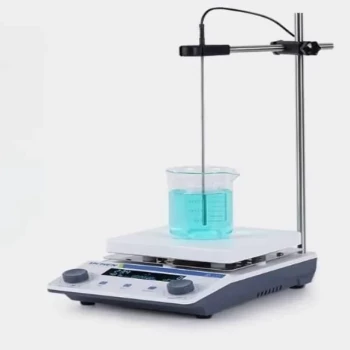
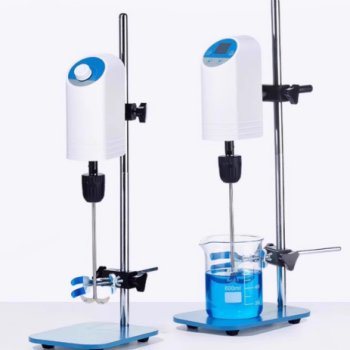
Constant temperature heating and stirring equipment serves as the critical driver for uniform surface modification. It maintains a precise thermal environment, usually at 50 °C, while applying continuous mechanical shear to the mixture. This dual action enables the chemical reaction between stearic acid and zinc oxide nanopowders within a toluene solvent, ensuring consistent surface coverage.
The synergy of stable heat and mechanical agitation is required to convert hydrophilic zinc oxide into a hydrophobic material. This controlled environment ensures that long-chain alkyl groups attach uniformly to the nanoparticle surface, maximizing the effectiveness of the functionalization.
The Physics of Surface Functionalization
Facilitating the Chemical Reaction
The primary role of the heating equipment is to provide the necessary activation energy for the reaction.
By maintaining a stable temperature around 50 °C, the system creates an ideal thermodynamic environment. This heat facilitates the interaction between stearic acid molecules and the hydroxyl groups residing on the surface of the zinc oxide nanopowders.
The Role of Solvent Interaction
The process typically occurs within solvents like toluene.
Heating ensures the solvent remains at a viscosity and temperature that supports the mobility of the stearic acid molecules. This allows them to effectively reach and bond with the nanoparticle surfaces.
The Importance of Mechanical Shear
Ensuring Uniform Coverage
Stirring equipment provides continuous mechanical shear force throughout the process.
This physical agitation is essential for preventing the nanopowders from settling or clumping together during the reaction. By keeping the particles in suspension, the equipment ensures that the stearic acid can access the entire surface area of the zinc oxide.
Driving Homogeneity
The goal of this process is to achieve a uniform layer of long-chain alkyl groups on the particles.
Mechanical stirring creates a homogeneous mixture, eliminating "hot spots" or areas of low concentration. This uniformity is what ultimately determines the quality of the final material.
The Chemical Transformation
Altering Surface Properties
The combined effect of heating and stirring drives a fundamental change in the material's nature.
Through this controlled process, hydrophilic (water-attracting) zinc oxide is converted into a hydrophobic (water-repelling) material. This transformation is dependent on the successful attachment of the alkyl groups.
Understanding the Variables and Risks
The Consequence of Thermal Instability
If the heating equipment fails to maintain a constant temperature, the reaction rate becomes unpredictable.
Fluctuations below the target 50 °C may result in incomplete functionalization, leaving some hydroxyl groups unreacted. Conversely, excessive heat could alter the solvent properties or the reaction kinetics undesirably.
The Impact of Inadequate Shear
Without continuous mechanical shear, the nanopowders are likely to agglomerate.
This leads to uneven coating, where the outer surfaces of particle clusters are functionalized, but the inner surfaces remain hydrophilic. This lack of uniformity compromises the bulk properties of the final nanomaterial.
Optimizing Your Functionalization Process
To achieve high-quality hydrophobic zinc oxide, you must view your equipment not just as hardware, but as a control system for reaction kinetics.
- If your primary focus is Reaction Efficiency: Prioritize precise thermal regulation at 50 °C to ensure the chemical bonding between stearic acid and hydroxyl groups occurs at the optimal rate.
- If your primary focus is Material Uniformity: Ensure your stirring mechanism provides constant, consistent shear force to prevent agglomeration and guarantee every nanoparticle is evenly coated.
Success in this process relies on the strict maintenance of both thermal stability and mechanical agitation to drive the complete surface conversion.
Summary Table:
| Parameter | Role in Functionalization | Impact on Material Quality |
|---|---|---|
| Constant Temperature (50°C) | Provides activation energy for chemical bonding | Ensures complete conversion of hydroxyl groups |
| Mechanical Stirring | Maintains particle suspension & prevents clumping | Guarantees uniform coating of long-chain alkyl groups |
| Solvent Management | Optimizes molecule mobility in toluene | Drives homogeneity and efficient reaction kinetics |
| Process Stability | Regulates reaction rate and thermal environment | Prevents agglomeration and inconsistent hydrophobicity |
Elevate Your Nanomaterial Research with KINTEK
Precision is the backbone of successful surface functionalization. KINTEK specializes in high-performance laboratory equipment designed to meet the rigorous demands of chemical synthesis and material science. Whether you are performing stearic acid functionalization or complex chemical vapor deposition, our comprehensive range of constant temperature heating solutions, magnetic stirrers, and high-temperature furnaces provides the stability you need.
From advanced crushing and milling systems to ensure particle uniformity to high-pressure reactors and autoclaves for specialized reactions, KINTEK delivers the tools that drive innovation.
Ready to optimize your lab's efficiency and material quality? Contact us today to discover how our premium laboratory equipment and consumables can streamline your research workflow.
References
- Carmela Tania Prontera, Paola Manini. Sustainable, Fluorine-Free, Low Cost and Easily Processable Materials for Hydrophobic Coatings on Flexible Plastic Substrates. DOI: 10.3390/ma12142234
This article is also based on technical information from Kintek Solution Knowledge Base .
Related Products
- Laboratory Small Constant Temperature Heated Magnetic Stirrer Heater and Stirrer
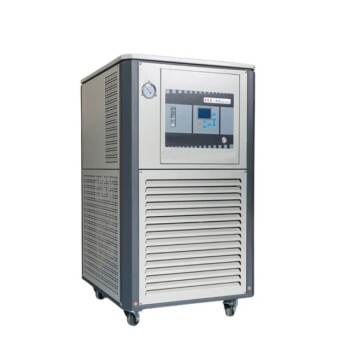
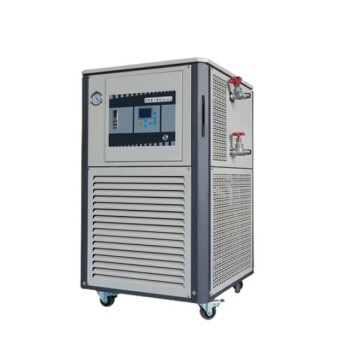
- High Temperature Constant Temperature Heating Circulator Water Bath Chiller Circulator for Reaction Bath
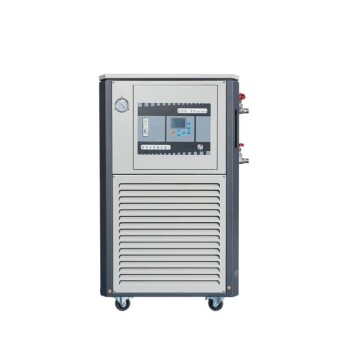
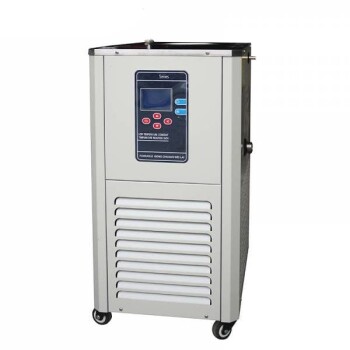
- 20L Heating Chilling Circulator Cooling Water Bath Circulator for High and Low Temperature Constant Temperature Reaction
- 10L Heating Chilling Circulator Cooling Water Bath Circulator for High and Low Temperature Constant Temperature Reaction
- 5L Heating Chilling Circulator Cooling Water Bath Circulator for High and Low Temperature Constant Temperature Reaction
People Also Ask
- What role does a magnetic stirrer with heating play in ZnO nanoparticle synthesis? Precision Control for Quality Results
- What role does a constant temperature heating magnetic stirrer play in MFC-HAp synthesis? Achieve Material Homogeneity
- What is the function of a laboratory magnetic stirrer in Ni–Cr–P electrodeposition? Optimize Ion Transport & Coating
- Why is a laboratory magnetic stirrer required for benzoic acid esters? Boost Reaction Speed & Yield with High RPM
- What role does a laboratory magnetic stirrer play in TiO2 and TiO2-Ag sol preparation? Master Chemical Kinetics