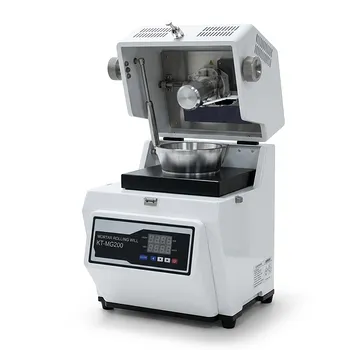
Grinding equipment serves as a vital preparation tool in the chemical stability assessment of Li3InCl6 electrolytes by mechanically forcing an interaction between the electrolyte and simulated discharge products. By utilizing devices such as ball mills or mortars, researchers thoroughly mix and refine the electrolyte powder with substances like KO2 or Li2O2 to mimic the conditions inside a battery.
The primary function of grinding in this context is to mechanically enforce "intimate contact" between solid particles. This ensures that subsequent analysis measures true chemical stability under realistic interface conditions, rather than falsely reporting stability due to a lack of physical interaction.
Creating the Simulation Environment
The goal of this process is not simply to mix powders, but to replicate the harsh internal environment of a solid-state battery.
Achieving Intimate Contact
In a solid-state system, reactions often fail to occur simply because particles do not touch. Grinding overcomes this physical barrier.
It utilizes mechanical force to refine the Li3InCl6 electrolyte powder alongside simulated discharge products. This reduces particle size and maximizes the contact area between the distinct materials.
Mimicking Internal Interfaces
The mixture typically includes the electrolyte and discharge products like potassium superoxide (KO2) or lithium peroxide (Li2O2).
By grinding these together, you simulate the tight, pressurized interfaces that exist within a battery cell. This allows you to predict how the electrolyte will behave when it is compressed against reactive byproducts during actual operation.
Enabling Precise Analysis
Once the mechanical preparation is complete, the material is ready for chemical characterization.
Facilitating X-ray Diffraction (XRD)
The ultimate goal of this grinding process is to prepare the sample for X-ray diffraction (XRD) characterization.
Because the grinding ensures thorough mixing and refinement, the XRD results provide an accurate reading of the chemical phases present.
Verifying Chemical Stability
If the electrolyte is unstable, the intimate contact created by grinding will facilitate a reaction with the simulated discharge products.
Consequently, the XRD analysis will reveal new, unwanted phases. If the XRD pattern remains unchanged, it confirms the chemical stability of the Li3InCl6 electrolyte in that specific environment.
Understanding the Trade-offs
While grinding is essential for ensuring reactivity, it introduces variables that must be managed to maintain data integrity.
Mechanical Force vs. Chemical Reactivity
Grinding applies significant mechanical energy, which increases the reactive surface area of the solids.
While this is beneficial for testing stability or synthesizing materials (such as garnet-type electrolytes), excessive energy input could theoretically induce mechanochemical reactions that might not occur under normal battery operation.
Homogeneity Challenges
The effectiveness of the assessment relies entirely on the uniformity of the mix.
If the grinding is inconsistent, you may have pockets of unmixed material. This could lead to false positives in your stability assessment, where the electrolyte appears stable simply because it never physically contacted the discharge product.
Making the Right Choice for Your Goal
The way you utilize grinding equipment depends heavily on whether you are testing an existing material or creating a new one.
- If your primary focus is assessing chemical stability: Ensure you grind the electrolyte with specific discharge products (like KO2) to force intimate contact, enabling XRD to detect any degradation.
- If your primary focus is material synthesis: Use grinding to maximize surface area and diffusion, ensuring precursors react fully during high-temperature calcination processes.
Grinding is the bridge that turns a theoretical mixture into a physically interacting system, allowing you to validate chemical reality before assembling a full cell.
Summary Table:
| Process Step | Equipment Used | Role in Assessment |
|---|---|---|
| Particle Refinement | Ball Mills / Mortars | Reduces particle size to maximize contact surface area |
| Interface Simulation | Grinding Systems | Mechanically forces interaction between electrolyte and discharge products (KO2/Li2O2) |
| Sample Preparation | Homogenizers | Ensures mixture uniformity for reliable X-ray Diffraction (XRD) analysis |
| Stability Validation | Grinding Tools | Facilitates detectable mechanochemical reactions to verify material integrity |
Elevate Your Battery Research with KINTEK Precision
Achieving the perfect 'intimate contact' in solid-state electrolyte research requires more than just mixing—it requires precision engineering. KINTEK specializes in high-performance laboratory equipment designed for the rigorous demands of chemical stability assessment.
Our extensive portfolio includes:
- Crushing and Milling Systems: Advanced ball mills for superior particle refinement.
- High-Temperature Furnaces: Muffle, tube, and vacuum furnaces for material synthesis and calcination.
- Hydraulic Presses: Pellet and isostatic presses to simulate high-pressure battery environments.
- Specialized Labware: Precision-engineered ceramics, crucibles, and PTFE products.
Whether you are refining Li3InCl6 electrolytes or synthesizing new garnet-type materials, KINTEK provides the tools necessary to ensure data integrity and experimental success. Contact us today to optimize your laboratory workflow!
Related Products
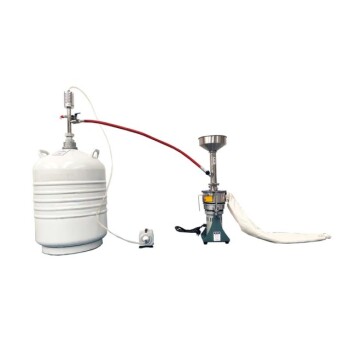
- Liquid Nitrogen Cryogenic Grinder Mill Cryomill Airflow Ultrafine Pulverizer
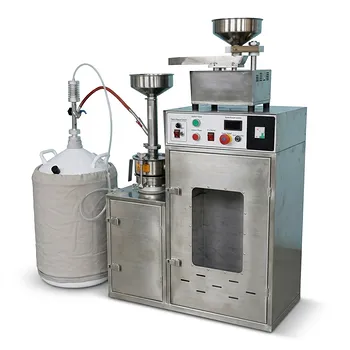
- Liquid Nitrogen Cryogenic Grinder Mill Cryomill with Screw Feeder
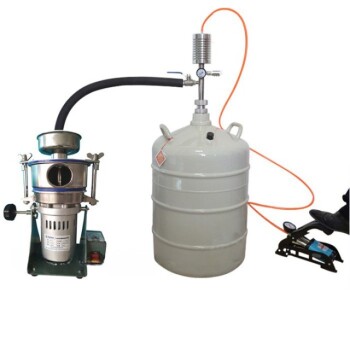
- Small Cryogenic Grinder Cryomill Cryogrinder with Liquid Nitrogen for Laboratory Use
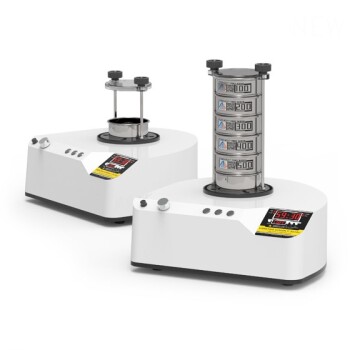
- Three-dimensional electromagnetic sieving instrument
- Laboratory Grinding Mill Mortar Grinder for Sample Preparation
People Also Ask
- What is cryogenic grinding of crumb rubber? Achieve Fine, High-Quality Rubber Powder
- What are the advantages of using a cryogenic grinder? Achieve Nanoscale Precision for All-Solid-State Battery Cathodes
- What is the role of a cryogenic grinder in PET recycling? Transform Waste into High-Reactive Micron Powders
- Why is a cryogenic grinder required for cured alkyd resin HRMAS NMR? Ensure Structural Integrity & Sample Precision
- What is the temperature of cryogenic grinding? Achieve Superior Particle Size & Preserve Heat-Sensitive Materials