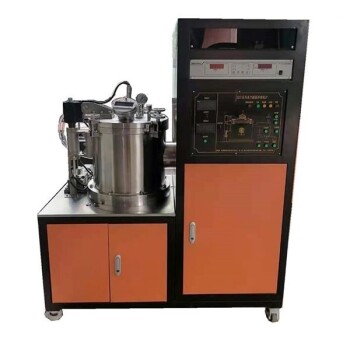
The precise synthesis of Magnesium-Silver (Mg-2Ag) alloys relies on a symbiotic relationship between advanced heating technology and specialized containment. The vacuum induction furnace uses electromagnetic fields to generate rapid, uniform heat that ensures the metals fuse completely. Simultaneously, the high-purity graphite crucible serves as a chemically inert vessel, shielding the reactive molten magnesium from contamination during the process.
Core Takeaway: Success in creating Mg-2Ag alloys requires balancing thorough homogenization with strict contamination control. This specific equipment setup solves the problem by using induction for consistent mixing while relying on graphite’s inert properties to prevent the corrosive molten magnesium from degrading the alloy's purity.
The Role of the Vacuum Induction Furnace
The primary function of the furnace is to create a heating environment that is both energetic and controlled. Because Magnesium and Silver have different properties, standard heating methods can lead to inconsistent results.
Electromagnetic Induction Principles
The furnace utilizes electromagnetic induction rather than radiant heat.
This mechanism generates heat directly within the metal charge. The result is a rapid rise in temperature that reduces the time the material spends in a transitional state.
Ensuring Uniform Fusion
A major challenge in alloying is ensuring the constituent metals—in this case, Magnesium and Silver—mix completely.
The induction process naturally promotes stirring within the molten pool. This ensures a uniform heating environment, guaranteeing that the two distinct metals are thoroughly fused into a homogeneous alloy.
The Role of the High-Purity Graphite Crucible
While the furnace provides the energy, the crucible provides the protection. The choice of material here is not arbitrary; it is dictated by the aggressive chemical nature of molten magnesium.
Withstanding Chemical Corrosion
Molten magnesium is highly reactive and corrosive to many standard container materials.
A high-purity graphite crucible is specifically selected for its chemical inertness. It withstands the corrosive effects of the magnesium, ensuring the vessel does not degrade or fail during the high-heat cycle.
Preventing Impurity Introduction
The integrity of the Mg-2Ag alloy depends on maintaining a precise chemical composition.
Because the graphite is chemically inert, it prevents the introduction of impurities into the melt. This ensures the final alloy matches the exact specifications required without contamination from the crucible walls.
High-Temperature Resistance
Beyond chemical stability, the physical structure of the crucible is vital.
High-purity graphite offers exceptional high-temperature resistance. This allows the process to reach the necessary melting points without the risk of the crucible warping or cracking.
Understanding the Trade-offs
While this combination of equipment is optimal for Mg-2Ag, it requires strict adherence to material quality standards.
The Risk of Crucible Quality
The "high-purity" designation of the graphite is not a suggestion; it is a requirement.
If lower-grade graphite is used, the protective barrier may fail. This can lead to carbon contamination or a reaction with the magnesium, fundamentally altering the alloy's properties and rendering the batch unusable.
Process Control vs. Speed
The rapid heating provided by induction is a benefit, but it demands precise control.
Because the heating is so fast, operators must monitor the process closely to prevent overheating. The goal is thorough fusion, not excessive thermal stress.
Making the Right Choice for Your Goal
When configuring your melting process for Magnesium-Silver alloys, your equipment choices should align with your specific quality targets.
- If your primary focus is Compositional Accuracy: Prioritize the purity grade of the graphite crucible above all else to eliminate the risk of chemical leaching.
- If your primary focus is Microstructural Homogeneity: Focus on the induction frequency and power settings of the furnace to maximize the stirring effect and ensure uniform fusion.
By leveraging the speed of induction heating and the stability of graphite, you ensure the production of a high-integrity, contaminant-free alloy.
Summary Table:
| Component | Primary Role | Key Advantage for Mg-2Ag |
|---|---|---|
| Vacuum Induction Furnace | Heating & Homogenization | Electromagnetic stirring ensures uniform silver distribution. |
| High-Purity Graphite Crucible | Containment & Protection | Chemically inert surface prevents corrosive magnesium reactions. |
| Vacuum Environment | Atmospheric Control | Prevents oxidation and maintains high alloy purity standards. |
| High-Purity Material | Contamination Control | Ensures no carbon leaching or impurity introduction into the melt. |
Elevate Your Material Synthesis with KINTEK
Precise alloy production demands equipment that balances extreme performance with absolute purity. KINTEK specializes in advanced laboratory solutions designed for rigorous research and industrial standards. Our comprehensive range of vacuum induction furnaces and specialized high-purity graphite crucibles provides the thermal control and chemical inertness required for sensitive magnesium-silver alloying.
From high-temperature furnaces and crushing systems to high-temperature high-pressure reactors and specialized PTFE or ceramic consumables, KINTEK delivers the tools you need for reliable results.
Ready to optimize your melting process? Contact our technical experts today to find the perfect configuration for your laboratory's needs.
References
- Meysam Mohammadi Zerankeshi, Reza Alizadeh. Hydrothermal Coating of the Biodegradable Mg-2Ag Alloy. DOI: 10.3390/met13071260
This article is also based on technical information from Kintek Solution Knowledge Base .
Related Products
- Vacuum Induction Melting Spinning System Arc Melting Furnace
- Lab-Scale Vacuum Induction Melting Furnace
- Vacuum Arc Induction Melting Furnace
- Vacuum Heat Treat Furnace and Levitation Induction Melting Furnace
- Non Consumable Vacuum Arc Induction Melting Furnace
People Also Ask
- What are the advantages of a vacuum induction melting furnace? Achieve High-Purity Alloys with Precision VIM
- Why use VIM for rare earth steel? Essential Precision for Melting Reactive Lanthanum and Cerium
- What is the primary function of a vacuum induction melting furnace in Ni-Mo-Cr-Fe master alloy prep? Ensure High Purity
- What is the function of a vacuum induction melting furnace? Essential Guide for High-Purity FeCrAl Alloy Production
- What types of metals are typically processed in a vacuum induction melting furnace? High-Purity Alloys for Critical Applications