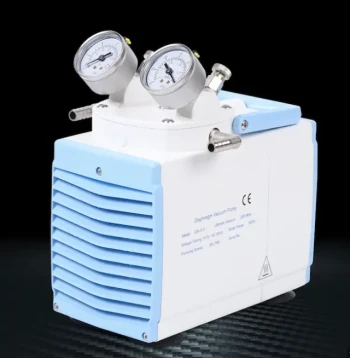
A rotary vane vacuum pump acts as the critical regulator in atmospheric and micro-pressure Chemical Vapor Deposition (CVD) systems, serving distinct functions before and during the process. Its primary role is twofold: it first evacuates the chamber to eliminate contaminants like oxygen and moisture, and subsequently maintains a precise pressure equilibrium by continuously extracting reaction by-products to ensure stable, uniform deposition.
Core Takeaway: Ideally, a vacuum pump in CVD is not just an exhaust mechanism, but an active component of process control. By managing the balance between gas inflow and outflow, it creates the stable gas flow dynamics required to achieve reproducible, high-quality material layers.
Critical Functions in CVD Processes
Initial System Evacuation
Before any deposition can occur, the reaction chamber must be purged of atmospheric contaminants.
The rotary vane pump performs the initial drawdown to remove background gases, specifically oxygen and moisture. Eliminating these elements is vital, as their presence can cause oxidation or unwanted chemical reactions that compromise the purity of the deposited film.
Dynamic Pressure Regulation
Once the process begins, the pump shifts roles from simple evacuation to active pressure management.
In coordination with pressure control valves, the pump regulates the total pressure within the reactor. It does not merely pull a vacuum; it balances the extraction rate against the input of precursor gases to maintain the specific micro-pressure environment required for the reaction.
Management of Reaction By-products
CVD processes generate gaseous by-products that must be removed immediately.
If these by-products accumulate, they can alter the chemical composition of the environment or redeposit on the substrate. The rotary vane pump ensures continuous extraction, preventing accumulation and maintaining the purity of the reaction zone.
Stabilization of Gas Flow Dynamics
Achieving a uniform film thickness across a substrate requires consistent gas behavior.
By providing a steady, non-pulsing suction, the pump helps establish stable gas flow dynamics. This stability is the key factor in ensuring that the experiment or production run is reproducible and that the deposition layer is uniform.
Understanding the Trade-offs
The Oil-Sealed Mechanism
Rotary vane pumps rely on oil for airtightness, lubrication of moving parts (vanes and rotors), and cooling.
This design makes them a cost-effective and high-performance solution for reaching rough vacuum levels compared to dry pumps. However, the presence of oil introduces a risk of backstreaming if not properly managed, which can contaminate sensitive high-purity CVD environments.
Maintenance and Durability
Because these pumps are oil-sealed, they require strict maintenance schedules.
The oil degrades over time, particularly when exposed to reactive CVD by-products or high-boiling solvents. To reduce wear and maintain performance, the oil typically requires changing every 3,000 hours of use. Neglecting this can lead to pump failure or inconsistent vacuum levels.
Duty Cycle Limitations
Not all rotary vane pumps are built for the same workload.
Low-cost models are often designed for light-duty cycles (e.g., 10-15 minutes of operation). For CVD systems requiring long, continuous deposition runs, using a light-duty pump can lead to overheating and premature failure.
Making the Right Choice for Your Goal
When integrating a rotary vane pump into your CVD system, align your choice with your operational intensity:
- If your primary focus is Short-Term R&D: A standard, low-cost rotary vane pump is sufficient for brief cycles, provided you strictly adhere to oil maintenance schedules.
- If your primary focus is Industrial Reliability: You must select a heavy-duty, industrial-grade pump capable of continuous operation to prevent downtime during long deposition processes.
- If your primary focus is Process Purity: Ensure the pump is equipped with high-quality oil mist filters and non-return valves to prevent oil backstreaming into the reaction chamber.
Successful CVD does not rely solely on the chemistry of the precursors, but on the stability of the vacuum that surrounds them.
Summary Table:
| Function | Description | Key Benefit |
|---|---|---|
| Initial Evacuation | Removes O2 and moisture from the chamber | Prevents oxidation and ensures high-purity films |
| Pressure Regulation | Balances precursor inflow with exhaust | Maintains stable micro-pressure environments |
| By-product Removal | Extracts gaseous waste during reaction | Prevents contamination and secondary reactions |
| Flow Stabilization | Provides steady, non-pulsing suction | Ensures uniform deposition and reproducibility |
Elevate Your CVD Precision with KINTEK
Don't let unstable vacuum levels compromise your material research. KINTEK specializes in high-performance laboratory equipment, offering a robust selection of rotary vane vacuum pumps specifically designed to integrate seamlessly with our CVD and PECVD systems. Whether you are performing short-term R&D or require industrial-grade reliability for continuous deposition, our expert team is ready to help you select the ideal vacuum solution.
From high-temperature furnaces and high-pressure reactors to precision hydraulic presses and essential consumables, KINTEK provides the comprehensive tools needed for advanced material science.
Ready to optimize your deposition process? Contact KINTEK experts today for a tailored solution!
References
- Saphina Biira. Design and fabrication of a chemical vapour deposition system with special reference to ZrC layer growth characteristics. DOI: 10.17159/2411-9717/2017/v117n10a2
This article is also based on technical information from Kintek Solution Knowledge Base .
Related Products
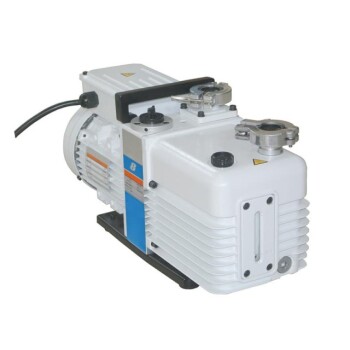
- Laboratory Rotary Vane Vacuum Pump for Lab Use
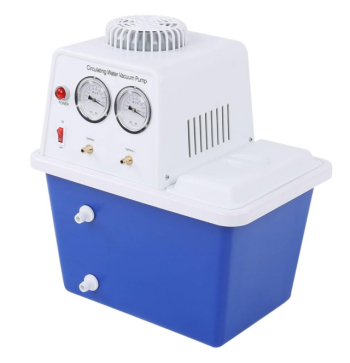
- Circulating Water Vacuum Pump for Laboratory and Industrial Use
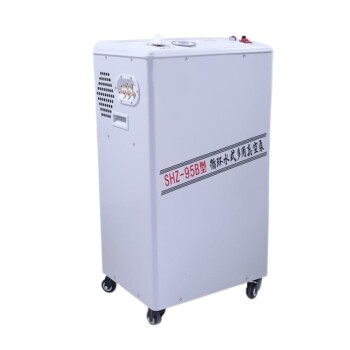
- Laboratory Vertical Water Circulating Vacuum Pump for Lab Use
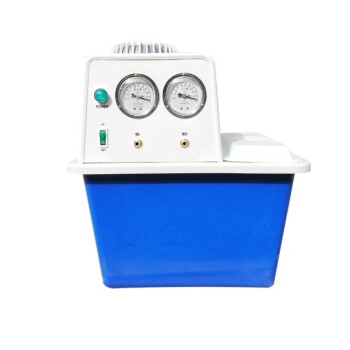
- Laboratory Benchtop Water Circulating Vacuum Pump for Lab Use
- Vacuum Sealed Continuous Working Rotary Tube Furnace Rotating Tube Furnace
People Also Ask
- What is the use of rotary vacuum pump? A Guide to Reliable Rough Vacuum for Labs & Industry
- What is the vacuum level of a rotary vacuum pump? Achieve Medium Vacuum for Your Lab or Industry
- What is the difference between a single-stage and a two-stage rotary vane pump? Choosing the Right Vacuum Depth
- How does the performance of single-stage and two-stage rotary vane pumps compare? Optimize Your Vacuum Efficiency
- How does a Rotary Vane Pump operate? Discover Efficient Vacuum Technology for Your Lab