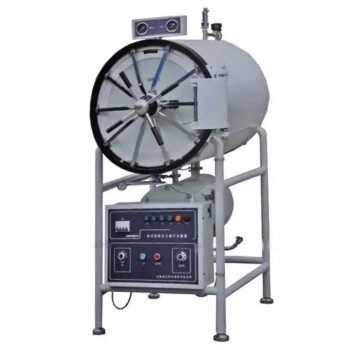
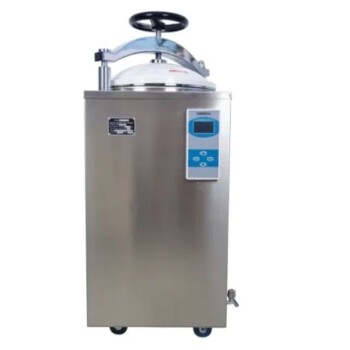
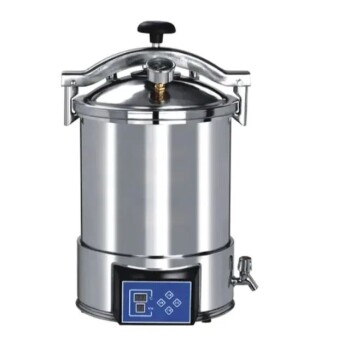
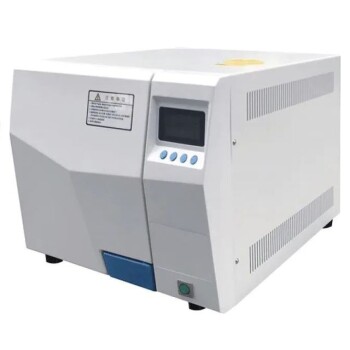
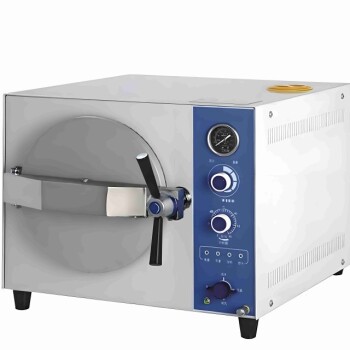
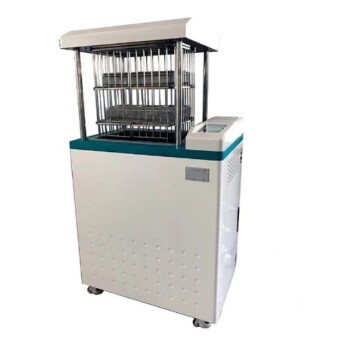
A high-temperature and high-pressure autoclave simulates the critical primary circuit service environment of a Pressurized Water Reactor (PWR) when evaluating the stress corrosion cracking (SCC) resistance of 316L stainless steel. To accurately replicate these conditions, the equipment maintains a temperature of 320 °C, a pressure of 13.0 MPa, and a specific chemical composition involving Boron and Lithium.
The primary goal of simulating these extreme parameters is to intentionally induce intergranular cracks, providing a rigorous testing ground to verify if Grain Boundary Engineering (GBE) successfully improves the material's resistance to propagation.
Replicating the Primary Circuit Environment
precise Thermal and Pressure Controls
To evaluate 316L stainless steel effectively, the autoclave must maintain a stable high-temperature environment of 320 °C.
Simultaneously, the system applies a high pressure of 13.0 MPa. These physical conditions are non-negotiable for mimicking the operational stresses found in the primary circuit of a PWR.
The Role of Chemical Composition
Physical stress alone is insufficient for a complete evaluation; the chemical environment plays a massive role in SCC.
The simulation requires a specific water chemistry, typically consisting of 1200 ppm Boron and 2 ppm Lithium. This chemical makeup accelerates the corrosive elements naturally present in reactor operations.
Targeting Intergranular Cracking
The combination of these thermal, pressure, and chemical factors is designed to produce a specific failure mode: intergranular cracking.
By forcing these cracks to form, researchers can determine if modifications to the metal's microstructure—specifically Grain Boundary Engineering—actually deliver enhanced durability.
Understanding the Trade-offs
Specificity vs. Versatility
It is critical to understand that autoclave settings are highly material-specific. While an autoclave can simulate a PWR environment for 316L (320 °C), other reactor types require vastly different parameters.
For example, Fourth Generation Nuclear Reactors (SCWR) operate in a supercritical state (e.g., 550 °C and 250 atm), which is necessary for testing different alloys like 310H stainless steel but would be inappropriate for standard PWR 316L evaluations.
The Danger of Incorrect Parameters
Applying the wrong simulation parameters can lead to data that is irrelevant to the target application.
If the temperature or pressure does not match the specific reactor type (PWR vs. SCWR), the oxidation behavior and cracking mechanisms observed in the lab will not correlate with real-world service performance.
Making the Right Choice for Your Goal
To ensure your evaluation data is valid, you must align your test parameters strictly with your target reactor environment.
- If your primary focus is 316L for PWRs: Ensure your autoclave is calibrated to 320 °C, 13.0 MPa, and includes the Boron/Lithium water chemistry to test for intergranular cracking.
- If your primary focus is Advanced Alloys for SCWRs: You must utilize a high-pressure static autoclave capable of reaching supercritical states (550 °C, 250 atm) to study long-term oxidation behavior.
Success in SCC testing relies not just on the equipment, but on the precise matching of environmental variables to the specific material's intended service life.
Summary Table:
| Parameter | PWR Simulation (316L) | SCWR Simulation (Advanced Alloys) |
|---|---|---|
| Temperature | 320 °C | 550 °C |
| Pressure | 13.0 MPa | 25.0 MPa (250 atm) |
| Water Chemistry | 1200 ppm B + 2 ppm Li | Supercritical Water |
| Primary Goal | Induce Intergranular Cracking | Study Long-term Oxidation |
Precision Testing for Nuclear-Grade Reliability
Ensure your materials withstand the harshest reactor environments with KINTEK’s high-temperature high-pressure reactors and autoclaves. Whether you are evaluating 316L stainless steel for PWRs or developing advanced alloys for supercritical water reactors (SCWR), our specialized equipment delivers the precise thermal, pressure, and chemical control required for rigorous Stress Corrosion Cracking (SCC) analysis.
From high-performance furnaces and hydraulic presses to specialized electrolytic cells and ceramics, KINTEK provides a comprehensive range of laboratory solutions tailored for nuclear and material science research.
Ready to elevate your material testing accuracy? Contact KINTEK experts today to find the perfect autoclave for your lab!
References
- Tingguang Liu, Tetsuo Shoji. Evaluation of Grain Boundary Network and Improvement of Intergranular Cracking Resistance in 316L Stainless Steel after Grain Boundary Engineering. DOI: 10.3390/ma12020242
This article is also based on technical information from Kintek Solution Knowledge Base .
Related Products
- High Pressure Laboratory Autoclave Reactor for Hydrothermal Synthesis
- Stainless High Pressure Autoclave Reactor Laboratory Pressure Reactor
- Mini SS High Pressure Autoclave Reactor for Laboratory Use
- Laboratory High Pressure Horizontal Autoclave Steam Sterilizer for Lab Use
- Portable High Pressure Laboratory Autoclave Steam Sterilizer for Lab Use
People Also Ask
- What role does a high-pressure reactor (autoclave) play in the synthesis of NiCuFe-LDH? Master Hydrothermal Growth
- What Role Does a High-Pressure Reactor or Autoclave Play in HA Catalyst Synthesis? Achieve High Surface Area Materials
- What equipment is required for hydrothermal synthesis of Ga0.25Zn4.67S5.08? Optimize Your Semiconductor Production
- What is the function of a high-pressure reactor in the hydrothermal synthesis of boehmite? Expert Process Insights
- What role does an autoclave play in the synthesis of MnO2 nanofibers? Mastering Hydrothermal Growth